TRENDING

Thursday, 12 November 2026
----------------------
2 Jumada Al-Thani 1448 AH
Fighting in Yemen has intensified dramatically, with Houthi forces and the Saudi-led coalition exchanging missile and drone attacks. Casualties are surging, and the humanitarian crisis deepens as both sides deny critical allegations.
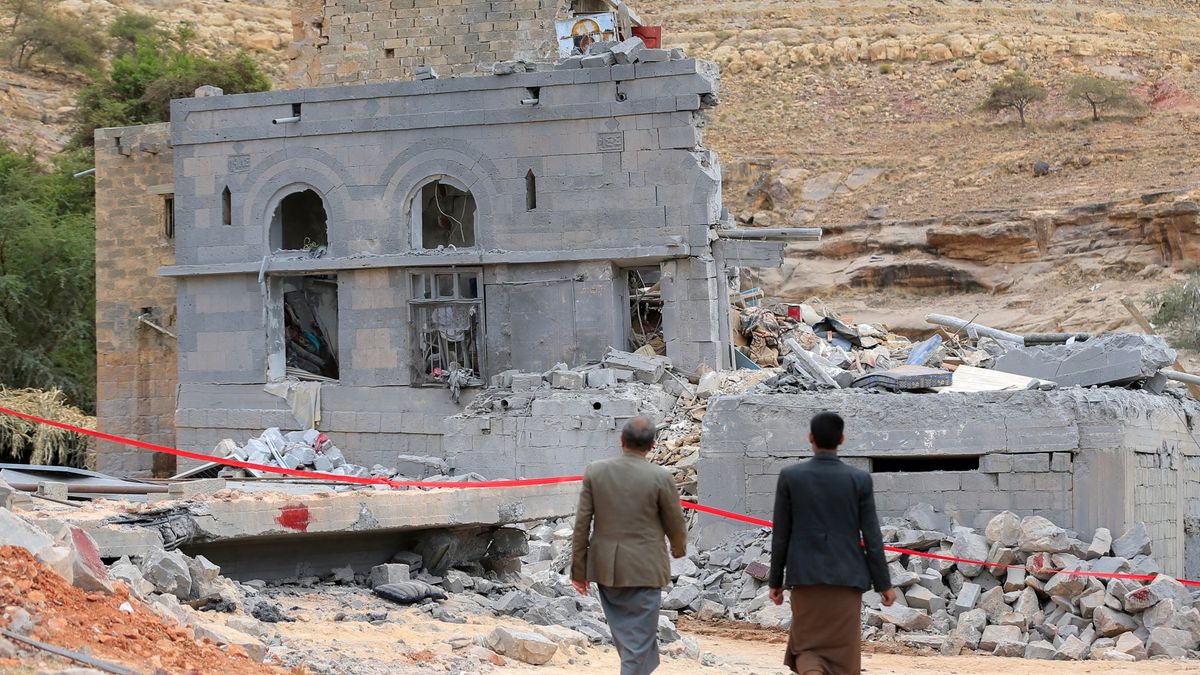
The conflict in Yemen has seen a significant escalation, marked by intensified fighting between the Iran-allied Houthi movement and the Saudi-backed internationally recognized government. This surge in hostilities included claims from the Saudi-led coalition that it intercepted drones aimed at Mecca and cruise missiles targeting Riyadh, while the Houthis vehemently denied targeting Islam’s holiest city, asserting their strikes were directed at a pumping station in Yanbu and Riyadh's King Khalid International Airport. Concurrently, both sides reported heavy losses inflicted on their adversaries, with a dramatic increase in civilian casualties and displacement across several Yemeni governorates.
The recent surge in hostilities in Yemen reveals a complex interplay of power dynamics, where military capability, narrative control, and regional rivalries converge. The Houthis' ability to launch drones and cruise missiles deep into Saudi Arabian territory, regardless of the precise target, demonstrates a significant and evolving projection of force. This capability, widely believed to be bolstered by Iran, serves multiple purposes: it challenges Saudi Arabia's air defense systems, undermines its claims of security, and forces the kingdom into a costly and protracted military engagement. By denying the targeting of Mecca, the Houthis attempt to navigate a delicate political line, seeking to avoid universal condemnation from the broader Muslim world while still showcasing their reach and resolve. Their claims of striking strategic economic and military targets like the Yanbu pumping station and Riyadh airport underscore a calculated strategy to inflict economic pain and psychological pressure on their primary adversary.
Conversely, the Saudi-led coalition, acting on behalf of the internationally recognized Yemeni government, wields superior air power and significant ground forces. Their strategy focuses on degrading Houthi military assets and reclaiming territory, as evidenced by hundreds of artillery attacks, drone strikes, rocket attacks, and airstrikes reported in governorates like al-Jawf, Marib, al-Bayda, and Taiz. However, the coalition's repeated failure to halt Houthi attacks on critical areas like Aden's al-Buraiqa district, where the government is based, highlights the limitations of their military dominance against an entrenched and adaptable adversary. The Saudi narrative, emphasizing the targeting of civilian objects and violations of international humanitarian law, is a diplomatic tool aimed at galvanizing international support and delegitimizing the Houthi movement. This framing also serves to justify their continued military intervention and deflect scrutiny from their own actions.
At a deeper level, the conflict remains a proxy battleground for regional hegemonic ambitions, primarily between Saudi Arabia and Iran. The Houthis represent a crucial Iranian lever in the Arabian Peninsula, disrupting Saudi influence and challenging its regional leadership. For Saudi Arabia, the war is a critical front in its broader containment strategy against Iran, aimed at preventing the establishment of a hostile, Iran-aligned entity on its southern border. The United States and other Western powers, while often calling for de-escalation, continue to provide significant military and logistical support to the Saudi-led coalition, thereby becoming integral, albeit often understated, actors in the power mechanics of the conflict. This external support allows the war to continue, perpetuating a cycle of violence that serves the strategic interests of external powers more than the immediate needs of the Yemeni people. The struggle for political survival is also paramount for all direct parties: the Houthis seek to consolidate their control and legitimize their governance, the internationally recognized government strives to regain authority and secure its existence, and Saudi Arabia aims to protect its national security and project regional strength.
The relentless escalation of fighting in Yemen continues to exact an unimaginable toll on its civilian population, transforming the nation into one of the world's most severe humanitarian crises. The numbers paint a stark picture of suffering, far removed from the strategic calculations of warring factions.
According to the World Health Organization (WHO), the conflict has resulted in a staggering 11,755 casualties as of early November, including 2,098 killed and 9,657 wounded. Alarmingly, over 2,000 of these casualties were recorded in just nine days, underscoring the brutal intensity of the recent fighting. Governorates like Marib and Lahij are among the worst affected, becoming epicenters of violence where ordinary citizens are caught in the crossfire of artillery barrages, airstrikes, and ground engagements. These figures represent not just statistics, but shattered families, orphaned children, and communities grappling with profound loss and trauma.
The fighting has triggered massive waves of displacement, forcing people from their homes and livelihoods. Over 320,000 individuals have been displaced since August 1 alone, with nearly 16,000 fleeing their homes in just the past week. This constant uprooting means families lose everything – their homes, their farms, their businesses, and their social support networks. Displaced populations often end up in overcrowded camps or informal settlements, vulnerable to disease, food insecurity, and further violence, with little to no access to basic services. The economic fabric of entire regions is being torn apart, leading to widespread poverty and a generation growing up without stability or opportunity.
The healthcare system in Yemen, already fragile before the war, is now on the brink of collapse. Reports indicate that strikes have directly hit health facilities and ambulances, violating international humanitarian law and depriving communities of essential medical care. Critical fuel shortages, particularly acute in Taiz, are disrupting emergency medical services, meaning that even if a hospital remains standing, it may lack the power to operate life-saving equipment or transport patients. Despite efforts by organizations like the WHO to deliver medical supplies and conduct vaccination campaigns, major gaps persist in trauma care, rehabilitation services for the wounded, and mental health support for a population scarred by years of conflict. The long-term consequences of these deficiencies will manifest in increased mortality rates, preventable diseases, and a generation suffering from untreated physical and psychological wounds.
Both the Houthis and the Saudi-backed forces accuse each other of targeting civilians. Regardless of intent, the reality on the ground is that civilians bear the brunt of the violence. The repeated shelling of densely populated areas, such as Aden's al-Buraiqa district, as reported by the Minister of Information Salem al-Awalqi, reflects a pattern where civilian areas become battlegrounds. This creates an environment of pervasive fear and terror, forcing people to live in constant dread of the next missile, drone, or airstrike. The psychological scars of living under such conditions will endure for decades, affecting the social cohesion and future development of the nation.
Amidst the escalating violence and the public pronouncements of the warring parties in Yemen, several critical aspects are consistently downplayed, omitted, or strategically reframed. These untold stories reveal the deeper mechanics of power and the true beneficiaries and victims of the conflict.
The intense focus on the alleged Houthi targeting of Mecca and the subsequent denials by the Houthis serves as a powerful, albeit manipulative, narrative. For Saudi Arabia, emphasizing this claim is a potent tool to rally international and Muslim world condemnation against the Houthis, portraying them as extremist and sacrilegious. This narrative effectively overshadows the daily, grinding reality of the war in Yemen, diverting attention from the immense civilian casualties, widespread destruction, and humanitarian catastrophe unfolding on the ground. The actual strategic targets, such as the Yanbu pumping station or Riyadh's King Khalid International Airport, while significant, lack the symbolic weight to generate the same level of global outrage. By fixating on Mecca, the powerful actors shift the conversation from the systemic suffering of Yemenis to a religiously charged accusation, allowing the brutal mechanics of the conflict to continue largely unexamined.
Official statements often frame the conflict as an internal Yemeni struggle or a necessary intervention by the Saudi-led coalition to restore the internationally recognized government. This framing conveniently downplays the fundamental nature of the conflict as a proxy war between regional rivals, primarily Saudi Arabia and Iran. While Yemeni factions are the direct combatants, the strategic direction, financial backing, and sophisticated weaponry often originate from these external powers. The true beneficiaries are not the Yemeni people, but the regional powers who gain strategic leverage, influence, and a testing ground for their military doctrines. The human cost, however, is borne exclusively by Yemenis, who are caught between the ambitions of powerful states that face no direct consequences for the devastation they enable.
The role of major international powers, particularly the United States and European nations, in supplying advanced weaponry and logistical support to the Saudi-led coalition is consistently omitted or downplayed in official discourse. These arms sales, often framed as supporting allies or regional stability, directly fuel the conflict and contribute to the immense civilian toll. The international community's selective condemnation – often quick to criticize Houthi attacks on Saudi Arabia but slower to denounce the widespread destruction caused by coalition airstrikes or the blockade – highlights a moral asymmetry. This complicity allows the conflict to fester, as the primary external actors face little accountability for their contributions to the crisis. The narrative of humanitarian aid, while crucial, often serves to mask the deeper political and military decisions that perpetuate the need for such aid in the first place.
Beyond the immediate casualties and displacement, the profound and systemic economic devastation of Yemen is rarely highlighted by the warring parties. The destruction of infrastructure – roads, bridges, ports, and factories – cripples the nation's ability to recover. The disruption of trade routes, the collapse of the local currency, and the widespread unemployment have pushed millions into extreme poverty and food insecurity. This economic warfare creates a cycle of dependency and underdevelopment that will take generations to overcome, even if the fighting were to cease tomorrow. The long-term impact on education, public services, and the very fabric of Yemeni society is a silent catastrophe that receives far less attention than the dramatic headlines of missile exchanges.
As the conflict in Yemen continues its brutal trajectory, several key indicators will reveal the evolving dynamics and potential future scenarios. Observers should look beyond the immediate headlines to understand the underlying power shifts and their human consequences.
First, monitor the Houthi's continued ability to project force into Saudi Arabia. Any further successful attacks on critical infrastructure or population centers within the kingdom will signal a sustained or even enhanced Houthi military capability, likely indicative of ongoing external support, primarily from Iran. Such attacks will inevitably provoke intensified Saudi retaliatory strikes, perpetuating the cycle of violence and increasing the risk of regional spillover.
Second, pay close attention to the humanitarian situation, particularly the casualty figures and displacement rates reported by international organizations like the WHO and the UN. A continued surge in these numbers, coupled with reports of health facility damage or critical shortages in aid delivery, will underscore the deepening catastrophe and the failure of international efforts to protect civilians. The situation in besieged areas like Taiz, where essential services are critically disrupted, will be a crucial barometer of the crisis's severity.
Third, observe any shifts in international diplomatic pressure. While calls for peace have been largely ineffective, a significant escalation, such as a direct attack on a highly symbolic target or a major humanitarian disaster, could prompt renewed, more forceful diplomatic interventions from global powers. However, the willingness of key international actors, particularly the United States, to leverage their influence on the Saudi-led coalition will be critical in determining the effectiveness of any such efforts.
Finally, watch for signs of internal fragmentation or consolidation within both the Houthi movement and the Saudi-backed government factions. The ability of either side to maintain internal cohesion and control over their respective territories will be crucial for their long-term viability and any potential for a political settlement. Any significant internal instability could either open pathways for peace or lead to further chaotic fragmentation, exacerbating the suffering of the Yemeni people.
Source referenced: ALJAZEERA
This brief was synthesized by our Editorial Engine and reviewed by The Ground Narrative team.


