TRENDING

Thursday, 12 November 2026
----------------------
2 Jumada Al-Thani 1448 AH
The People's Liberation Army Air Force has launched official international social media accounts, signaling a new front in Beijing's global information strategy. This move aims to directly shape perceptions of China's military power and intentions on a global scale.
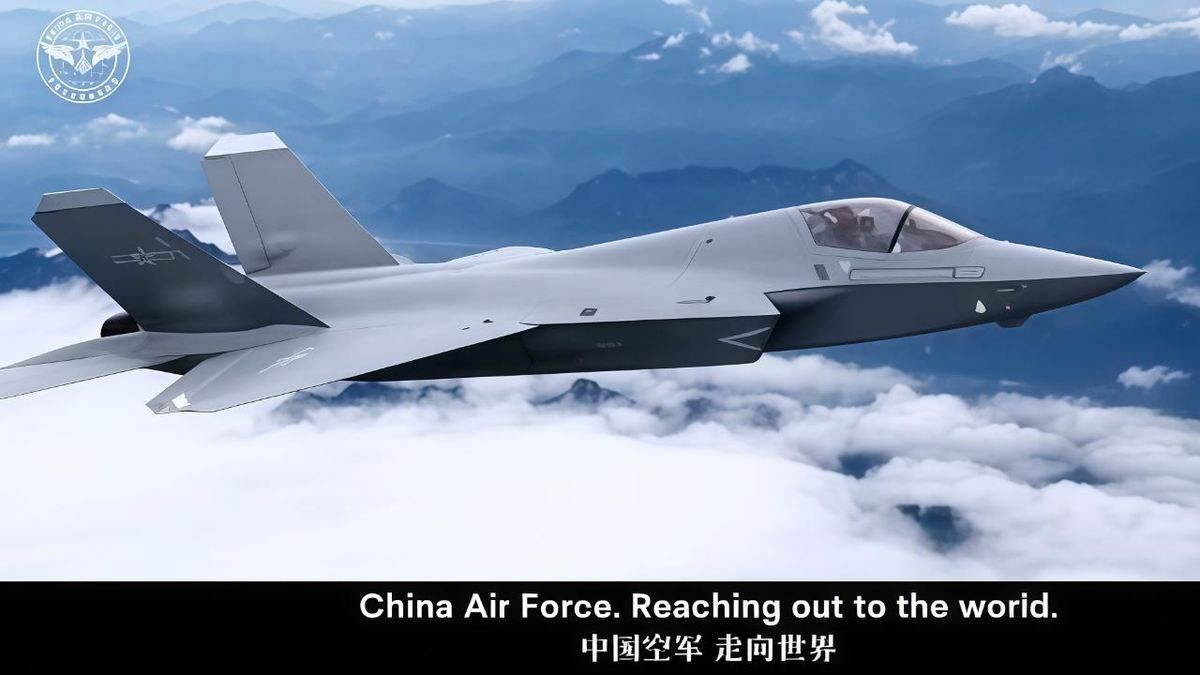
The People's Liberation Army Air Force (PLAAF), often referred to as the PLA Air Force, has officially launched its presence on major international social media platforms, including Facebook, YouTube, and X (formerly Twitter). Operating under the handle “China Air Force,” these accounts aim to directly engage with global audiences, sharing what the PLA describes as its stories, authoritative information on international exchanges, humanitarian operations, and joint exercises. The stated goal is to foster dialogue and exchanges with air forces worldwide, coinciding with the 77th anniversary of the PLAAF's establishment.
This move by the PLA Air Force is far more than a simple public relations exercise; it represents a calculated evolution in Beijing's approach to global power projection and information warfare. In an era where narratives are as potent as missiles, direct engagement on international social media platforms allows China to bypass traditional media filters and directly shape global perceptions of its rapidly modernizing military.
At its core, this is about narrative control. For years, China has struggled with its international image, particularly concerning its military activities in the South China Sea, its stance on Taiwan, and its broader human rights record. By establishing direct channels, the PLAAF can curate its own image, presenting itself as a responsible, modern, and capable force engaged in benign activities like humanitarian aid and international cooperation. This is a deliberate attempt to build soft power around a rapidly expanding hard power capability.
Crucially, it is a direct challenge to the established information dominance of Western military powers, particularly the United States. The US military and its allies have long used social media for recruitment, public relations, and strategic communication. Beijing is now stepping onto the same digital battlefield, seeking to normalize its military presence and counter existing negative narratives. This isn't merely about informing; it's about influencing. By consistently showcasing images of advanced aircraft, joint drills, and personnel, the PLAAF reinforces its growing technological sophistication and operational reach, both to potential adversaries and to nations it seeks to influence.
The timing is also significant. Launching these accounts on the PLAAF's 77th anniversary underscores a sense of pride and maturity in its development. It signals to both domestic and international audiences that the PLAAF is a confident, established global actor. For domestic consumption, even though most Chinese citizens cannot access these international platforms, state media will undoubtedly highlight the global reach and perceived international acceptance of the
The PLA Air Force launched these accounts to share its stories, authoritative information on international exchanges, humanitarian operations, and joint exercises, aiming to foster dialogue and improve its global image and narrative control.
This move allows China to directly control its military narrative, potentially influencing international perceptions and engaging in information warfare. It raises concerns about transparency, the spread of state-curated content, and the psychological impact on populations in contested regions.
The paradox is that while the PLA Air Force uses international social media platforms to engage global audiences, the Chinese government simultaneously blocks its own citizens from accessing these same platforms through its 'Great Firewall,' highlighting a double standard in information control.
Editor's Note: Analysis based on interpreting the strategic intent and potential impact of a state military's social media presence, drawing on established principles of information warfare and geopolitical communication.
Source referenced: CGTN
This brief was synthesized by our Editorial Engine and reviewed by The Ground Narrative team.


