TRENDING

Thursday, 12 November 2026
----------------------
2 Jumada Al-Thani 1448 AH
A planned power link between Greece and Cyprus has become a flashpoint as Ankara demands control over the seabed. The clash reveals how maritime law, energy security and regional rivalries intersect far below the surface.
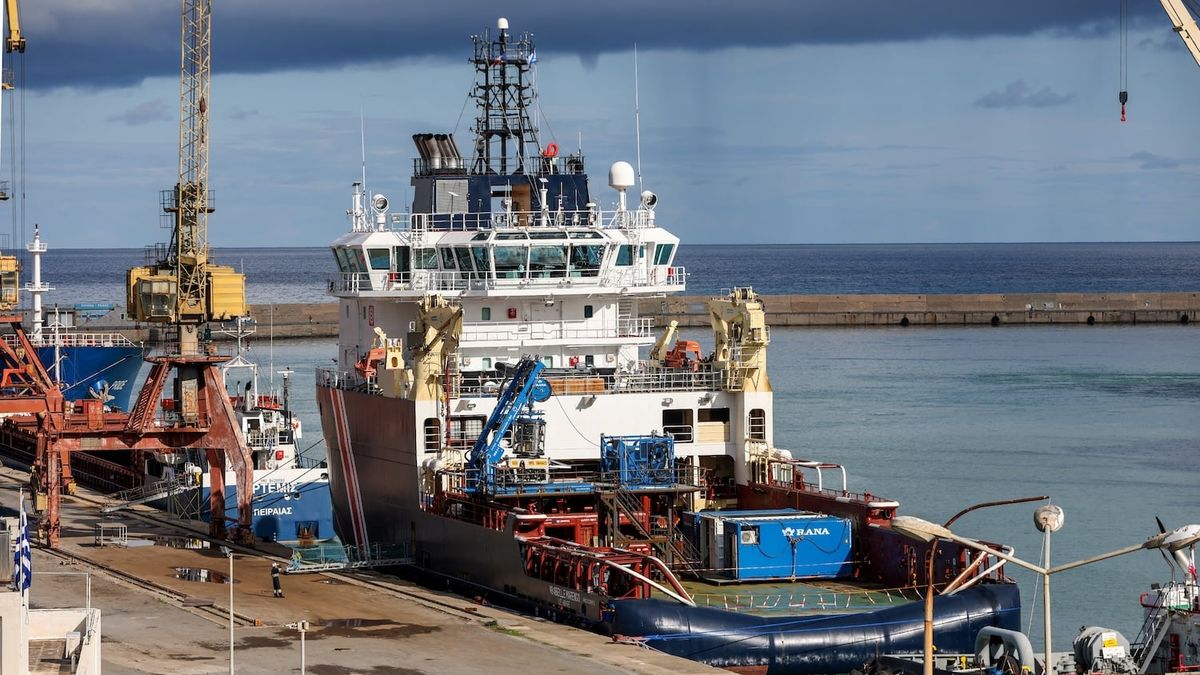
The Great Sea Interconnector – a high‑voltage submarine cable meant to carry renewable electricity from Greece to Cyprus – was slated to begin installation in late 2026. Within weeks, Turkey issued a formal notice demanding permission for any work that crosses what it claims as its exclusive economic zone, despite the route lying outside the limits defined by the United Nations Convention on the Law of the Sea (UNCLOS). Greek authorities responded with their own permit, and Ankara counter‑notified, warning that any attempt to proceed without Turkish consent would be treated as a violation of its sovereign rights.
Turkey’s objection is not about a single cable; it is a lever in a broader contest over maritime boundaries in the Eastern Mediterranean. Since refusing to sign UNCLOS, Ankara has built a parallel legal framework that expands its claimed exclusive economic zone (EEZ) to cover large swaths of the Aegean and the eastern Mediterranean. This expansion serves three intertwined goals. First, it creates bargaining chips for energy negotiations – Turkey can pressure Greece, Cyprus and even Israel to route gas and electricity through Ankara‑controlled pipelines. Second, it reinforces Ankara’s domestic narrative of defending Turkish waters against what it portrays as Greek island‑centric entitlement. Third, it signals to other revisionist powers that the post‑World‑War II maritime order is negotiable.
The EU has funded a substantial portion of the interconnector, viewing it as a climate‑friendly bridge that reduces dependence on fossil‑fuel imports from the Persian Gulf. For European policymakers, the project also represents a strategic counterweight to Turkish influence in the region. Yet the EU’s leverage is limited: it cannot compel a non‑signatory of UNCLOS to obey its rulings, and it must balance the risk of antagonising a NATO ally whose military contributions remain valuable in other theaters.
Economic incentives further complicate the picture. Cable‑laying firms operate on thin margins and rely on clear legal certainty. The requirement to file notices with a state that does not recognise the prevailing international regime adds a layer of risk that could deter investors, delay construction, and raise costs for end‑users. Meanwhile, Turkish energy firms stand to profit from an alternative pipeline that would deliver Turkish‑generated electricity to the Turkish‑controlled part of Cyprus, undercutting the interconnector’s market share.
Residents of Cyprus and the Greek islands have long endured high electricity prices, a legacy of imported fossil fuels and limited grid interconnections. The interconnector promises cheaper, greener power and greater resilience against supply shocks. Delays driven by the maritime dispute keep those price premiums in place, burdening households and small businesses that already face inflationary pressures.
The Aegean’s fishing villages depend on clear, predictable maritime zones. Turkey’s claim to a broader EEZ threatens to redraw fishing boundaries overnight, potentially criminalising traditional catches. Enforcement actions – whether naval patrols or coast‑guard inspections – could lead to arrests, fines, and a chilling effect on livelihoods that have survived for generations.
Both Greece and Turkey are NATO members, yet the dispute pits them against each other in a domain that NATO’s collective defence clause does not explicitly cover. Any naval confrontation over the cable could trigger a chain reaction, pulling in allied forces, raising insurance premiums for commercial shipping, and diverting resources from other security priorities. The indirect cost would be borne by taxpayers across the alliance, not just the immediate belligerents.
Official statements from Ankara and Athens focus on legal technicalities, but they omit the strategic calculus behind the posturing. Turkey is simultaneously courting Libya’s eastern government to cement a maritime boundary that flouts UNCLOS, a move that expands its influence southward and creates a precedent for other non‑signatories. The article also downplays the role of NATO – the alliance has refrained from mediating, preferring to avoid a split between two members, even as the risk of a flashpoint grows.
Corporate actors are another invisible layer. Cable manufacturers and installation vessels are forced to navigate a legal minefield where a single misstep could result in a seizure or a costly legal battle. Their risk assessments are not public, yet they shape the timeline and feasibility of the project. Moreover, environmental NGOs have raised concerns about seabed disturbance, but these voices are largely eclipsed by the geopolitical narrative, leaving potential ecological impacts unexamined.
Finally, the broader erosion of maritime norms is presented as a series of isolated incidents – Turkey here, China there – without linking them to a systemic weakening of the rules that have underpinned global trade for decades. The cumulative effect is a shift toward “undersea anarchy,” where powerful states assert de‑facto control over critical infrastructure, leaving smaller actors and the global commons vulnerable.
Watch for a legal challenge at the International Tribunal for the Law of the Sea (ITLOS). Both Greece and the EU have hinted at filing a case that could force Turkey to recognise the interconnector’s route as lawful under customary international law, even if Ankara never signs UNCLOS. Simultaneously, monitor NATO’s internal discussions; a decision to issue a joint statement or to deploy assets to protect the cable would signal a new willingness to enforce maritime order among allies.
Another indicator will be the reaction of energy markets. If Turkish pipeline proposals gain traction, the price differential between Turkish‑supplied electricity and the renewable interconnector could widen, influencing consumer bills and political pressure in Cyprus. Finally, keep an eye on parallel undersea projects – such as the proposed EuroAsia Gas Link – because a pattern of delayed or aborted installations would confirm that the maritime rulebook is being rewritten in real time.
The next months will reveal whether the dispute remains a diplomatic spat over paperwork or escalates into a tangible contest for control of the dark waters that power Europe’s energy transition.
Turkey argues the cable crosses what it considers its exclusive economic zone, even though the route lies outside the 12‑nautical‑mile limit recognised by UNCLOS. The claim is part of a broader strategy to expand Turkish maritime jurisdiction.
Delays keep electricity prices high for Cyprus and Greek islands, strain local economies that rely on affordable power, and could push the region toward more fossil‑fuel imports, undermining climate goals.
Turkey is not a party to UNCLOS, so the treaty’s dispute‑resolution mechanisms have limited reach. However, Greece and the EU could pursue a case at the International Tribunal for the Law of the Sea, seeking a ruling based on customary international law.
Source referenced: FOREIGNPOLICY
This brief was synthesized by our Editorial Engine and reviewed by The Ground Narrative team.


