TRENDING

Wednesday, 21 October 2026
----------------------
10 Jumada Al-Awwal 1448 AH
In Gaza, a woman's journey to recovery from an Israeli air strike serves as a poignant reminder of the devastating human cost of conflict and the long road to healing.
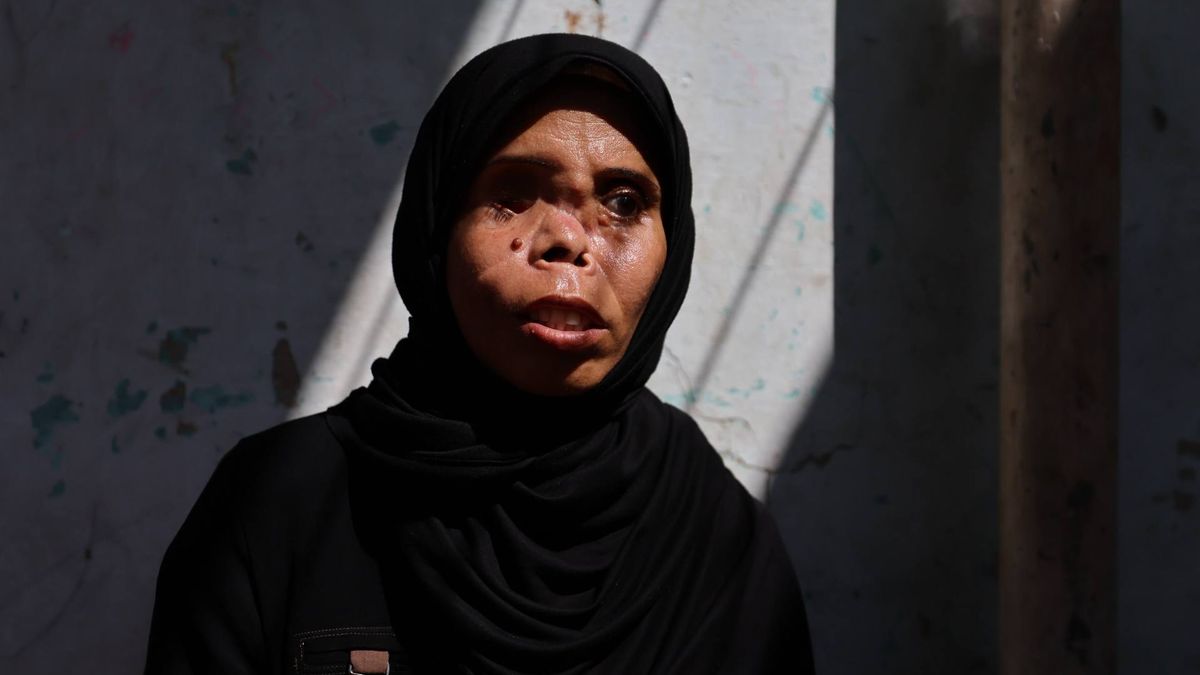
Gaza has been a focal point of international attention in recent years, with the Israeli-Palestinian conflict resulting in widespread destruction, displacement, and loss of life. The latest chapter in this ongoing saga is the story of Najwa Abu Atiwi, a 42-year-old woman who lost an eye and her young daughter in an Israeli air strike in September 2024.
Najwa's story is a powerful reminder of the human cost of conflict and the long road to recovery that lies ahead for those affected. Her journey began with a series of surgeries and treatments, but it soon became clear that her injuries were more complex than initially thought. Metal plates and meshes were placed in her face, and she continues to struggle to open her jaw, speak, and eat.
The challenges of treating complex injuries like Najwa's are compounded by the lack of resources, equipment, and medical supplies in Gaza. Dr. Ayman Saidam, a consultant in oculoplastic surgery, notes that treating such injuries requires a series of interventions, each stage depending on the success of the previous one. However, the shortages of certain materials used in surgeries, including screws and eye drops, can delay treatment stages and slow the healing process.
These shortages are a direct result of Israeli restrictions on imports into Gaza, which have continued despite an October "ceasefire" that Israel regularly violates. The World Health Organization estimates that about a quarter of recorded injuries in Gaza are classified as life-changing, with more than 50,000 injuries requiring long-term rehabilitation services.
Najwa's story is not an isolated case. Many people who suffered facial disfigurement caused by bombardment, including severe burns, facial fractures, loss of an eye, or shrapnel injuries, face psychological struggles that can be as painful as their physical wounds. Dr. Hassan Abu Shawish, a psychologist at the Deir el-Balah Mental Health Clinic, notes that such injuries can lead to post-traumatic stress disorder (PTSD), anxiety disorders, depression, and body image disturbance.
Psychological care is an essential part of recovery, helping patients adapt to physical changes, rebuild their confidence, and return to society. Najwa's case is particularly challenging, as she has had to cope with the loss of her daughter, the dramatic change in her facial appearance, and the physical pain of her injuries.
Najwa's journey to recovery is a long and difficult one. She is still waiting for the opportunity to travel for specialized treatment, and she continues to live with pain, difficulty moving, and challenges reaching hospitals. Her story serves as a poignant reminder of the human cost of conflict and the need for a lasting solution to the Israeli-Palestinian conflict.
As Najwa waits for the chance to travel and complete her treatment, she holds on to the hope that she will one day be able to regain some more of what the war has taken from her. Her story is a powerful reminder of the resilience of the human spirit and the importance of supporting those affected by conflict.
The story of Najwa Abu Atiwi serves as a powerful reminder of the need for a lasting solution to the Israeli-Palestinian conflict. The human cost of conflict is a stark reminder of the devastating consequences of ongoing violence and the importance of working towards a peaceful resolution.
In the meantime, it is essential to support those affected by conflict, including providing access to medical care, psychological support, and other essential services. Najwa's story is a powerful reminder of the importance of prioritizing human life and dignity in the face of conflict.
Editor's Note: The analysis of the situation is based on available information and may not be comprehensive or up-to-date.
Source referenced: ALJAZEERA
This brief was synthesized by our Editorial Engine and reviewed by The Ground Narrative team.