TRENDING

Sunday, 25 October 2026
----------------------
14 Jumada Al-Awwal 1448 AH
Massive wildfires in southwest France, among the largest since WWII, have forced 220,000 evacuations and prompted civilian aid from farmers. The crisis underscores the escalating impact of climate change and tests France's national resilience and emergency response capabilities.
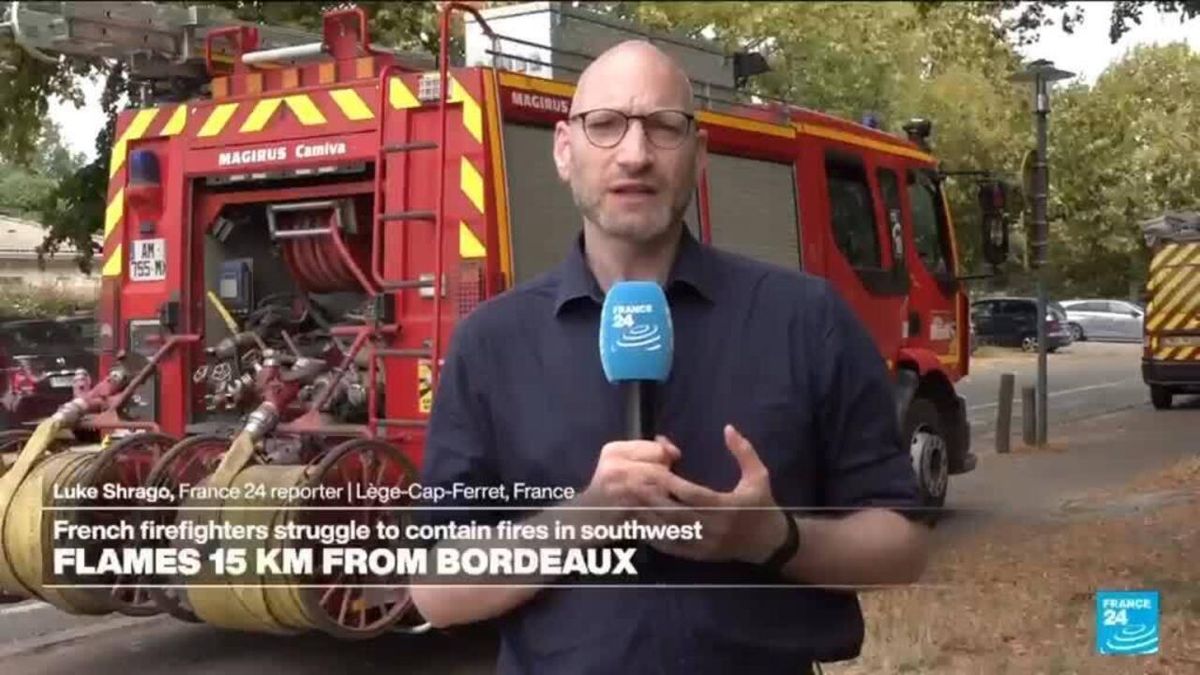
The southwest of France is grappling with an unprecedented wildfire crisis, described as among the largest the nation has experienced since World War II. This escalating environmental disaster, centered around the Bordeaux region and particularly impacting areas like Lège-Cap-Ferret, has necessitated the evacuation of over 220,000 people and consumed more than 42,000 hectares of land. The severity of the situation has prompted an extraordinary civilian response, with local French farmers deploying their water tankers to support exhausted firefighters, underscoring the immense strain on national emergency services.
The wildfires, which have been raging since at least July 24, 2026, represent a significant challenge to France's national resilience and disaster response capabilities. The sheer scale of the destruction, encompassing vast tracts of forest and threatening residential areas, has overwhelmed conventional firefighting resources. The interior minister's assessment that the "situation 'remains very unfavourable'" highlights the persistent difficulties faced by emergency personnel, exacerbated by factors such as extremely high winds, which rapidly spread the flames across dry landscapes. The involvement of civilian farmers, who are providing crucial logistical support by ensuring a continuous supply of water for firefighting hoses, illustrates a critical community-level response to a crisis that has surpassed typical emergency thresholds. This grassroots effort is vital in sustaining the prolonged battle against the infernos, demonstrating a collective societal commitment to mitigating the disaster's impact.
The French wildfires are not merely a localized environmental event but carry significant geopolitical and economic implications. Economically, the destruction of tens of thousands of hectares of forest represents a substantial loss of natural capital. The Bordeaux region, renowned globally for its wine industry and tourism, faces potential long-term damage to its agricultural sector and a severe blow to its tourism economy. Properties, infrastructure, and livelihoods are directly threatened, leading to considerable reconstruction costs and economic disruption. The mass evacuation of over 220,000 individuals also imposes significant logistical and social costs, straining public services and potentially causing prolonged displacement.
From a geopolitical perspective, these fires underscore the escalating impact of climate change on developed nations. France, a key member of the European Union and a G7 country, experiencing such a catastrophic event serves as a stark reminder of the global nature of climate vulnerability. The crisis could prompt intensified discussions within the EU regarding enhanced cross-border cooperation in disaster management, the pooling of resources, and the acceleration of climate adaptation strategies. It also highlights the increasing pressure on national governments worldwide to invest in robust climate resilience infrastructure and early warning systems. The strain on France's emergency services could also lead to a re-evaluation of national security priorities, recognizing climate-induced disasters as a significant non-traditional security threat that demands substantial resource allocation and strategic planning.
The explicit mention of "climate change" as a contributing factor in the article is crucial. The increasing frequency and intensity of extreme weather events, including heatwaves and droughts that create tinderbox conditions, are directly linked to global climate patterns. For France, a country committed to the Paris Agreement, these fires serve as a tangible manifestation of the challenges posed by a warming planet. The long-term consequences extend beyond immediate damage, potentially altering ecosystems, impacting biodiversity, and contributing to further desertification in vulnerable regions.
The crisis also raises questions about land management practices, urban planning in fire-prone areas, and the effectiveness of current prevention strategies. As such events become more common, the need for comprehensive national and international strategies to mitigate climate change and adapt to its inevitable impacts becomes paramount. The collective effort seen in the French farmers' response, while commendable, also signals a potential future where civilian populations may be increasingly called upon to supplement overstretched state resources in the face of climate-driven emergencies. This necessitates a broader societal discussion on shared responsibility and preparedness for a future marked by greater environmental volatility.
The ongoing wildfire crisis in southwest France is a multifaceted challenge, exposing vulnerabilities in national infrastructure, testing community resilience, and highlighting the profound and immediate impacts of climate change. Beyond the immediate devastation and the heroic efforts of firefighters and civilian volunteers, the event serves as a critical case study for how developed nations must adapt to and mitigate the escalating risks posed by a changing climate. The economic fallout, social disruption, and the imperative for enhanced international cooperation in disaster response will undoubtedly shape policy discussions in France and across Europe for years to come, reinforcing the urgent need for proactive climate action and robust national preparedness.
Source referenced: FRANCE24
This brief was synthesized by our Editorial Engine and reviewed by The Ground Narrative team.


