TRENDING

Sunday, 4 October 2026
----------------------
23 Rabi' Al-Thani 1448 AH
France's support for the American Revolution was a calculated act of realpolitik, driven by centuries of rivalry with Great Britain and a desire for revenge after the Seven Years' War. This strategic intervention, coupled with the influence of Enlightenment ideals, profoundly altered the course of the war and reshaped global power dynamics.
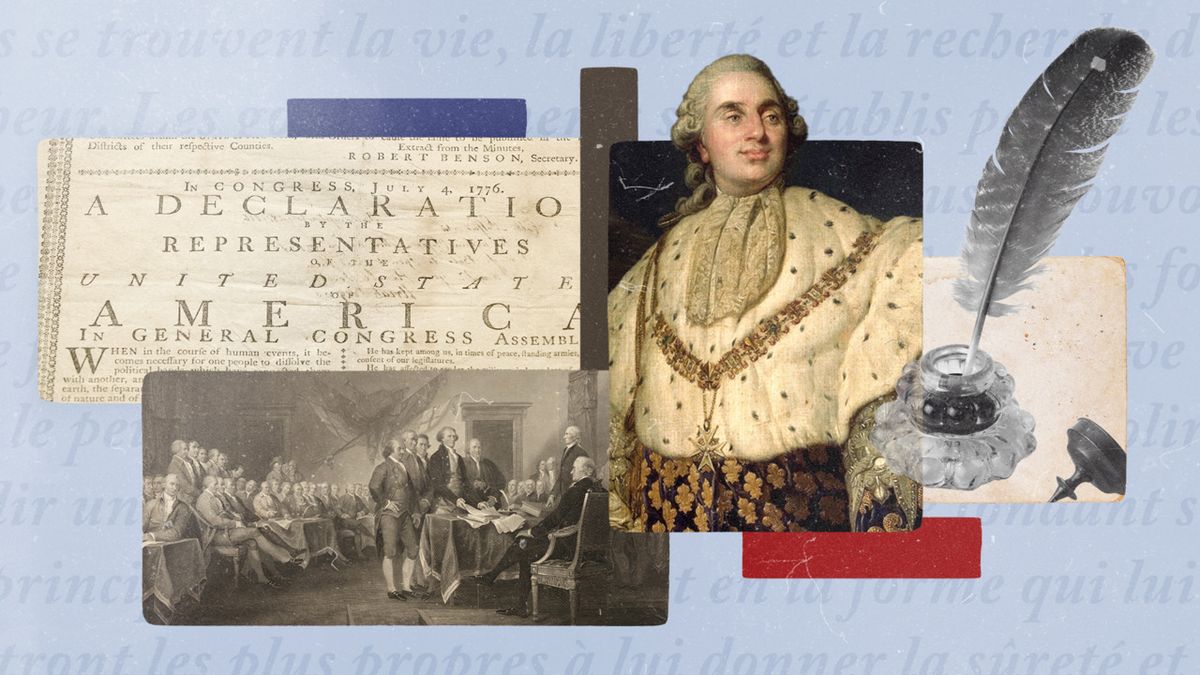
The 250th anniversary of American independence in 2026 prompts a critical re-examination of the foundational alliances that shaped the nascent United States. Central to this narrative is France's decisive, yet often complex, support for the American revolutionaries. Far from a purely ideological endorsement of liberty, France's intervention was primarily a calculated act of realpolitik, driven by centuries of intense geopolitical rivalry with Great Britain, coupled with a secondary, albeit influential, undercurrent of Enlightenment ideals. This strategic calculus by King Louis XVI and his foreign minister, Charles Gravier, Count of Vergennes, profoundly altered the course of the American War of Independence and reshaped the global balance of power.
The roots of French involvement stretch back decades, even centuries, before the Declaration of Independence on July 4, 1776. Great Britain and France were the preeminent European colonial powers, locked in a relentless struggle for global hegemony across North America, the Caribbean, and India. This competition culminated in the Seven Years' War (1756-1763), a global conflict that proved catastrophic for France. The Treaty of Paris in 1763 stripped France of vast territories, including Canada, parts of Louisiana, and significant holdings in India and the West Indies. This defeat was a profound national humiliation for the French monarchy, fostering an enduring desire for revenge and a strategic imperative to prevent Britain from achieving unchallenged global dominance.
When tensions escalated between the Thirteen Colonies and the British Crown in the 1770s, culminating in the first clashes at Lexington, Massachusetts, in 1775, Versailles saw a golden opportunity. For King Louis XVI, described as a pacifist but acutely aware of his kingdom's weakened state and the need to rebuild its navy, the American rebellion offered a low-risk, high-reward pathway to undermine his rival. As historian Émilie Mitran notes, "France had only one objective on its mind: reclaiming its territory and undermining the English." The prospect of Britain losing a significant portion of its empire was viewed as fitting retribution for France's own losses in 1763.
France's initial approach was marked by extreme caution and a striking paradox. An absolute monarchy supporting a rebellion against a fellow monarch was a delicate balancing act. Louis XVI could not officially endorse the insurgents without potentially legitimizing revolutionary sentiments within his own kingdom. Consequently, French support began covertly. From May 1776, even before the Declaration of Independence, Vergennes authorized the secret shipment of arms, ammunition, and supplies to the American rebels through a shell company managed by Pierre-Augustin Caron de Beaumarchais. This "shadow diplomacy" allowed France to exploit British vulnerabilities without prematurely committing to a full-scale war, which could have been another financial and diplomatic disaster given France's still-recovering economy.
This period also saw the influence of Enlightenment ideals permeating Parisian intellectual circles. Philosophers like Montesquieu, Voltaire, and Rousseau had long debated concepts of liberty, separation of powers, and popular sovereignty – ideas that resonated deeply with American leaders like Benjamin Franklin, who arrived in Paris in December 1776 as a diplomat seeking open French support. Franklin's charisma and embodiment of these new American ideals captivated the French elite, adding an ideological layer to the purely strategic motivations of the monarchy. As Steven Ekovich highlights, "Two sets of logic coexisted from the beginning: The king acts against Great Britain, while a portion of the French elite supports the Americans out of conviction."
Despite the covert aid and growing public sympathy, Vergennes remained cautious, waiting for a decisive American military success to justify a formal alliance. That moment arrived in October 1777 with the Battle of Saratoga, where American forces inflicted a crushing defeat on the British, forcing the surrender of 6,000 soldiers. This victory was the crucial turning point, convincing Versailles that the American rebels possessed the military capability to prevail.
A few months later, France signed a formal alliance with the United States and officially entered the war against Great Britain. This commitment transformed the conflict from a colonial rebellion into a global war, drawing in other European powers like Spain and the Netherlands. French naval power, military expertise, and financial aid proved indispensable to the American cause, culminating in the decisive Franco-American victory at Yorktown in 1781.
France's intervention in the American Revolution was a masterclass in geopolitical maneuvering. It successfully weakened Great Britain, avenged past defeats, and prevented its rival from consolidating global dominance. While the financial strain of the war would later contribute to France's own revolutionary upheaval, the immediate impact was a significant shift in the global balance of power. The alliance forged during this period laid the groundwork for the enduring, albeit sometimes strained, relationship between the United States and its "oldest ally." The story of French support for American independence is a powerful reminder that international relations are often driven by a complex interplay of strategic self-interest and, occasionally, shared ideals.
Source referenced: FRANCE24
This brief was synthesized by our Editorial Engine and reviewed by The Ground Narrative team.