TRENDING

Sunday, 25 October 2026
----------------------
14 Jumada Al-Awwal 1448 AH
Massive wildfires continue to rage near Bordeaux, France, prompting the evacuation of hundreds of thousands and highlighting the escalating challenge of climate-driven environmental disasters in Europe. The ongoing crisis underscores significant economic, social, and ecological vulnerabilities.
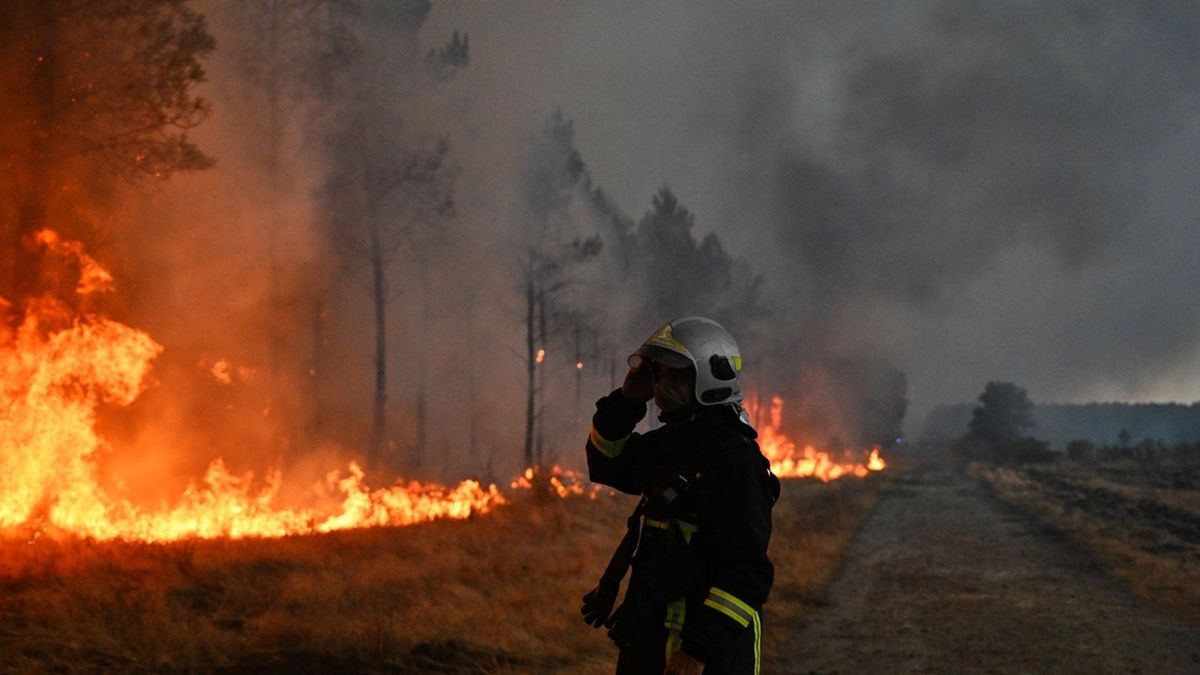
The ongoing battle against extensive wildfires near Bordeaux, France, represents a significant environmental and humanitarian crisis, underscoring the escalating challenges posed by climate change to European nations. As of July 27, 2026, firefighters continue to combat blazes that have already necessitated the evacuation of hundreds of thousands of residents from southwestern France, including approximately 220,000 people across the broader affected regions. This event is not merely a localized disaster but a potent symbol of broader geopolitical and environmental vulnerabilities.
The fires, concentrated in the Gironde department near the economically vital city of Bordeaux, have forced unprecedented mass evacuations. The sheer number of displaced individuals—tens of thousands from immediate vicinities and hundreds of thousands across the wider southwest—highlights the severe and immediate threat to human life and property. Emergency services are stretched thin, deploying substantial resources to contain the infernos and protect communities. The direct impact includes the destruction of vast tracts of forests, agricultural land, and potentially residential areas, leading to significant economic losses and profound social disruption for those affected. The psychological toll on evacuated populations, facing uncertainty about their homes and livelihoods, is also considerable.
While the immediate cause of specific ignitions can vary, the scale, intensity, and increasing frequency of these wildfires are inextricably linked to the broader phenomenon of climate change. Southern Europe, including France, has experienced a discernible trend of hotter, drier summers, prolonged heatwaves, and reduced rainfall, creating ideal conditions for rapid fire spread. This climatic shift transforms what might once have been manageable seasonal fires into uncontrollable conflagrations with devastating consequences. From a geopolitical perspective, climate change is no longer a distant environmental concern but an immediate security and economic threat, directly impacting national resilience, resource management, and public safety infrastructure. The "why" of these fires extends beyond local conditions to global atmospheric changes.
The economic fallout from the Bordeaux wildfires is multifaceted and substantial. The region is renowned for its viticulture, and damage to vineyards, even if indirect, could have long-term implications for France's prestigious wine industry. Beyond agriculture, the destruction of forests impacts timber industries, biodiversity, and carbon sequestration efforts. Tourism, a vital sector for many parts of France, will also suffer from the environmental degradation and the perception of a region prone to such disasters. The cost of firefighting operations, emergency relief, and eventual reconstruction will place a significant burden on national and local budgets, potentially diverting funds from other critical public services or development projects. This economic strain can have ripple effects, influencing national fiscal policy and potentially requiring international assistance.
Mass evacuations and the destruction of communities test the social fabric and the effectiveness of governance. French authorities face the complex logistical challenge of housing, feeding, and supporting hundreds of thousands of displaced citizens, while simultaneously coordinating a massive firefighting effort. The ability of the state to protect its citizens and manage large-scale disasters is a critical measure of its legitimacy and capacity. Prolonged displacement and the slow pace of recovery can lead to social unrest, increased pressure on public services in host communities, and a sense of vulnerability among the populace. These events underscore the need for robust disaster preparedness, effective communication strategies, and resilient infrastructure.
The wildfires in France are not an isolated incident but part of a wider pattern of extreme weather events affecting Europe. Countries across the Mediterranean basin, from Spain and Portugal to Greece and Italy, have increasingly grappled with similar large-scale fires, droughts, and heatwaves. This shared vulnerability necessitates greater European cooperation on civil protection, resource sharing, and climate adaptation strategies. The European Union's Civil Protection Mechanism often plays a crucial role in coordinating international assistance, providing aircraft, firefighters, and expertise. Such events highlight the interconnectedness of European security and the collective challenge of building climate resilience across the continent. They also serve as a stark reminder to the international community of the urgent need for global climate action and investment in adaptation measures.
Looking ahead, the recurring nature of these intense wildfires demands a strategic reassessment of land management, urban planning, and emergency response protocols. France, like other vulnerable nations, must invest further in predictive modeling, early warning systems, and proactive forest management techniques, including controlled burns and firebreaks. There is also a growing imperative to integrate climate change adaptation into national security frameworks, recognizing environmental disasters as direct threats to national stability and economic prosperity. The events near Bordeaux serve as a critical case study for how developed nations are increasingly confronted with the tangible and costly consequences of a changing climate, necessitating long-term strategic planning and significant public investment to mitigate future risks and enhance societal resilience.
Source referenced: ALJAZEERA
This brief was synthesized by our Editorial Engine and reviewed by The Ground Narrative team.


