TRENDING

Monday, 5 October 2026
----------------------
24 Rabi' Al-Thani 1448 AH
The European Union's pursuit of technological sovereignty is a direct response to the Trump administration's policies, which have created a trust deficit and driven Europe to seek self-sufficiency in key technologies.
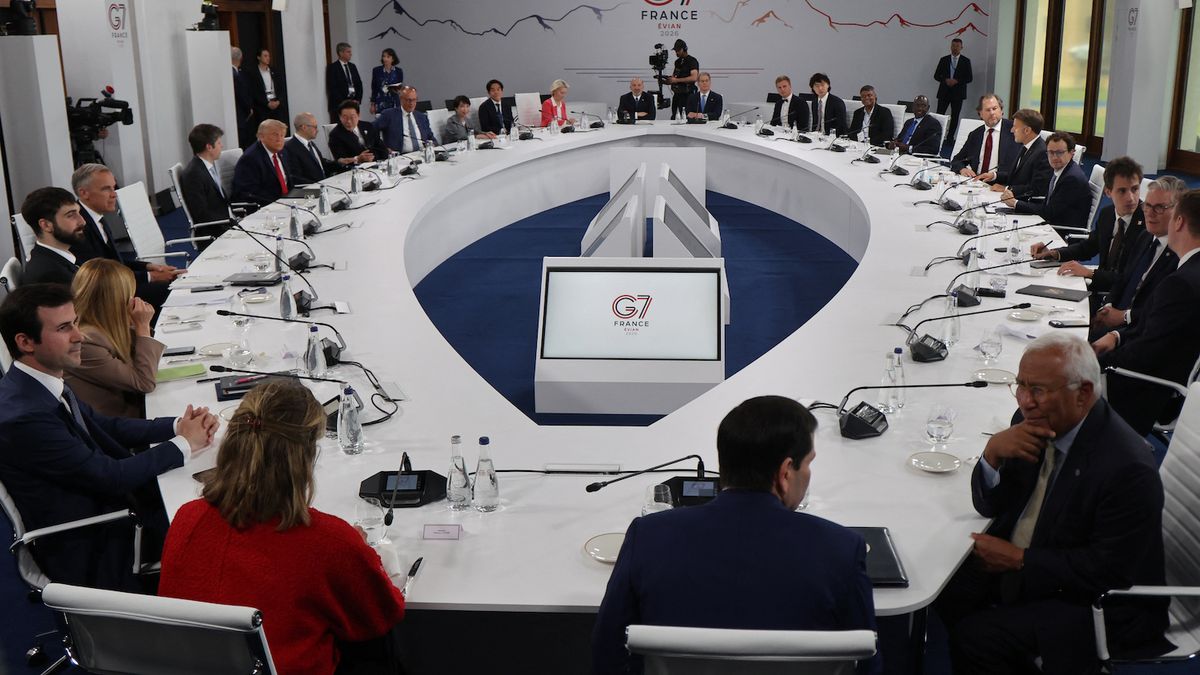
The European Union's (EU) pursuit of technological sovereignty is a direct response to the Trump administration's policies, which have created a trust deficit and driven Europe to seek self-sufficiency in key technologies. The EU's new "tech sovereignty" agenda, anchored in a package released on June 3, aims to strengthen its competitiveness, strategic autonomy, and geoeconomic position in artificial intelligence (AI) by developing more of its own capacity in semiconductor manufacturing, cloud computing, and AI model development.
The trans-Atlantic challenge that Europe now faces on technology is the same as the one it faces in defense: it has been addicted to U.S. supply for so long that it cannot quit cold turkey, and its homegrown competitors in many advanced technologies remain significantly behind U.S. alternatives. European companies account for less than 15 percent of the continent's cloud computing market, with the rest captured largely by U.S. companies such as Amazon, Google, and Microsoft.
The Trump administration's policies have created a trust deficit in Europe, with U.S. officials repeatedly slamming European tech regulations, accusing the EU of using those regulations to censor free speech. The administration has also threatened a new 100 percent tariff on any European countries that impose digital service taxes on U.S. companies and abruptly cut off all non-U.S. citizens — including those from allied countries — from using AI company Anthropic's latest large language models.
The EU's response to the Trump administration's policies is to pursue technological sovereignty, which means being proactive when it comes to innovation and being sure that it understands who its friends and allies are and where the danger lies. The EU's chief tech regulator, Roberto Viola, has signed the EU on to the Trump administration's Pax Silica initiative, which is aimed at securing technological supply chains, but has also sought to lay out the EU's new "tech sovereignty" agenda.
The trust deficit created by the Trump administration's willingness to weaponize dependencies may be difficult for Europe to overcome. However, the EU's pursuit of technological sovereignty is not an effort to wean itself off dependence on U.S. technology, but rather to be proactive when it comes to innovation and to protect its digital independence. The EU and the U.S. can still collaborate on technology, but the EU must be cautious not to fall into the trap of trying to recreate everything in Europe, as this would be unrealistic and counterproductive.
The EU's pursuit of technological sovereignty is a response to the Trump administration's policies, which have created a trust deficit and driven Europe to seek self-sufficiency in key technologies. The EU's new "tech sovereignty" agenda aims to strengthen its competitiveness, strategic autonomy, and geoeconomic position in AI by developing more of its own capacity in semiconductor manufacturing, cloud computing, and AI model development. The EU and the U.S. can still collaborate on technology, but the EU must be cautious not to fall into the trap of trying to recreate everything in Europe.
Editor's Note: The analysis is based on publicly available information and does not reflect any confidential or classified information.
Source referenced: FOREIGNPOLICY
This brief was synthesized by our Editorial Engine and reviewed by The Ground Narrative team.


