TRENDING

Monday, 5 October 2026
----------------------
24 Rabi' Al-Thani 1448 AH
Ethiopia's civil war has reignited in the Tigray region, threatening to draw in neighboring states and unravel the fragile stability of the Horn of Africa. The collapse of a four-year peace deal highlights the enduring power struggles and human costs of regional rivalries.
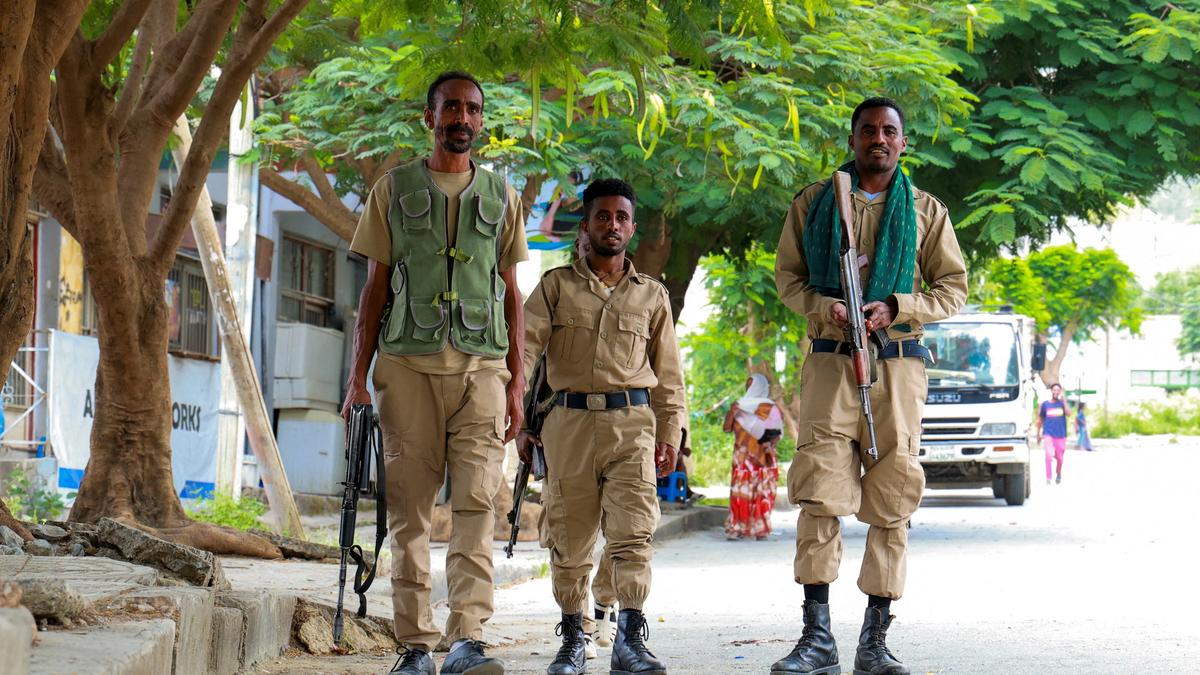
After four years of uneasy peace, Ethiopia's Tigray region has plunged back into full-blown civil war. The Tigray People's Liberation Front (TPLF) launched coordinated attacks, seizing three airports and forming alliances with other armed groups, including Oromo Liberation Army and Amhara Fano nationalists, to challenge Prime Minister Abiy Ahmed's federal government. Federal forces have responded, claiming to retake strategic towns, as the conflict rapidly escalates, threatening to engulf a region already grappling with instability.
This renewed conflict is not a spontaneous eruption but the culmination of deep-seated power struggles and unaddressed grievances following the 2022 Pretoria Agreement. The TPLF, once a dominant force in Ethiopian politics, felt sidelined by the deal, which mandated disarmament and reintegration but ultimately led to their ban from national elections. For the federal government, the TPLF's re-establishment of its pre-war legislative council was an act of defiance against central authority. Regionally, Eritrea, initially an ally of Abiy's government against the TPLF, has now reportedly shifted its allegiance, frustrated by its exclusion from the Pretoria Agreement talks and Ethiopia's pursuit of Red Sea access through its territory. This complex web of alliances is further complicated by historical rivalries: Egypt and Sudan, with their own disputes over the Grand Ethiopian Renaissance Dam and regional influence, are accused by Ethiopia of supporting the rebel alliance – claims they deny. The United States, in a move ostensibly aimed at securing the Red Sea against Houthi attacks, recently lifted sanctions on Eritrea's ruling party and military, a decision that could inadvertently embolden regional actors and escalate proxy conflicts rather than contain them.
While political and military leaders strategize, it is the ordinary citizens who bear the immediate and devastating consequences. The previous Tigray war claimed an estimated 600,000 lives, and the resurgence of fighting promises a similar, if not worse, humanitarian catastrophe. Beyond direct casualties, the conflict coincides with a powerful El Niño event, threatening crop production and exacerbating an already precarious food security situation for millions. Displacement, both internal and across borders, will surge, adding to the immense pressure on neighboring countries like Chad, which is already struggling with a massive influx of Sudanese refugees. Ethiopia's decision to withdraw over 3,000 troops from Somalia to bolster its domestic forces also creates a security vacuum, allowing extremist groups like al-Shabab to expand their control, further destabilizing the wider region and creating new humanitarian crises.
What is often downplayed or omitted in official statements is the extent to which external strategic interests fuel internal conflicts. The US decision to lift sanctions on Eritrea, framed as a move for Red Sea security, is a high-stakes gamble. It prioritizes maritime stability over regional peace, potentially empowering a regime with a history of human rights abuses and risking a larger proxy war in the Horn of Africa. Governments involved, both regional and international, rarely acknowledge the full human cost of their strategic maneuvers, nor the long-term destabilization effects of arming or tacitly supporting one faction over another. The narrative often focuses on national security or counter-terrorism, while the suffering of civilians, the disruption of livelihoods, and the erosion of social fabric remain largely unaddressed in official discourse. The accusations of foreign support for rebel groups, even if denied, highlight the deep mistrust and the undercurrent of external interference that complicates any path to genuine peace.
As the conflict intensifies, several critical dynamics bear close watching. The immediate concern is the humanitarian response: how quickly will aid organizations be able to access affected areas, and will the international community mobilize sufficient resources to avert widespread famine? Regionally, observe the solidification of alliances and counter-alliances. Will Eritrea fully commit to the TPLF, and how will this impact relations between Addis Ababa and Asmara? Will Egypt and Sudan be drawn in more directly, escalating the conflict beyond Ethiopia's borders? The effectiveness of the US's Red Sea strategy, now intertwined with the Horn of Africa's internal dynamics, will also be a key indicator of future stability. Finally, the vacuum created in Somalia by Ethiopia's troop withdrawal could see al-Shabab make significant territorial gains, transforming a local conflict into a broader regional security threat that will demand a far more complex and costly response than any current diplomatic efforts suggest. The next few months will reveal whether this is merely a renewed chapter in an old conflict or the opening act of a much larger regional conflagration.
Source referenced: FOREIGNPOLICY
This brief was synthesized by our Editorial Engine and reviewed by The Ground Narrative team.


