TRENDING

Thursday, 15 October 2026
----------------------
4 Jumada Al-Awwal 1448 AH
Ethiopia's parliamentary and regional elections are expected to give Prime Minister Abiy Ahmed's Prosperity Party a landslide win, despite significant unrest in the country's two biggest regions.
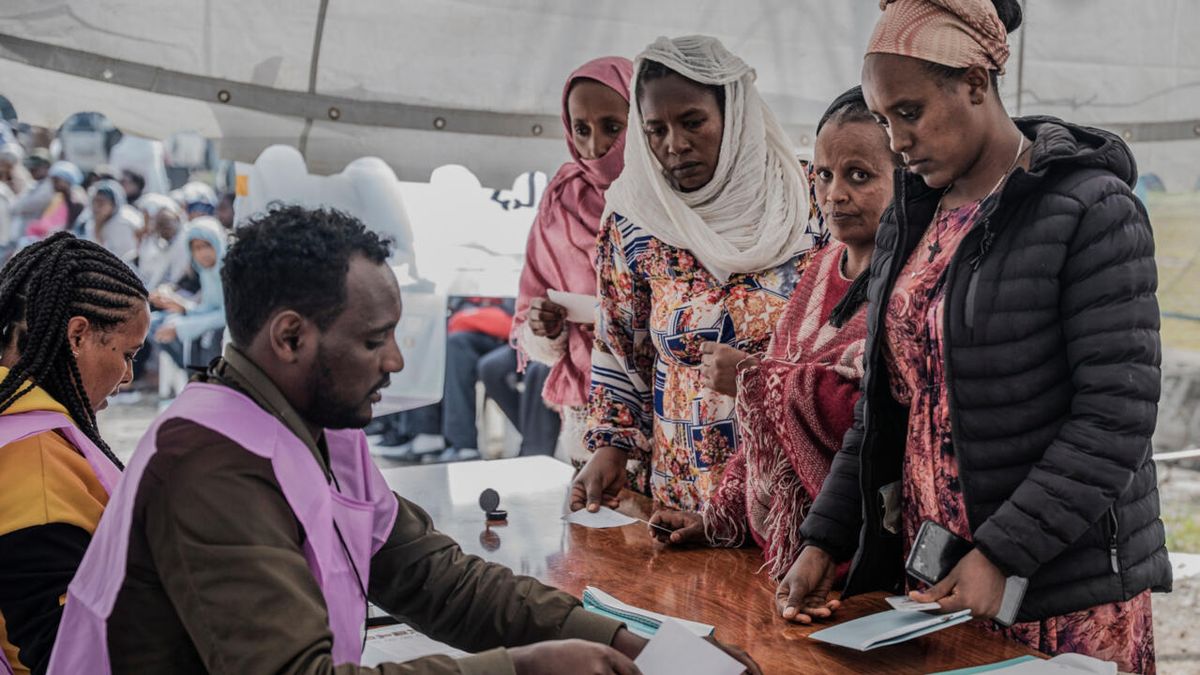
Ethiopia's parliamentary and regional elections, held on June 1, 2026, are expected to hand Prime Minister Abiy Ahmed's Prosperity Party a landslide victory. The elections come at a critical juncture for the country, with significant unrest in the two largest regions, Oromiya and Amhara, linked to grievances by different ethnic groups about alleged marginalisation within Ethiopia's federal system.
The Prosperity Party, which has campaigned on the government's economic record, is expected to dominate the elections against a fragmented opposition weakened by internal rivalries. The party has touted improved food security and strong economic growth in Africa's second-most populous country, with officials projecting a growth rate of over 10% in 2026, one of the fastest rates on the continent.
However, the elections are taking place amidst significant unrest in the country's two biggest regions. In Oromiya, fighting between government forces and the Oromo Liberation Army separatist group has killed hundreds of people in the past few years. In neighbouring Amhara, a militia known as Fano has seized swathes of the countryside since 2023. As a result, voting did not take place in at least eight of Amhara's 138 constituencies.
The Tigray region, which was the epicentre of a two-year civil war that caused hundreds of thousands of deaths, has also been affected by the elections. A 2022 peace deal ended the civil war, but a move last month by the main political party in Tigray to reassert control over the region's political administration has led Ethiopian officials and analysts to warn of the risk of fresh unrest.
The elections will be a test of Prime Minister Abiy's leadership, who has been in power since 2018. Abiy has moved to liberalise Ethiopia's tightly controlled economy and freed journalists, activists, and other political prisoners. However, his opponents and human rights activists accuse his government of reversing those gains in recent years by detaining journalists, shutting down civil society groups, and overseeing military campaigns marked by atrocities.
The elections have significant regional implications, with Ethiopia's neighbours watching the outcome closely. The rapprochement with Eritrea, which won its independence from Ethiopia in 1993, has given way to fresh animosity in the past few years, in part over repeated declarations by Abiy that landlocked Ethiopia has a right to sea access. Eritrea has viewed the comments as an implicit threat of military aggression.
The outcome of the elections will have significant consequences for Ethiopia's future. A landslide victory for Abiy's Prosperity Party could consolidate his power and lead to further repression of opposition voices. On the other hand, a fragmented opposition could lead to a more inclusive and representative government. The regional unrest and the Tigray crisis will also continue to pose significant challenges to Abiy's leadership.
The elections in Ethiopia are a critical test of Abiy's leadership and the country's stability. The outcome will have significant regional implications and will shape the future of the country. As the results are expected by June 11, the world will be watching closely to see how this complex landscape unfolds.
Editor's Note: The analysis is based on available information and may be subject to change as more information becomes available.
Source referenced: FRANCE24
This brief was synthesized by our Editorial Engine and reviewed by The Ground Narrative team.