TRENDING

Tuesday, 22 September 2026
----------------------
11 Rabi' Al-Thani 1448 AH
Ethiopian Prime Minister Abiy Ahmed's Prosperity Party has secured a significant parliamentary majority, reinforcing his political mandate. This victory comes as Ethiopia navigates complex internal divisions and asserts its influence in the volatile Horn of Africa.
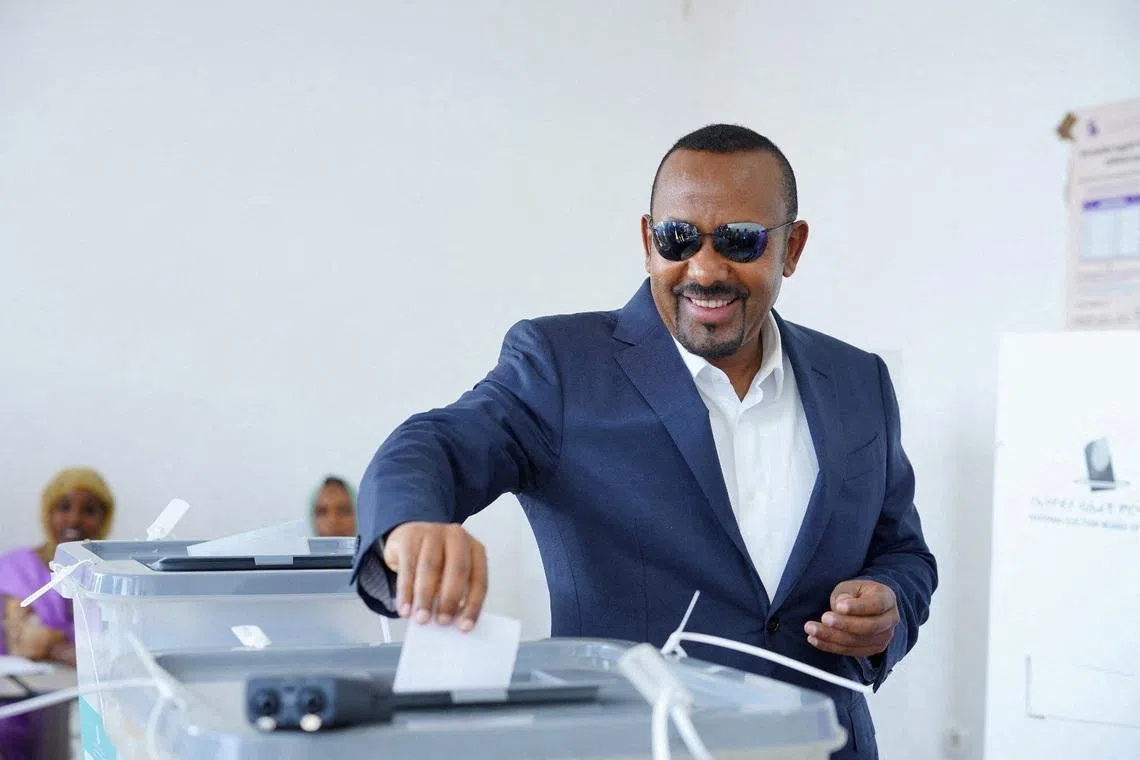
Ethiopian Prime Minister Abiy Ahmed's Prosperity Party has achieved a decisive victory in the nation's recent parliamentary elections, securing a comfortable majority of seats. The results, released by the national election board on Sunday, June 21, 2026, confirm a widely anticipated outcome given the fragmented nature of the opposition. This electoral success solidifies Prime Minister Abiy's grip on power and sets the stage for his administration to continue its policy agenda in a nation grappling with significant internal and regional complexities.
The elections, which saw Prime Minister Abiy cast his vote on June 1, 2026, in Jimma, Oromia Region, mark another chapter in Ethiopia's evolving political landscape. Abiy Ahmed initially rose to power in 2018, appointed amidst widespread public protests against the then-ruling Ethiopian People's Revolutionary Democratic Front (EPRDF) coalition. He subsequently dissolved the EPRDF, a coalition that had dominated Ethiopian politics for nearly three decades, and formed the Prosperity Party in 2019. This move aimed to transcend ethnic federalism and foster a more unified national identity, though it also led to significant political realignments and new challenges. The party's latest victory echoes its performance in the 2021 parliamentary elections, where it also secured over 90% of the available seats, underscoring a consistent pattern of electoral dominance.
The overwhelming mandate granted to the Prosperity Party is a critical development for Ethiopia's political future. For Prime Minister Abiy, this victory provides a strong foundation to pursue his reform agenda, which has historically focused on economic liberalization, infrastructure development, and national unity. A robust parliamentary majority minimizes legislative hurdles and allows for more streamlined policy implementation. However, the ease of this victory, attributed to a "fragmented opposition," also raises questions about the vibrancy of multi-party democracy in Ethiopia. While elections were held, the lack of a strong, unified opposition suggests a political environment where genuine contestation for power remains challenging. This dynamic could lead to concerns among international observers regarding democratic space and political pluralism, even as the government emphasizes stability and development.
Ethiopia, as Africa's second-most populous nation and a key regional power, plays a pivotal role in the stability of the Horn of Africa. The consolidation of power under Abiy Ahmed has significant geopolitical ramifications. Internally, a strong central government could be seen as essential for managing ethnic diversity and addressing lingering internal divisions, including those stemming from recent conflicts. The ability of Abiy's government to foster national reconciliation and ensure equitable development across all regions will be crucial for long-term stability.
Regionally, Ethiopia's internal political strength directly impacts its diplomatic and strategic engagements. The nation is central to initiatives concerning regional security, economic integration, and water resource management, particularly regarding the Grand Ethiopian Renaissance Dam (GERD) dispute with downstream nations like Egypt and Sudan. A stable and politically strong Ethiopian government is better positioned to assert its interests and negotiate effectively on these complex issues. Conversely, any perceived democratic backsliding or continued internal strife could complicate its relationships with international partners and potentially embolden regional rivals or non-state actors.
Economically, the electoral victory provides the Abiy administration with renewed impetus to tackle Ethiopia's significant development challenges. These include managing inflation, attracting foreign direct investment, addressing a substantial national debt, and creating employment opportunities for a rapidly growing young population. A stable political environment is generally conducive to economic growth and investor confidence. The government's ability to deliver tangible economic improvements will be vital for maintaining public support and mitigating potential social unrest.
In terms of international relations, the outcome will likely be viewed by global powers through a dual lens. On one hand, partners seeking stability in a volatile region may welcome the clear mandate, hoping it translates into predictable governance. On the other hand, concerns about human rights, democratic freedoms, and the rule of law, which have been raised by some Western nations and international organizations in the past, may persist. Ethiopia's strategic importance means that major global players, including the United States, European Union, and China, will continue to engage with Abiy's government, balancing their strategic interests with their stated values.
The comfortable re-election of Prime Minister Abiy Ahmed's Prosperity Party marks a significant moment for Ethiopia. It underscores a desire for continuity and stability following a period of profound political transformation and internal challenges. The government now faces the critical task of leveraging this strong mandate to address deep-seated ethnic tensions, foster genuine national unity, accelerate economic development, and navigate complex regional dynamics. The path forward will require astute leadership to balance the imperatives of national sovereignty and stability with the aspirations for greater democratic participation and human rights protection, all while maintaining Ethiopia's crucial role in the geopolitical landscape of the Horn of Africa.