TRENDING

Tuesday, 27 October 2026
----------------------
16 Jumada Al-Awwal 1448 AH
Thousands of Congolese citizens in eastern cities protest proposed constitutional changes that could allow President Felix Tshisekedi to run for a third term, sparking regional and international implications.
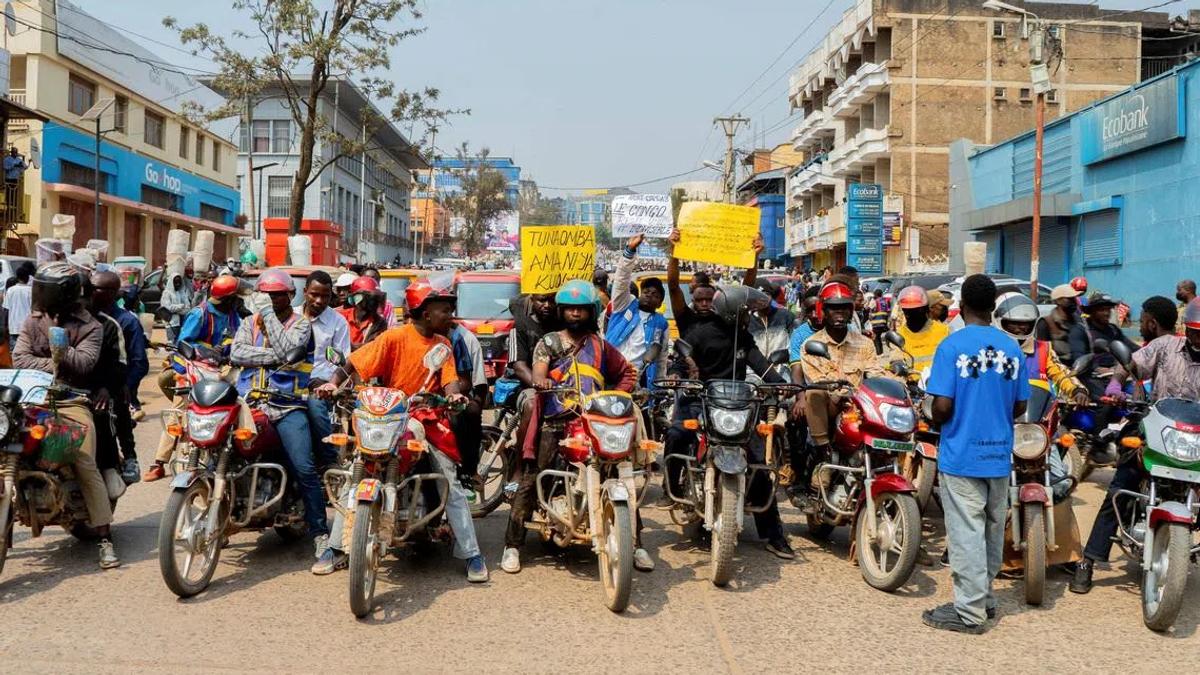
The recent protests in eastern Congo, where thousands of citizens in Goma and Bukavu rallied against proposed constitutional changes that could pave the way for President Felix Tshisekedi to run for a third term, are a significant development in the region's complex politics. The protests, which took place under police supervision despite a ban on gatherings introduced to curb the spread of Ebola, demonstrate the deep-seated concerns among Congolese citizens regarding the erosion of democratic norms and the potential for authoritarianism.
The Democratic Republic of Congo (DRC) has a tumultuous history, marked by periods of instability, conflict, and authoritarian rule. The current president, Felix Tshisekedi, came to power in 2019 after a disputed election, and his administration has faced criticism for its handling of the country's numerous challenges, including corruption, insecurity, and economic stagnation. The proposed constitutional changes, which would allow for a referendum on extending presidential term limits, have been met with widespread opposition from civil society, opposition parties, and international observers.
The protests in eastern Congo have significant regional implications, particularly in the context of the ongoing conflict in the Kivu provinces. The region has been plagued by violence and instability, with the M23 rebel group controlling large swaths of territory. The protests have also sparked calls for the United Nations to lift sanctions imposed on the M23 leader, Corneille Nangaa, and the group, which has been accused of human rights abuses. The regional dynamics are complex, with neighboring countries, including Rwanda and Uganda, playing a significant role in the conflict.
The outcome of the protests and the proposed constitutional changes will have far-reaching consequences for the DRC and the region. If the changes are implemented, it could pave the way for President Tshisekedi to run for a third term, potentially undermining democratic norms and exacerbating the country's instability. Conversely, if the protests succeed in blocking the changes, it could strengthen the opposition and civil society, potentially leading to a more inclusive and democratic governance structure.
Editor's Note: The analysis is based on available information and may be subject to change as new developments emerge.
Source referenced: STRAITSTIMES
This brief was synthesized by our Editorial Engine and reviewed by The Ground Narrative team.