TRENDING

Sunday, 1 November 2026
----------------------
21 Jumada Al-Awwal 1448 AH
A cyberattack on the US Federal Election Commission (FEC) website halted campaign finance disclosures days before midterm elections, obscuring billions in last-minute spending. This incident exposes critical vulnerabilities in election transparency, allowing powerful, untracked money to influence the democratic process.
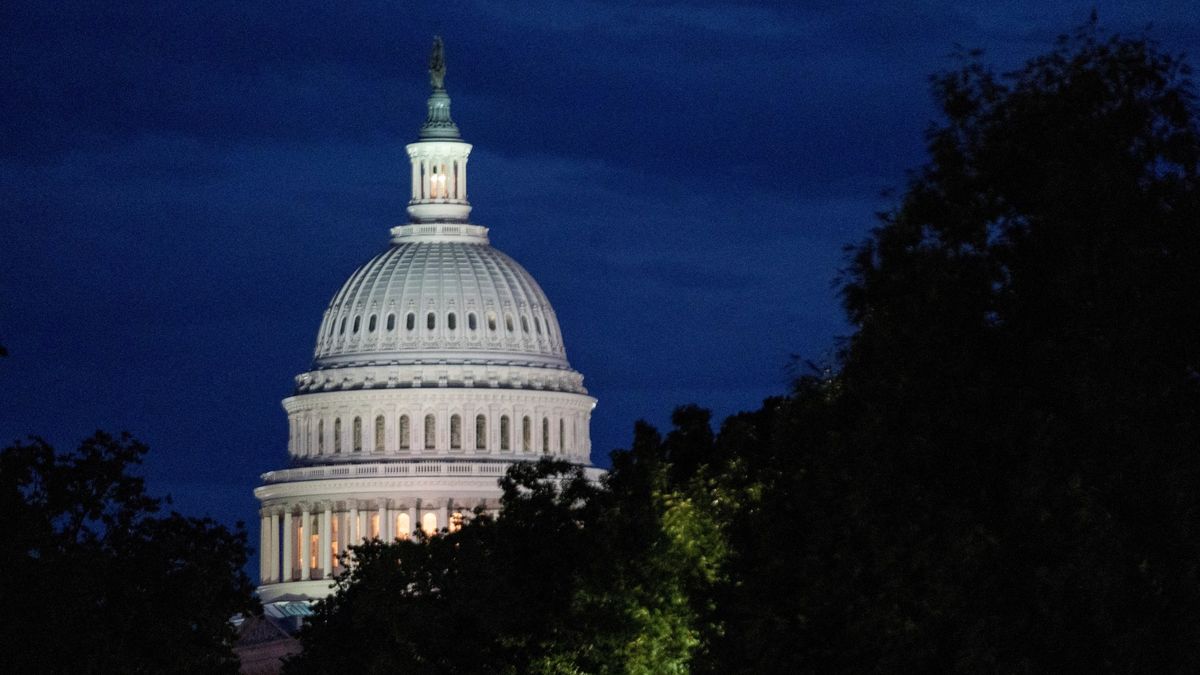
Just days before the United States' crucial midterm elections, the Federal Election Commission (FEC) website was reportedly targeted by hackers, leading to a temporary suspension of its web-facing services. This disruption specifically prevented political organizations and candidates from filing mandatory 24 and 48-hour spending reports, which are vital for tracking last-minute financial outlays in specific races. While FEC officials were quick to clarify that the incident did not affect voter files or registration systems, which are maintained at the state level, the timing coincided with a period of record-breaking spending in the midterms, much of it from opaque Super PACs and 'dark money' groups.
The incident, while seemingly technical, reveals a critical vulnerability in the mechanics of democratic power: the flow of money. The FEC's primary function is to enforce campaign finance law, ensuring transparency in how political campaigns are funded and how money is spent. It acts as a public ledger, allowing citizens, journalists, and watchdog groups to trace the financial arteries of political influence. When this ledger goes dark, even temporarily, the balance of power shifts dramatically.
The core of this shift lies with Super PACs and other 'dark money' groups. These entities can accept unlimited amounts of money from corporations, unions, associations, and individuals, then spend unlimited sums to overtly advocate for or against political candidates. Crucially, they operate independently of campaigns, which allows them to bypass many traditional campaign finance restrictions. In the final days before an election, these groups often unleash a torrent of advertising and ground operations, strategically designed to sway undecided voters. The raw intelligence indicates these midterms have already seen over $11.21 billion spent, with Super PACs and dark money groups spending an average of $50 million per day in the week leading up to the election.
The disruption of the FEC's reporting system granted an immediate, albeit temporary, obscurity advantage to these powerful financial actors. Without the ability to file 24 and 48-hour reports, the public, media, and opposing campaigns were left in the dark about who was spending what, where, and on whose behalf. This creates a vacuum of information, allowing well-funded interests to deploy resources without immediate scrutiny. The lack of real-time disclosure means that by the time the data is eventually made public, the elections may already be decided, and the impact of untracked spending cemented.
This incident underscores a fundamental asymmetry of information in modern elections. Powerful donors and political operatives possess intimate knowledge of where their money is going and what impact it's having. The public, however, relies on systems like the FEC to bridge this gap. When that bridge is compromised, the public's ability to make informed decisions about candidates and their financial backers is severely hampered. This empowers those with financial resources to shape the narrative and influence outcomes without immediate accountability, effectively operating in a temporary shadow economy of political influence.
While the focus often falls on direct interference with voting machines or voter rolls, this incident highlights a different, equally potent vector for undermining democratic processes: the disruption of financial transparency. Whether the attack was perpetrated by domestic or foreign actors, its effect is the same – to inject uncertainty and opacity into a crucial aspect of election integrity. This demonstrates that weakening the public's access to information about money in politics can be as effective, and perhaps less detectable, than directly tampering with votes, offering a new playbook for those seeking to influence elections from the shadows.
The immediate impact of the FEC system disruption extends far beyond technical glitches; it directly compromises the public's right to transparent governance and informed participation in democracy. The human cost is borne by every citizen who seeks to understand the forces shaping their political landscape.
At its core, the incident eroded public trust in the integrity of the electoral process. When the mechanisms designed to ensure transparency are compromised, it fuels cynicism and suspicion. Citizens are left wondering what financial maneuvers occurred in the dark, and whether the election outcomes truly reflect the will of the people or the unchecked influence of hidden money. This erosion of trust can lead to disengagement and a feeling that the system is rigged, making it harder for legitimate democratic institutions to function effectively.
Ordinary voters rely on timely information to make educated choices. Knowing who funds a candidate or a political message provides crucial context, revealing potential allegiances, special interests, and ideological leanings. When last-minute spending by Super PACs and 'dark money' groups goes untracked, voters are denied this critical information. They might encounter a barrage of ads or campaign messages without knowing the true source of the funding, making it difficult to discern genuine grassroots support from well-financed, often misleading, propaganda. This creates an environment where narratives can be manufactured and amplified without immediate accountability, leaving voters vulnerable to manipulation.
Candidates who rely on small-dollar donations and grassroots organizing are particularly vulnerable when the financial playing field becomes opaque. They often cannot match the spending power of large, well-funded organizations. When the public cannot track the massive, last-minute expenditures of these powerful groups, it becomes harder for smaller campaigns to counter false narratives or expose the financial interests behind their opponents' messaging. This further tilts the scales in favor of established, well-connected political machines and wealthy donors, stifling genuine political competition and the emergence of new voices.
Perhaps the most insidious human cost is the precedent this incident sets. If attacks on financial transparency systems are seen as effective and low-risk, it could encourage future attempts. This normalizes a degree of opacity in election finance, gradually diminishing the expectation of transparency that is fundamental to a healthy democracy. The public might slowly accept that certain aspects of political funding will remain shrouded, further empowering those who benefit from operating in the shadows and weakening the collective demand for accountability.
While official statements focused on reassuring the public that voter data was secure, a crucial part of the story remains downplayed or omitted: the profound implications of obscuring the money trail itself. The powerful actors involved – from political parties to well-heeled donors – have a vested interest in controlling the narrative around campaign finance, often minimizing the impact of its opacity.
The immediate reassurance that the hack did not affect voter files or registration systems, while factually correct, serves as a subtle red herring. It diverts attention from the equally, if not more, insidious threat to the integrity of the *financial* information underpinning elections. The public is conditioned to fear direct interference with votes, but the ability to influence votes through untracked money is a different, often more pervasive, form of electoral manipulation. By emphasizing the security of voter data, the severity of the transparency breach is implicitly downplayed, allowing the focus to shift away from the vulnerability of financial oversight.
Governments and political parties often frame Super PACs and 'dark money' groups as legitimate, independent actors engaging in free speech. What is downplayed is the sheer scale and often coordinated nature of their spending, especially in the final days of an election. The term 'independent expenditure' often belies a close, if legally distinct, relationship with campaigns and parties. The FEC outage allowed a period where this 'independence' was even harder to scrutinize, making it easier for powerful interests to coordinate messaging and resource deployment without immediate public knowledge. The true cost is the erosion of the principle that elections should be decided by citizens, not by hidden financial muscle.
Official statements rarely delve into the motivations behind such attacks beyond generic 'bad actors.' The critical untold story here is the question of *who benefits* from the temporary blinding of the FEC's reporting system. Was it merely a disruptive act, or was it strategically timed to allow specific, large-scale financial maneuvers to occur without immediate public disclosure? The lack of transparency around the attack's origins and intent leaves open the possibility that the 'hack' was not just an attack *on* the system, but an attack *for* specific political or financial gain, enabling certain groups to operate with impunity during a critical window. This silence allows powerful beneficiaries to remain unexamined.
The incident also exposes an underlying fragility in what is often presented as a robust democratic infrastructure. While the US invests heavily in election security, the focus is often on voting technology. The vulnerability of a critical financial reporting system, which is essential for accountability, suggests that the broader ecosystem of election integrity is less resilient than advertised. This downplays the systemic nature of the threat and the need for a holistic approach to securing all facets of the democratic process, not just the ballot box.
As the dust settles from the midterm elections and the FEC system is fully restored, several key areas will reveal the lasting impact and future trajectory of this incident.
First, closely monitor the FEC's post-mortem analysis. Will they provide a comprehensive report detailing the nature of the attack, the duration of the outage, and a full accounting of all delayed financial disclosures? The thoroughness and transparency of this report will be crucial in rebuilding public trust and understanding the true scope of untracked spending during the critical pre-election window. Any attempts to minimize the data gap or delay its release should be viewed with scrutiny.
Second, observe the response from US federal law enforcement and cybersecurity agencies, particularly the FBI and CISA. Will an investigation identify the perpetrators of the attack? The attribution (or lack thereof) will be vital in understanding whether this was a domestic disruption, a foreign interference attempt, or a combination. The nature of the actor will inform future cybersecurity strategies for election-related infrastructure.
Third, watch for any legislative or regulatory proposals aimed at hardening campaign finance reporting systems or increasing transparency requirements. This incident could catalyze renewed calls for campaign finance reform, particularly regarding the disclosure requirements for Super PACs and 'dark money' groups. Any resistance to such reforms, or attempts to further weaken disclosure laws, will indicate where the true power lies in the ongoing battle for financial transparency in politics.
Finally, pay attention to the broader public discourse around election integrity. Will this incident raise public awareness about the importance of financial transparency in elections, or will it be overshadowed by other political narratives? The sustained demand from citizens and watchdog groups for greater accountability will be a critical factor in determining whether this event leads to meaningful change or simply becomes another forgotten vulnerability in the democratic process. The true test of resilience lies in how the system adapts to such attacks on its foundational principles.
The hack disrupted the US Federal Election Commission's ability to process 24 and 48-hour campaign spending reports just days before midterm elections. This prevented the public and watchdog groups from tracking billions in last-minute political spending, especially from Super PACs and dark money groups.
No, FEC officials clarified that the hack did not affect voter files or registration systems, which are maintained by individual states. The disruption was limited to campaign finance disclosure systems, impacting transparency rather than direct voting mechanisms.
The disruption is significant because it obscured the flow of massive, last-minute spending by powerful Super PACs and dark money groups. This lack of transparency makes it harder for voters to understand who is funding political messages and influences, thereby eroding public trust and potentially skewing election outcomes without immediate accountability.
Editor's Note: Analysis based on reported facts, focusing on the systemic implications of financial transparency disruption in a democratic context.
Source referenced: ALJAZEERA
This brief was synthesized by our Editorial Engine and reviewed by The Ground Narrative team.


