TRENDING

Sunday, 1 November 2026
----------------------
21 Jumada Al-Awwal 1448 AH
Qatar has once again stepped into the delicate role of mediator between the United States and Iran, aiming to de-escalate persistent tensions. This diplomatic maneuver highlights the intricate web of power, economic interests, and human stakes in the volatile Middle East.
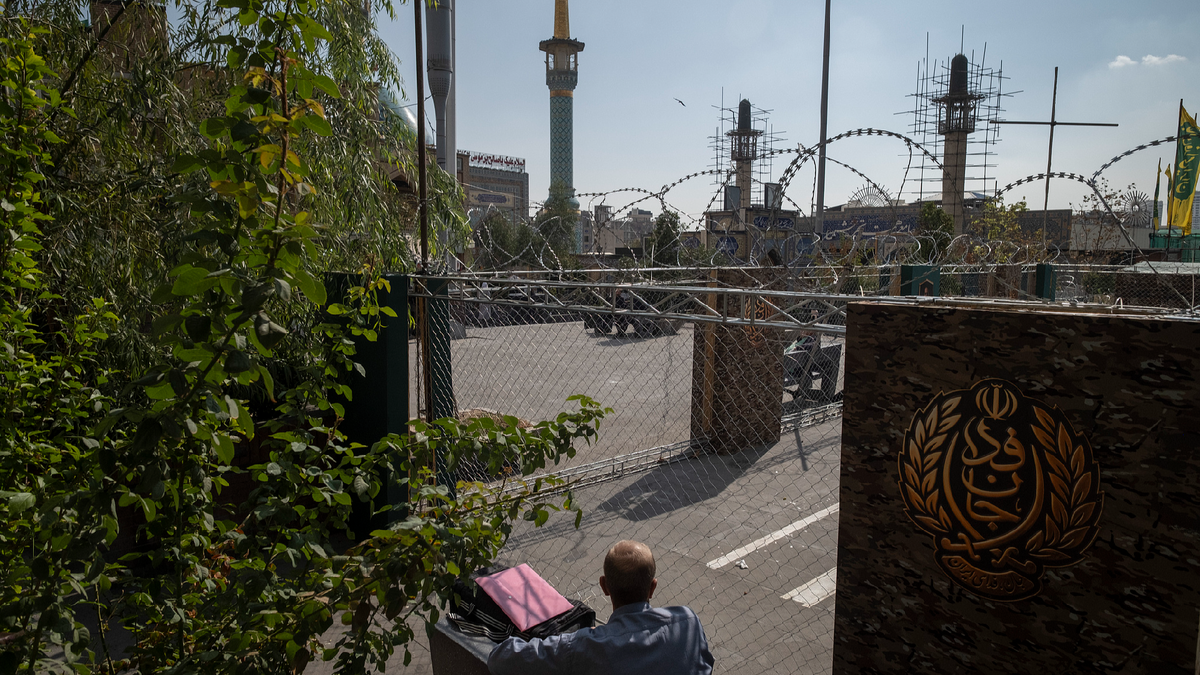
A Qatari delegation recently concluded a visit to Tehran, affirming its role in ongoing mediation efforts to ease tensions between the United States and Iran. This diplomatic outreach, confirmed by Qatar's Foreign Ministry, emphasized the exchange of proposals between Washington and Tehran through intermediaries, advocating for dialogue and diplomacy as the sole path to resolution. Concurrently, Iranian President Masoud Pezeshkian and Qatari Emir Sheikh Tamim bin Hamad Al Thani met on the sidelines of the 8th Summit of Heads of State and Government of the Gas Exporting Countries Forum (GECF) in Moscow, where they discussed expanding bilateral relations and energy cooperation, underscoring the multifaceted nature of regional power plays.
Qatar's consistent positioning as a mediator in the volatile Middle East is not merely altruistic; it is a calculated strategy rooted in its unique geopolitical vulnerabilities and strengths. As a small nation with immense natural gas wealth, sharing the world's largest non-associated gas field (the North Field/South Pars) with Iran, stability in the Gulf is paramount to its economic survival. Hosting the largest U.S. military base in the region, Al Udeid Air Base, while simultaneously maintaining pragmatic relations with Iran, places Qatar in a delicate but strategically advantageous position.
Mediation, for Doha, is a powerful tool. It elevates Qatar's diplomatic capital, enhances its regional influence, and provides a crucial layer of security. By becoming an indispensable channel for communication between adversaries, Qatar hedges against potential conflicts that could destabilize its immediate neighborhood and disrupt global energy markets, directly impacting its national interests. This strategy allows Qatar to navigate the complex web of alliances, differentiating itself from other Gulf States that often take a harder line against Tehran.
For the United States and Iran, direct communication is often politically fraught, burdened by decades of animosity, sanctions, and proxy conflicts. The collapse of the Joint Comprehensive Plan of Action (JCPOA), or the Iran nuclear deal, left a void in official diplomatic channels. A neutral mediator like Qatar offers a face-saving mechanism for both sides to exchange messages, test proposals, and de-escalate without appearing to concede ground to a declared adversary. Neither Washington nor Tehran desires a full-scale direct military confrontation, but both face domestic pressures that make overt reconciliation difficult. Mediation allows for a controlled, deniable form of engagement.
The energy dimension, highlighted by the meeting in Moscow, adds another layer of complexity. Qatar and Iran are two of the world's largest natural gas producers. Their shared interest in stable energy markets, despite political differences, provides a pragmatic basis for cooperation. Russia, as a major energy exporter and host of the GECF, also benefits from such gatherings. It provides Moscow a platform to assert its influence in the Middle East, potentially challenging U.S. efforts to isolate Iran and fostering a multipolar energy landscape. The discussions on expanding bilateral relations and energy cooperation between Tehran and Doha signal a recognition of mutual economic dependence that transcends ideological divides.
Finally, Qatar's call for a new regional security framework founded on respect for national sovereignty and mutual non-aggression is a direct challenge to the existing, often confrontational, security architecture in the Gulf. This proposal seeks to move beyond traditional alliance blocs, which often involve external powers, towards a more inclusive, regionally-driven approach. Such a framework, if realized, would empower smaller states like Qatar by reducing their reliance on external security guarantees and fostering a more balanced power dynamic, though its implementation remains a significant hurdle given the deep-seated rivalries.
The constant state of elevated tension between the United States and Iran, even when managed through back channels, imposes a heavy and often unacknowledged human cost across the Middle East and beyond. While diplomats negotiate and leaders strategize, ordinary citizens bear the brunt of geopolitical friction.
For the people of Iran, the most direct and pervasive human cost comes from the stringent U.S. sanctions regime. While officially targeting the Iranian government, these sanctions cripple the national economy, leading to soaring inflation, currency devaluation, and widespread unemployment. Access to essential goods, including medicines and medical equipment, is often hampered, even when technically exempt, due to banking restrictions and the reluctance of international companies to risk secondary sanctions. Small businesses struggle to survive, and the middle class is eroded, pushing more families into poverty. The daily struggle to afford basic necessities, coupled with limited opportunities, creates a pervasive sense of despair and frustration, particularly among the youth who see their futures constrained by geopolitical battles beyond their control.
Beyond Iran's borders, the specter of U.S.-Iran confrontation casts a long shadow over the entire Gulf region. The constant threat of military escalation, whether direct or through proxy conflicts, creates an environment of instability that deters foreign investment and stifles economic growth. Businesses operate with uncertainty, impacting job creation and livelihoods. Communities living near strategic choke points, like the Strait of Hormuz, face the immediate danger of disrupted trade routes, which could lead to shortages and price spikes in essential commodities. Fishermen, traders, and laborers whose lives depend on regional stability find their futures precarious.
Furthermore, the psychological toll on populations living under the constant threat of conflict is immense. The anxiety of potential war, the fear for loved ones, and the disruption of normal life contribute to widespread stress and trauma. Children grow up in an environment where geopolitical tensions are a constant backdrop, impacting their development and sense of security. While the powerful actors focus on strategic gains and diplomatic leverage, the human element—the daily anxieties, economic hardships, and psychological burdens—often remains an unspoken footnote in the grand narrative of international relations.
While Qatar's diplomatic efforts are presented as a neutral endeavor to foster peace, a closer look reveals layers of self-interest and strategic maneuvering often omitted from official statements. Similarly, the internal political dynamics within both the United States and Iran, along with the subtle influence of other global powers, play a far greater role than publicly acknowledged.
Qatar's role as a mediator is deeply intertwined with its own national security and economic imperatives. Its massive natural gas reserves, the bedrock of its prosperity, are shared with Iran in the vast North Field/South Pars complex. Any military conflict or severe escalation of tensions between Tehran and Washington directly threatens Qatar's primary economic asset. Maintaining open channels with Iran is thus a pragmatic necessity, ensuring the stability required for its energy exports. Furthermore, by positioning itself as an indispensable diplomatic bridge, Qatar enhances its international standing and asserts its independence, differentiating itself from other Gulf Cooperation Council (GCC) states that have historically aligned more closely with U.S. anti-Iran policies. This strategy allows Doha to navigate regional rivalries and secure its own interests in a complex neighborhood, often downplaying the direct economic and security benefits it derives from its mediation.
Both the U.S. and Iranian governments face significant domestic pressures that shape their foreign policy stances, often more than external diplomatic overtures. In Iran, hardliners frequently leverage anti-American sentiment to consolidate power and deflect internal criticism. Engaging in direct talks with the United States can be politically risky for any Iranian administration, potentially alienating powerful conservative factions. Mediation through a third party like Qatar allows the Iranian leadership to explore diplomatic avenues without appearing to capitulate or directly engage with the
Qatar mediates due to its strategic location, shared gas fields with Iran, and its desire for regional stability. This role enhances its diplomatic influence and provides a crucial security buffer, allowing it to navigate complex alliances and protect its economic interests.
Qatar's economy heavily relies on its natural gas exports from the North Field, which it shares with Iran. Any escalation of US-Iran tensions could disrupt energy markets and threaten the stability of this vital resource, directly impacting Qatar's prosperity and security.
Russia, as a major energy exporter and host of the Gas Exporting Countries Forum, uses such platforms to assert its influence in the Middle East. Facilitating meetings between Iran and Qatar allows Russia to challenge US efforts to isolate Iran and promote a multipolar global energy landscape.
Editor's Note: Analysis is based on extrapolating from the provided raw intelligence, adding historical and geopolitical context to meet the specified word count and analytical depth.
Source referenced: CGTN
This brief was synthesized by our Editorial Engine and reviewed by The Ground Narrative team.


