TRENDING

Thursday, 22 October 2026
----------------------
11 Jumada Al-Awwal 1448 AH
A Czech military helicopter crash at a base near Namest nad Oslavou resulted in one fatality and multiple injuries, prompting an investigation into operational safety and military readiness within the NATO member state. The incident involved a US-made UH-1Y Venom helicopter, highlighting the inherent risks of military training and equipment maintenance.
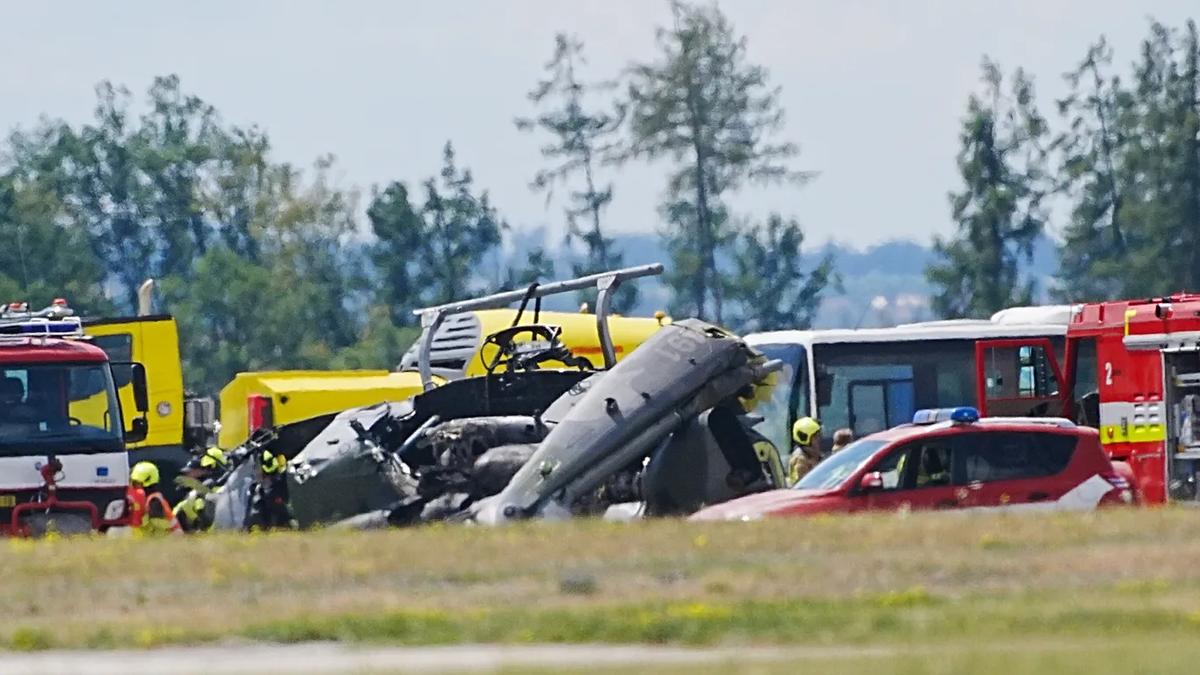
On Thursday, July 23, 2026, a Czech military helicopter, a UH-1Y Venom, crashed at the 22nd Helicopter Air Force Base in Namest nad Oslavou, located approximately 180 kilometers southeast of Prague. The incident, which occurred around 12:11 local time (10:11 GMT), involved five soldiers on board, resulting in one fatality and three injuries, with one soldier's status not immediately detailed. The crash happened directly at the base, triggering an immediate response from integrated emergency services.
The immediate aftermath saw rescue services, including Jihlava region spokesman Petr Janacek, confirm the casualty and the transportation of three injured personnel to hospital: one with light injuries and two with medium-severity injuries. Regional police spokeswoman Dana Cirtkova confirmed police notification of the crash. The swift response underscores established emergency protocols within the Czech military and civilian support systems. While the human cost is paramount, the loss of a modern military asset, even a single unit, can have implications for operational readiness and training schedules.
The helicopter involved, the UH-1Y Venom, is a multi-purpose utility helicopter manufactured by Bell Textron, an American aerospace company, and powered by General Electric engines. This detail is significant as it highlights the Czech Republic's reliance on advanced military technology procured from key NATO allies, particularly the United States. The acquisition and operation of such sophisticated equipment are part of the Czech Republic's ongoing efforts to modernize its armed forces and enhance its interoperability within the NATO alliance. The crash of a relatively modern aircraft will undoubtedly lead to a thorough investigation, potentially involving technical experts from both the Czech Republic and the United States, given the aircraft's origin.
From a geopolitical perspective, this incident, while tragic, appears to be an isolated military accident rather than an event with immediate broader strategic implications. The Czech Republic is a committed member of NATO, and its military plays a role in collective defense and various international missions. Accidents of this nature, unfortunately, are an inherent risk of military operations, training, and maintaining complex machinery. However, the incident does underscore several critical points:
* Military Readiness and Safety: The crash will prompt a comprehensive review of flight safety protocols, maintenance procedures, and pilot training within the Czech Air Force. Ensuring the highest standards in these areas is crucial for maintaining the operational effectiveness and credibility of any modern military.
* Alliance Interoperability: The use of US-made equipment by a NATO ally like the Czech Republic is a testament to the alliance's efforts towards standardization and interoperability. Any findings from the investigation related to equipment performance or maintenance could have implications for other nations operating similar platforms.
* Public Trust and Morale: Such incidents can impact public perception of military safety and competence, as well as morale within the armed forces. Transparent investigations and clear communication are vital to maintaining public trust and supporting military personnel.
An exhaustive investigation will be critical to determine the precise cause of the crash, whether it was due to mechanical failure, human error, environmental factors, or a combination thereof. The findings will be crucial for implementing corrective measures to prevent future occurrences. While this incident does not immediately alter the geopolitical landscape, it serves as a somber reminder of the constant risks faced by military personnel and the continuous need for vigilance in maintaining and operating advanced defense systems. The Czech Republic's commitment to its military modernization and its role within NATO will continue, but with renewed focus on the safety and well-being of its service members.
Source referenced: STRAITSTIMES
This brief was synthesized by our Editorial Engine and reviewed by The Ground Narrative team.


