TRENDING

Monday, 19 October 2026
----------------------
8 Jumada Al-Awwal 1448 AH
Cyprus commemorates the 52nd anniversary of Turkey's 1974 invasion, a somber occasion for Greek Cypriots and a celebratory one for Turkish Cypriots, as the United Nations launches a renewed diplomatic push to resolve the island's enduring division. The long-standing conflict continues to strain relations between NATO allies Greece and Turkey and impedes Ankara's European Union ambitions.
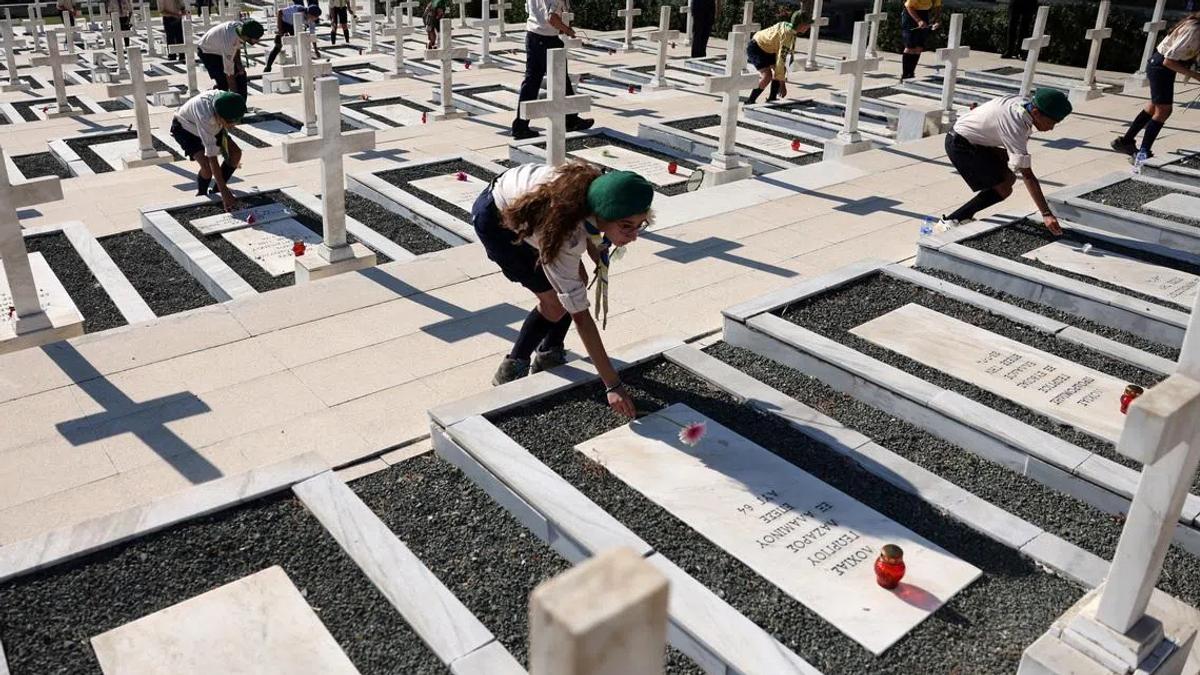
On July 20, 2026, Cyprus marked the 52nd anniversary of Turkey's 1974 invasion, an event that profoundly reshaped the island's political and demographic landscape. This somber commemoration in the Greek Cypriot south, characterized by the sounding of air raid sirens, starkly contrasted with military celebrations in the Turkish Cypriot north, a self-declared state recognized solely by Ankara. This enduring division forms the backdrop for a renewed diplomatic initiative by the United Nations, aiming to break years of deadlock in peace negotiations.
The 1974 invasion followed a period of intense intercommunal friction and violence that escalated shortly after Cyprus gained independence from Britain. Days before the Turkish intervention, a short-lived Greek-inspired coup sought to unite the island with Greece, an act that Turkey cited as a direct threat to the Turkish Cypriot community. Ankara subsequently launched what it termed a 'peace operation,' asserting its role as a protector of Turkish Cypriots. The military action led to the de facto partition of the island, with the northern third coming under Turkish Cypriot administration, supported by Turkey, and the southern two-thirds remaining under the internationally recognized Republic of Cyprus, predominantly Greek Cypriot.
This historical context is crucial for understanding the deep-seated mistrust and divergent narratives that continue to impede reconciliation. For Greek Cypriots, the anniversary represents a painful memory of invasion, occupation, and displacement. For Turkish Cypriots, it marks a moment of intervention that they view as having secured their safety and political autonomy.
The core of the current impasse lies in fundamentally different visions for the island's future political structure. The Greek Cypriot leadership, represented by President Nikos Christodoulides, consistently advocates for reunification under a federal system. This model envisions a single Cypriot state with a unified international personality, sovereignty, and citizenship, comprising two politically equal communities. Conversely, Turkey and the Turkish Cypriot leadership have increasingly pushed for a two-state solution, advocating for the recognition of two sovereign entities on the island. This divergence on the intended outcome of negotiations has effectively paralyzed substantive peace talks for years, despite numerous international efforts.
UN Secretary-General Antonio Guterres is scheduled to visit Cyprus from July 27 to 29, 2026, in a high-stakes attempt to revive the dormant peace process. His mission underscores the international community's persistent concern over the unresolved conflict and its implications for regional stability. However, without a fundamental shift in the negotiating positions of the principal parties, the path to a breakthrough remains exceptionally challenging.
The Cyprus dispute extends far beyond the island's shores, acting as a significant source of tension between two key NATO allies: Greece and Turkey. Both nations maintain strong historical, cultural, and strategic ties to their respective Cypriot communities, often leading to diplomatic spats and military posturing in the Eastern Mediterranean. The unresolved status of Cyprus thus complicates NATO's internal cohesion and its ability to project a unified front in a strategically vital region.
Furthermore, the division of Cyprus poses a substantial obstacle to Turkey's long-standing ambition of joining the European Union. The Republic of Cyprus has been a full member of the EU since 2004, and its unresolved status, particularly the presence of Turkish troops and the non-recognition of the northern entity by EU members, is a major point of contention. Any progress on Turkey's EU accession talks is inextricably linked to a resolution of the Cyprus issue, making the island's future a critical component of broader European geopolitical dynamics. The EU's stance generally aligns with the Republic of Cyprus, advocating for a unified, federal state, which further complicates Ankara's position.
The renewed UN peace push, while welcome, faces formidable challenges. The entrenched positions of both sides, coupled with the geopolitical interests of external actors like Greece and Turkey, create a complex web of dependencies and obstacles. Any viable solution would require significant political will, painful compromises from all parties, and robust international guarantees. The 52nd anniversary serves as a stark reminder of the human cost of a frozen conflict and the urgent need for a durable resolution that ensures peace and stability for all Cypriots and the wider Eastern Mediterranean region. The UN's role, while often frustratingly slow, remains indispensable as the primary international mediator in this protracted dispute.
Source referenced: STRAITSTIMES
This brief was synthesized by our Editorial Engine and reviewed by The Ground Narrative team.


