TRENDING

Monday, 5 October 2026
----------------------
24 Rabi' Al-Thani 1448 AH
Russian strikes killed four in Kyiv as Ukraine's air defenses dwindle, prompting retaliatory attacks on Russian oil refineries. This exchange highlights the brutal calculus of asymmetric warfare and the direct human toll of strategic attrition.
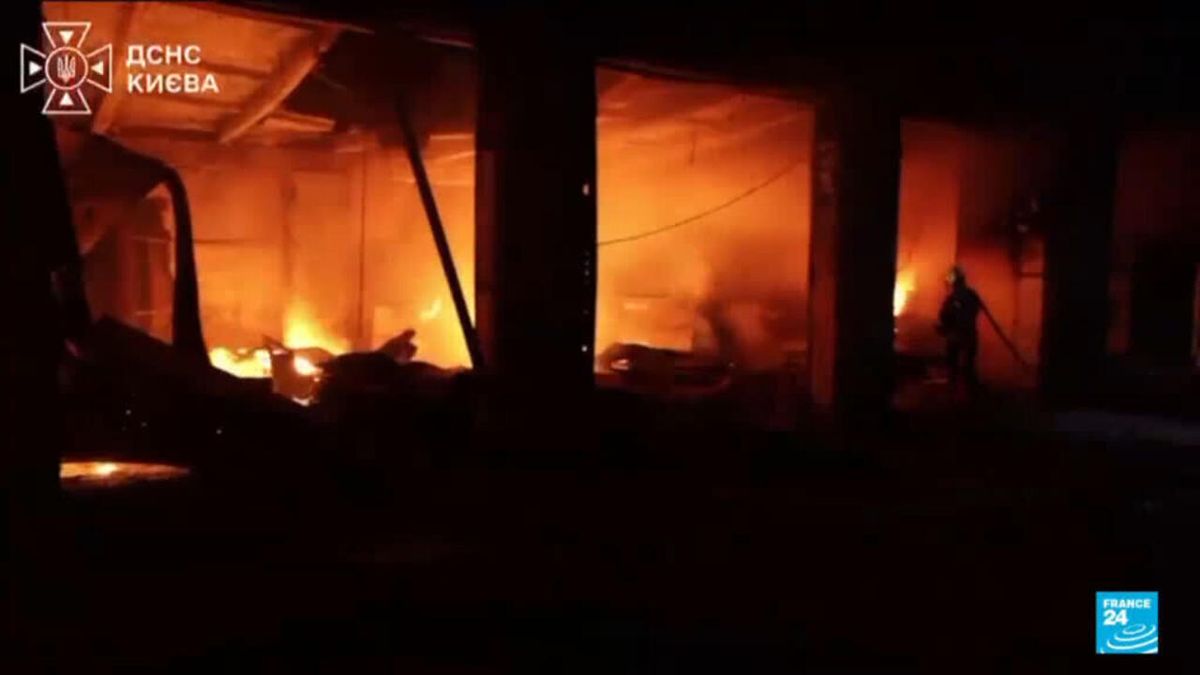
Early Saturday, Russian forces launched a series of drone and missile strikes on Kyiv and its surrounding regions, claiming the lives of at least four individuals, including a child. These attacks occurred as Ukrainian officials noted a critical depletion in their nation's air defense capabilities. In response, Ukraine continued its strategy of long-range assaults on Russian energy infrastructure, hitting another oil refinery deep within Russian territory, part of a near-daily campaign aimed at disrupting Moscow's fuel supplies.
This latest exchange of fire lays bare the grim power dynamics of a prolonged conflict. Russia, recognizing Ukraine's weakened air defense shield, is exploiting this vulnerability to inflict damage on civilian areas and critical infrastructure. The objective is multi-faceted: to degrade Ukrainian morale, exhaust its remaining defensive resources, and potentially force a diversion of military assets from the front lines to urban protection. For Ukraine, lacking the conventional air power to match Russia, the strategy has shifted to asymmetric warfare. By targeting Russia's vital oil infrastructure, Kyiv aims to impose economic costs, disrupt military logistics, and generate internal pressure within Russia. This tit-for-tat, while seemingly balanced, reveals a fundamental imbalance in defensive capabilities and a calculated escalation of economic warfare.
The immediate and most devastating cost of this exchange is borne by ordinary Ukrainian citizens. Four lives, including that of a child, were extinguished in the Russian strikes on Kyiv – a stark reminder that behind every strategic decision and military maneuver are real people living under constant threat. Homes are destroyed, daily life is interrupted, and the psychological toll of sustained aerial bombardment deepens. While Ukrainian strikes on Russian refineries aim for economic disruption, the direct human cost to Russian civilians is, for now, less immediate than the impact of missiles on residential buildings. However, the broader Russian populace indirectly pays through the diversion of national resources to war, economic instability, and the long-term consequences of international isolation. The people who suffer most are rarely consulted in the strategic discussions that dictate their fate.
Official statements from both sides tend to frame these actions within a narrow strategic context – Russia asserting its military might, Ukraine defending its sovereignty and striking back. What is often downplayed or omitted entirely is the critical role of external factors, particularly the sufficiency and timeliness of Western military aid to Ukraine. The phrase "depleted air defenses" is not merely a tactical observation; it is a direct consequence of delayed or insufficient supplies of interceptor missiles and air defense systems from allied nations. Powerful actors often emphasize the *provision* of aid without fully acknowledging the *gaps* that emerge when that aid is slow or inadequate, directly impacting Ukraine's ability to protect its population. Furthermore, the long-term environmental and economic damage from repeated attacks on energy infrastructure, on both sides, is rarely a central point of discussion, often overshadowed by immediate military objectives.
Looking ahead, several critical indicators will shape the trajectory of this conflict. The speed and scale of Western air defense shipments to Ukraine will be paramount. A significant increase could bolster Ukraine's ability to protect its cities and potentially alter Russia's calculus for aerial assaults. Conversely, continued delays will likely embolden Russia to intensify its strikes on civilian targets. Observers should also watch for Russia's adaptive strategies in response to Ukrainian drone attacks on its refineries – will it implement more robust air defenses around key infrastructure, or will it escalate its own offensive operations in retaliation? Finally, the resilience of the Ukrainian population under sustained attack, and the ability of its economy to absorb the damage, will be a crucial factor in the long-term viability of its defense. The war's human cost, driven by the mechanics of power, remains the most significant metric to monitor.
Source referenced: FRANCE24
This brief was synthesized by our Editorial Engine and reviewed by The Ground Narrative team.