TRENDING

Friday, 16 October 2026
----------------------
5 Jumada Al-Awwal 1448 AH
Colombia's presidential election is poised to significantly alter its relationship with the United States and reshape its approach to internal conflict and drug trafficking. The outcome will have profound implications for regional stability and global anti-narcotics efforts.
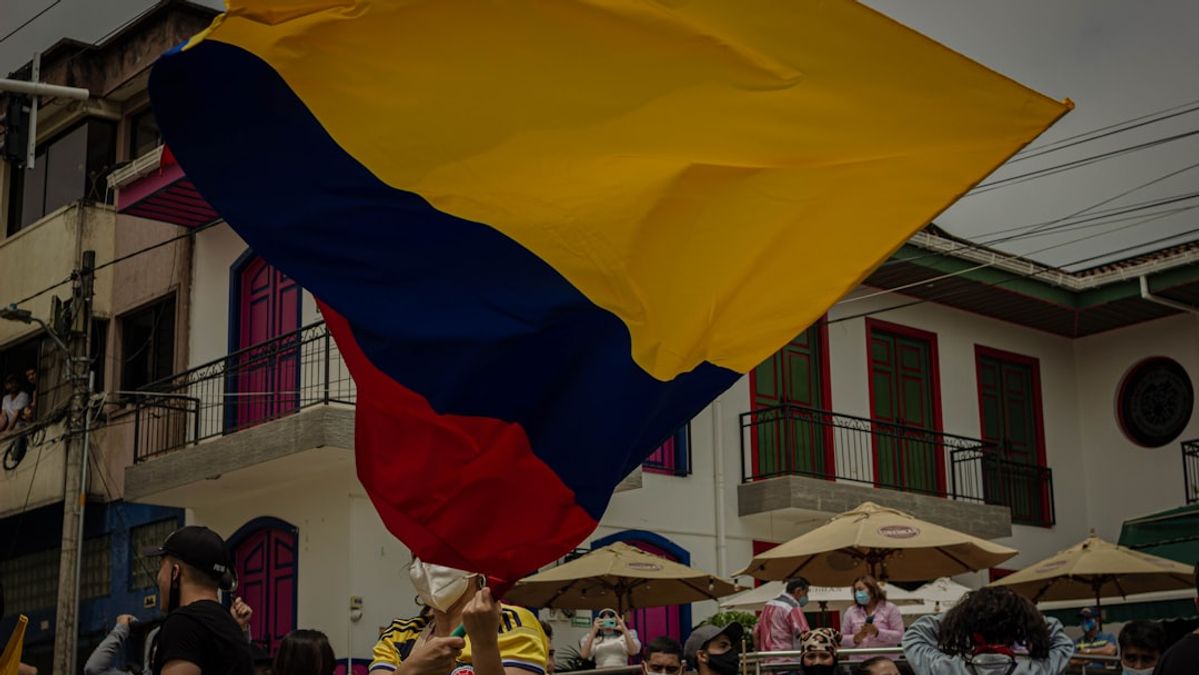
Colombia is currently undergoing a pivotal presidential election that carries substantial geopolitical weight, with the potential to redefine its long-standing relationship with the United States and fundamentally alter its domestic strategies for peace and security. The election follows a period of heightened tension between the outgoing left-wing President Gustavo Petro and his US counterpart, Donald Trump, marked by public recriminations over drug trafficking and regional interventionism.
With President Petro constitutionally barred from seeking re-election, the political landscape is divided. His chosen successor, Iván Cepeda, represents a continuation of the current administration's policies, notably the ambitious but challenging "total peace" initiative. This strategy aims for negotiated settlements with armed insurgent groups, many of whom are deeply involved in drug trafficking. However, these talks have frequently stalled or collapsed, contributing to a documented surge in violence, with the International Committee of the Red Cross (ICRC) reporting the highest civilian impact from armed conflict in a decade last year.
Challenging Cepeda are right-wing candidates Abelardo de la Espriella and Paloma Valencia. Both have advocated for a starkly different approach, promising a robust military crackdown on armed groups and a restoration of Colombia's traditionally close security alliance with the United States. Their campaign has unfolded against a backdrop of persistent political violence, underscored by the fatal shooting of one candidate last summer and de la Espriella's appearance behind bulletproof glass at a recent rally.
The election's outcome is particularly critical for US-Colombia relations. Historically, Colombia has been a key strategic ally for the United States in Latin America, especially in anti-narcotics efforts. However, under President Petro, this relationship has become strained. Petro has consistently asserted Colombia's sovereignty, insisting the nation should not be a "vassal state" to the US, a sentiment echoed by Cepeda. This stance has clashed with the Trump administration's more assertive foreign policy, leading to direct accusations from Trump that Petro has failed to curb cocaine production, even labeling him a "sick man who likes selling cocaine to the United States" and hinting at potential US military intervention.
Despite the heated rhetoric, observers note that practical anti-drugs cooperation between the two nations has largely continued. Nevertheless, the ideological divide is significant. Petro's government has claimed record drug seizures, yet the United Nations' World Drug Report 2025 indicates a record high in cocaine production under his watch, a methodology Petro disputes. The capture of Venezuela's former President Nicolás Maduro by US forces in January further isolated Petro as one of the few remaining left-wing leaders in the region not ideologically aligned with the Trump administration, highlighting the broader geopolitical currents at play.
The core of Colombia's internal struggle remains the intertwined issues of armed conflict and drug trafficking. The "total peace" policy, while aiming for reconciliation, has struggled to deliver tangible results in reducing violence or drug production. The right-wing candidates' promise of a military-first approach, coupled with a renewed security alliance with the US, signals a potential return to more confrontational tactics. This shift could either bring greater stability through force or risk escalating conflict, depending on implementation and the response of armed groups.
The election's result will reverberate across Latin America. A victory for Cepeda would likely solidify Colombia's more independent foreign policy stance, potentially aligning it more closely with other non-US-aligned nations in the region and further distancing it from Washington's traditional influence. Conversely, a win for de la Espriella or Valencia would likely see Colombia re-embrace its role as a staunch US ally, potentially bolstering Washington's regional security architecture and anti-narcotics efforts. This choice will influence regional power dynamics, diplomatic alignments, and the collective approach to transnational challenges like organized crime and migration.
Ultimately, the Colombian electorate faces a stark choice between two fundamentally different visions for the nation's future: one emphasizing negotiated peace and national autonomy, the other prioritizing military strength and a robust alliance with the United States. The outcome will not only determine Colombia's internal trajectory but also significantly impact the geopolitical landscape of the Americas.
Source referenced: BBC
This brief was synthesized by our Editorial Engine and reviewed by The Ground Narrative team.


