TRENDING

Monday, 5 October 2026
----------------------
24 Rabi' Al-Thani 1448 AH
A powerful 7.4-magnitude earthquake devastated western Colombia, leaving hundreds dead and thousands displaced. Beyond the immediate tragedy, the crisis reveals complex power dynamics and political tensions around international aid.
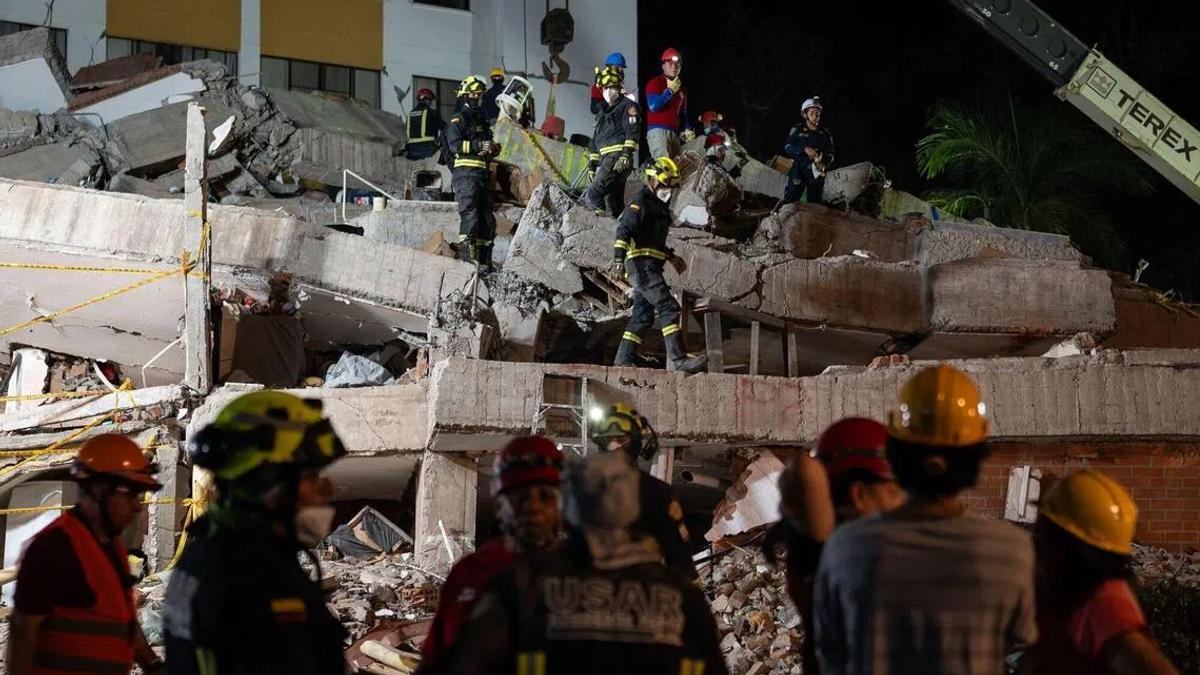
A powerful 7.4-magnitude earthquake struck western Colombia on August 10, unleashing widespread devastation across cities like Cali and Pereira and along the Pacific coast. The tremor claimed 281 lives, injured nearly 4,000, and left 379 people missing, while obliterating close to 13,000 homes. As the critical 72-hour window for finding survivors closed, rescue efforts persisted, though hopes dwindled. President Abelardo de la Espriella swiftly declared an “economic emergency” and a period of national mourning, signaling the immense scale of the disaster and the long road to recovery ahead.
In the immediate aftermath of such a catastrophe, the state's primary incentive is to project control and competence. For President de la Espriella, a newly appointed leader, a robust and visible response is crucial for political legitimacy and survival. Declaring an economic emergency opens pathways for international assistance, but also potentially for external influence. The acceptance or rejection of international urban search-and-rescue teams, as seen with the alleged refusal of Mexican aid while teams from the United States, El Salvador, Ecuador, and Israel were prepared to enter, reveals a deeper layer of power dynamics. This selective approach, despite official denials of political motivation, suggests that humanitarian aid can become entangled with existing diplomatic alignments or ideological preferences. Who gets to help, and under what conditions, can subtly shift the balance of influence in a region. The state maintains ultimate authority over its borders and, by extension, over the narrative of recovery.
While official statements focus on national recovery, the human cost falls disproportionately on ordinary citizens. Thousands, like 72-year-old Maria del Carmen Rodriguez, who lost the apartment she had saved for her entire life, or 79-year-old Javier Alzate, whose home and car were destroyed, now face an uncertain future in makeshift camps. These individuals are left grappling with the immediate loss of shelter and livelihood, compounded by the bureaucratic maze of aid applications and relocation promises. The impoverished Choco region, with its remote communities, bears an even heavier burden, often the last to receive aid and the first to be forgotten. Beyond the visible destruction, a “collective trauma” grips the affected population, a psychological toll that extends far beyond the physical injuries and material losses. Their voices, often lost in the pronouncements of leaders and aid organizations, speak of profound vulnerability and a desperate need for tangible, equitable support.
What official statements often downplay or omit are the pre-existing vulnerabilities that amplify the disaster's impact, and the political maneuvering that can occur even in moments of crisis. The “economic emergency” declaration, while necessary, hints at the massive reconstruction costs that will likely lead to significant international borrowing, potentially tying Colombia to new debt obligations and conditional aid packages for decades. More critically, the controversy surrounding the alleged blocking of Mexican rescue teams, framed by critics as politically motivated due to Mexico's “leftist leadership,” points to a troubling politicization of humanitarian assistance. If true, this suggests that the administration's foreign policy agenda or internal political calculations might be influencing life-saving operations, prioritizing ideological alignment over immediate human need. This unspoken tension highlights how even in a crisis, the powerful can leverage aid as a tool of soft power or as a means to consolidate internal political support, diverting focus from the structural issues that made communities so susceptible in the first place.
As Colombia moves beyond the immediate rescue phase, several critical aspects bear watching. First, the transparency and equity of aid distribution will be paramount. Will the most vulnerable and remote communities receive the resources they desperately need, or will aid be concentrated in more accessible, politically visible areas? Second, the political fallout from the alleged selective acceptance of international rescue teams could strain diplomatic relations and impact President de la Espriella's domestic standing. How will his administration navigate these criticisms, and what will it mean for Colombia's international alliances? Finally, the long-term reconstruction strategy will reveal much about the government's commitment to addressing underlying vulnerabilities. Will rebuilding efforts incorporate stronger infrastructure and better planning to mitigate future disasters, or will they simply restore the status quo, leaving communities exposed once again? The answers will shape Colombia's future, long after the tremors have ceased.
Source referenced: STRAITSTIMES
This brief was synthesized by our Editorial Engine and reviewed by The Ground Narrative team.