TRENDING

Saturday, 3 October 2026
----------------------
22 Rabi' Al-Thani 1448 AH
As the critical 72-hour window for earthquake survivors closes in Colombia, the immediate crisis shifts to a deeper examination of state capacity and the enduring human cost. This event exposes the fault lines of governance and vulnerability.
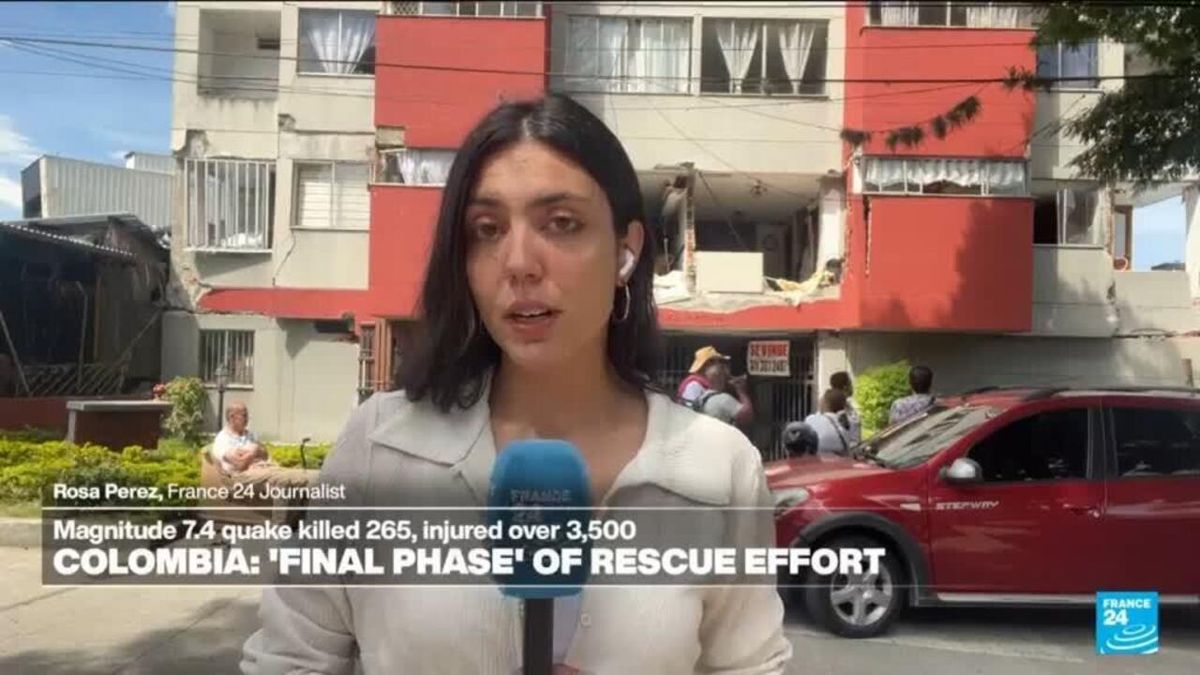
Rescuers in Colombia have made a final push to locate survivors following a recent earthquake, as the crucial 72-hour window for finding people alive drew to a close. This grim milestone marks the transition from immediate emergency response to the daunting long-term challenges of recovery and reconstruction for affected communities.
Natural disasters like the Colombian earthquake are not merely acts of nature; they are profound tests of state capacity and governance. The initial response, while often framed as a humanitarian effort, is deeply intertwined with political survival and the demonstration of state control. Governments are incentivized to project competence and compassion, mobilizing resources to prevent social unrest and maintain legitimacy. The speed and effectiveness of search and rescue operations, the provision of immediate aid, and the coordination with international bodies all reflect on the ruling administration. Economic trade-offs become stark: resources diverted to disaster relief often come from other critical sectors, highlighting pre-existing budgetary constraints and development priorities. For Colombia, a nation grappling with historical internal conflicts and significant socio-economic disparities, a major natural disaster can exacerbate these underlying fragilities, testing the state's ability to reach and support its most vulnerable citizens, particularly in remote or underserved regions. The power here lies in the state's ability, or inability, to protect its populace from both the immediate shock and the cascading after-effects.
The immediate human cost of an earthquake is devastating: lives lost, injuries sustained, and homes destroyed. But the burden extends far beyond the initial impact. It falls disproportionately on those who live in informal settlements, in poorly constructed buildings, or in remote areas with limited access to emergency services. These are often the working poor, indigenous communities, and marginalized populations whose livelihoods are instantly obliterated. For them, the 'survival window' doesn't close after 72 hours; it stretches into months and years of displacement, economic hardship, and psychological trauma. Children lose access to education, families are fractured, and the social fabric of communities is torn apart. The loss of homes means a loss of security, identity, and the foundation for economic activity. While official statements focus on national recovery, it is these specific populations who bear the brunt of the disaster's long tail, often without a voice in the reconstruction plans that will shape their future.
Governments and aid organizations, while commendable in their immediate response, often downplay the systemic issues that amplify the disaster's impact. Rarely discussed are the failures in urban planning and building code enforcement that lead to vulnerable infrastructure, especially in rapidly expanding cities or informal settlements. The long-term corruption in construction contracts, the inadequate investment in disaster preparedness and early warning systems, and the slow, often inequitable, distribution of reconstruction aid are frequently omitted from official narratives. What is also often overlooked is the profound psychological toll on survivors, the rise in gender-based violence in temporary shelters, and the potential for opportunistic land grabs or exploitation during the chaos of recovery. The focus remains on visible aid and heroic rescues, diverting attention from the deeper, structural vulnerabilities that made the disaster so catastrophic in the first place. The narrative of resilience, while inspiring, can inadvertently obscure the need for accountability and fundamental change.
As the immediate search and rescue operations wind down, several critical indicators will emerge. Watch for the government's long-term reconstruction plan: how quickly will aid be disbursed, and will it reach the most vulnerable? Scrutiny will fall on the transparency of reconstruction contracts and whether new infrastructure adheres to robust building standards. The flow of international aid will also be a key factor, and whether it is effectively coordinated or becomes entangled in bureaucratic delays. Furthermore, observe any shifts in internal displacement patterns and the potential for social unrest if recovery efforts are perceived as slow, inequitable, or politically motivated. This earthquake is not just a natural event; it is a catalyst that will reveal the true strength, or weakness, of Colombia's institutional foundations and its commitment to its most vulnerable citizens.
Source referenced: FRANCE24
This brief was synthesized by our Editorial Engine and reviewed by The Ground Narrative team.


