TRENDING

Monday, 5 October 2026
----------------------
24 Rabi' Al-Thani 1448 AH
Chinese Foreign Minister Wang Yi's recent tour of Denmark, Sweden, Finland, and Norway underscores Beijing's strategic efforts to deepen economic, green, and governance cooperation with key European partners, amidst evolving global power dynamics. The visit highlights China's commitment to multilateralism and its push to counter 'decoupling' narratives, while Nordic nations seek to balance economic opportunities with broader geopolitical considerations.
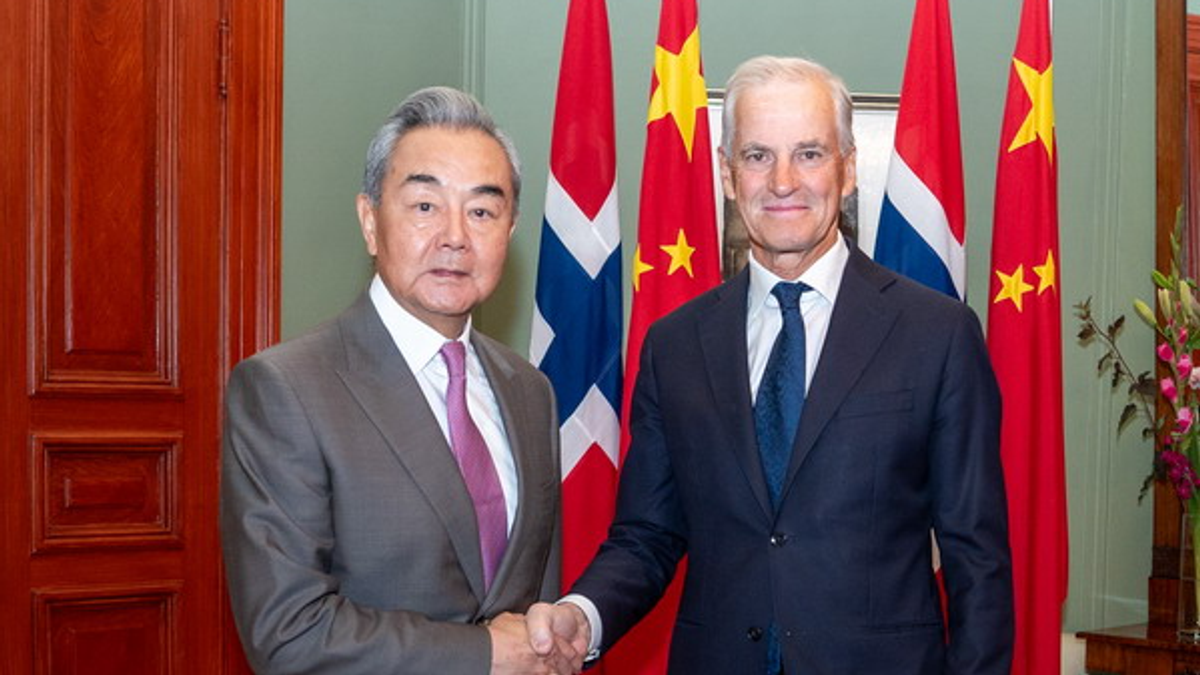
Chinese Foreign Minister Wang Yi recently concluded a six-day diplomatic tour across four Nordic nations – Denmark, Sweden, Finland, and Norway – from July 2 to July 8, 2026. The high-level engagements, which included meetings with heads of state and government, aimed to reinforce bilateral partnerships and expand cooperation across a spectrum of strategic areas, signaling Beijing's nuanced approach to European diplomacy.
The core objective of Wang Yi's visit was to solidify and enrich China's relationships with these strategically important European countries. Discussions focused on implementing prior agreements between Chinese President Xi Jinping and Nordic leaders, emphasizing the importance of sustained high-level exchanges and strategic communication. Notably, the Nordic countries reaffirmed their commitment to the 'one-China policy,' a crucial diplomatic victory for Beijing, which consistently seeks international validation of its territorial integrity. In return, China underscored its view of Europe as a partner, not a rival, advocating for cooperation as the defining feature of their relations and supporting comprehensive dialogue at all levels. This diplomatic framing aims to mitigate broader EU-China tensions and foster individual country-level engagement.
Economic and trade cooperation emerged as a central pillar of the discussions. China stressed that deepening economic ties is a necessity, not an option, for mutual benefit. Both sides voiced strong support for free trade and economic globalization, explicitly opposing unilateral actions, 'decoupling' strategies, and disruptions to global industrial and supply chains. This stance directly counters protectionist sentiments and efforts by some Western nations to reduce economic reliance on China. Wang Yi reiterated China's commitment to an open market for Nordic enterprises and, in turn, sought assurances for a fair, just, and non-discriminatory business environment for Chinese companies in the Nordic region. The positive reception to the China-EU trade and investment consultation mechanism also indicates a shared desire to resolve economic differences through dialogue, with China advocating for the EU to ease restrictions on high-value product exports to achieve more balanced trade.
A significant focus of the tour was on green transition and innovation, areas where Nordic countries are global leaders. Agreements were reached to deepen cooperation in low-carbon transition, circular economy, green shipping, and biopharmaceuticals. Specific initiatives, such as the China-Denmark Green Joint Work Programme and the China-Finland Joint Action Plan, are already yielding results or are in progress. Dialogue on global Artificial Intelligence (AI) governance and the exploration of common rules also featured prominently, reflecting a shared recognition of the transformative potential and regulatory challenges of emerging technologies. This collaboration is mutually beneficial: China gains access to advanced Nordic environmental technologies and expertise, while Nordic nations access China's vast market and manufacturing capabilities to scale green solutions.
The visit also served as a platform for extensive exchanges on the international situation and multilateral affairs. Both sides committed to strengthening dialogue on reforming global governance, cooperating within multilateral frameworks like the United Nations, the World Trade Organization (WTO), and the Group of 20 (G20). This aligns with China's broader foreign policy objective of promoting a multilateral order that reflects its growing influence. Discussions also touched upon international and regional hotspot issues, including Ukraine and the Middle East, with a shared emphasis on resolving conflicts through dialogue and negotiations. Climate governance was a key agenda item, with both sides valuing global climate action and expressing expectations for the 31st session of the Conference of the Parties to the UN Framework Convention on Climate Change (COP31) to reinforce multilateralism and accelerated climate action.
Beyond high-level policy, the tour aimed to foster closer people-to-people ties. China's unilateral visa-free policy for Nordic citizens was appreciated, and Beijing extended an invitation for more Nordic visitors while expressing hope for reciprocal convenience for Chinese citizens. Efforts to increase direct flights and expand exchanges in education, culture, tourism, and scientific research are designed to build a stronger foundation of public support for bilateral relations.
Wang Yi's Nordic tour represents a calculated diplomatic maneuver by China to strengthen its standing in Europe. By engaging individual nations, particularly those with advanced economies and strategic interests in areas like the Arctic and green technology, China aims to diversify its European relationships and potentially mitigate the impact of broader EU-level scrutiny or US-led containment efforts. For the Nordic countries, the engagement offers significant economic opportunities and a chance to influence global governance discussions with a major world power. However, it also presents a delicate balancing act, as they navigate their alliances with the European Union and the United States while pursuing independent foreign policy and economic interests with China. The emphasis on green and innovation cooperation highlights a pragmatic alignment of interests, positioning the Nordic region as a crucial partner in China's drive for sustainable development and technological advancement, with potential long-term implications for global supply chains and climate action leadership.
Source referenced: CGTN
This brief was synthesized by our Editorial Engine and reviewed by The Ground Narrative team.


