TRENDING

Monday, 19 October 2026
----------------------
8 Jumada Al-Awwal 1448 AH
China's Foreign Minister Wang Yi met with Dominica's Foreign Minister Vince Henderson in Shanghai, signaling Beijing's continued strategic outreach to Caribbean nations, particularly focusing on AI governance and development cooperation. The meeting underscores China's efforts to expand its diplomatic influence and shape global norms, especially concerning emerging technologies.
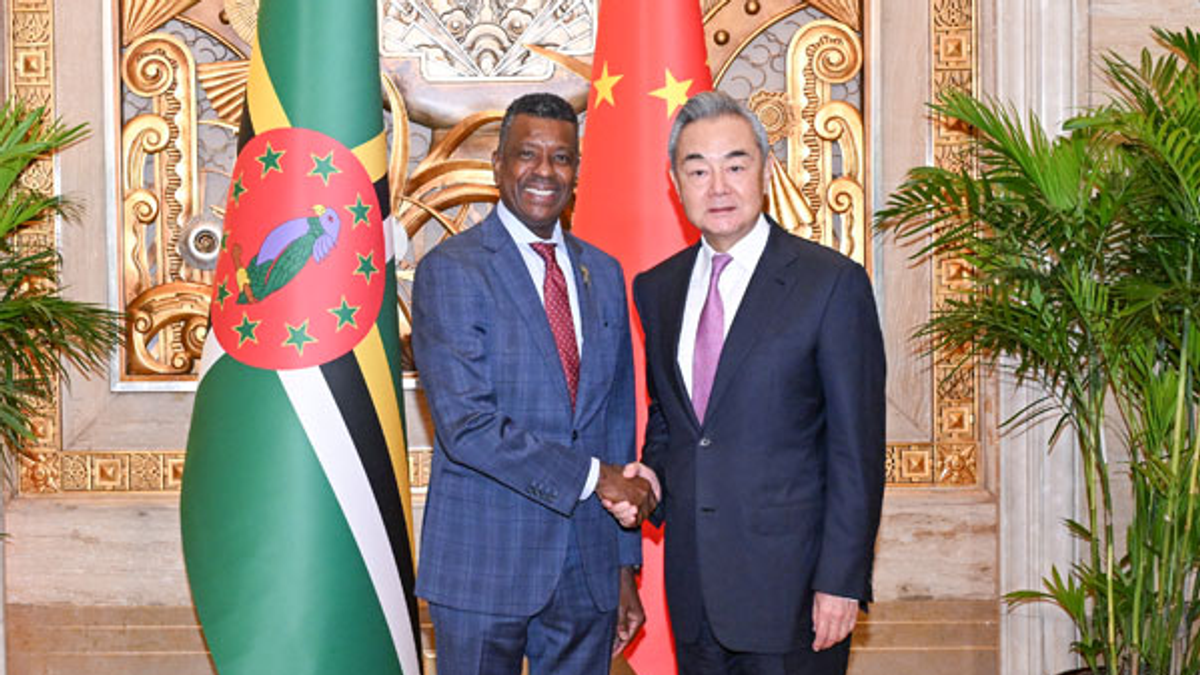
On July 18, 2026, Chinese Foreign Minister Wang Yi, a prominent member of the Political Bureau of the Communist Party of China Central Committee, held a significant meeting with Vince Henderson, the Foreign Minister of the Commonwealth of Dominica, in Shanghai. The encounter, which took place while Minister Henderson was in China to attend the World Artificial Intelligence Conference, underscores Beijing's persistent and multifaceted diplomatic engagement with nations in the Caribbean region, particularly focusing on emerging technologies and development cooperation.
The meeting's agenda, as articulated by both sides, centered on strengthening coordination and cooperation, aligning development strategies, and deepening mutually beneficial partnerships. A key highlight was the discussion around the World Artificial Intelligence Cooperation Organization, with China expressing its readiness to bolster collaboration with developing countries, including Dominica, to foster the organization's "steady and robust growth." In response, Dominica's Foreign Minister Henderson voiced support for China's efforts, in conjunction with the United Nations, to promote artificial intelligence as a "fair and inclusive international public good."
This high-level diplomatic exchange is not an isolated event but rather a component of China's broader strategic initiative to expand its influence across the Global South. The Caribbean, a region historically and geographically proximate to the United States, has become an increasingly important arena for Chinese diplomacy and economic engagement. Beijing's approach typically involves a combination of infrastructure development, trade agreements, financial aid, and cultural exchanges, often under the umbrella of initiatives like the Belt and Road Initiative (BRI), though not explicitly mentioned in this specific report.
For China, engaging with Caribbean nations like Dominica serves several strategic objectives. Firstly, it enhances Beijing's diplomatic footprint and soft power in a region where traditional Western influence has been predominant. Each bilateral relationship strengthened contributes to China's global network of partners, providing diplomatic leverage in multilateral forums such as the United Nations, where the votes and support of small island developing states (SIDS) can be significant. Secondly, it reinforces the "One China" policy, as many Caribbean nations have shifted diplomatic recognition from Taiwan to the People's Republic of China over the past two decades, with Dominica making this move in 2004. Such meetings solidify these relationships and mitigate any potential for diplomatic reversals.
The emphasis on artificial intelligence cooperation marks a significant dimension of this engagement. China is rapidly positioning itself as a global leader in AI research, development, and application. By advocating for AI as a "fair and inclusive international public good" and seeking cooperation within organizations like the World Artificial Intelligence Cooperation Organization, Beijing aims to shape the global norms and governance frameworks surrounding this transformative technology. This strategy allows China to present an alternative vision to potentially Western-centric approaches to AI regulation, garnering support from developing nations who may feel marginalized in existing global technology governance structures. For Dominica and other SIDS, collaboration on AI could offer pathways to technological advancement, digital transformation, and economic diversification, aligning with their own development aspirations.
The call for "strengthening alignment of development strategies and deepening mutually beneficial cooperation" points to the economic underpinnings of the relationship. For Dominica, a small island nation facing unique vulnerabilities such as climate change impacts, economic shocks, and limited resources, partnerships with a major global economy like China offer tangible benefits. These can include access to financing for infrastructure projects, technical assistance, market access for goods, and investment in key sectors. China, in turn, gains access to new markets, secures diplomatic allies, and projects an image of a responsible global power committed to South-South cooperation. This reciprocal relationship, while framed as mutually beneficial, inherently expands China's economic and political influence in the region.
The meeting between Ministers Wang Yi and Henderson signifies China's continued commitment to deepening its ties with Caribbean nations. This ongoing engagement is likely to result in increased Chinese investment, technological collaboration, and diplomatic support for Beijing's global initiatives. For the Caribbean, these partnerships offer opportunities for development and diversification but also necessitate careful navigation of geopolitical currents. As global power dynamics continue to shift, the strategic importance of regions like the Caribbean, and the nature of their relationships with major powers, will remain a critical area of observation for international affairs. The focus on AI governance, in particular, highlights a new frontier in geopolitical competition and cooperation, where China is actively seeking to build consensus and leadership among developing nations.
Source referenced: CGTN
This brief was synthesized by our Editorial Engine and reviewed by The Ground Narrative team.


