TRENDING

Tuesday, 27 October 2026
----------------------
16 Jumada Al-Awwal 1448 AH
Chinese President Xi Jinping and Brazilian President Lula da Silva held phone talks, emphasizing strengthened bilateral and multilateral strategic coordination. The discussion highlighted a shared vision for reforming global governance and enhancing BRICS cooperation, signaling a concerted effort to amplify the voice of the Global South on the international stage.
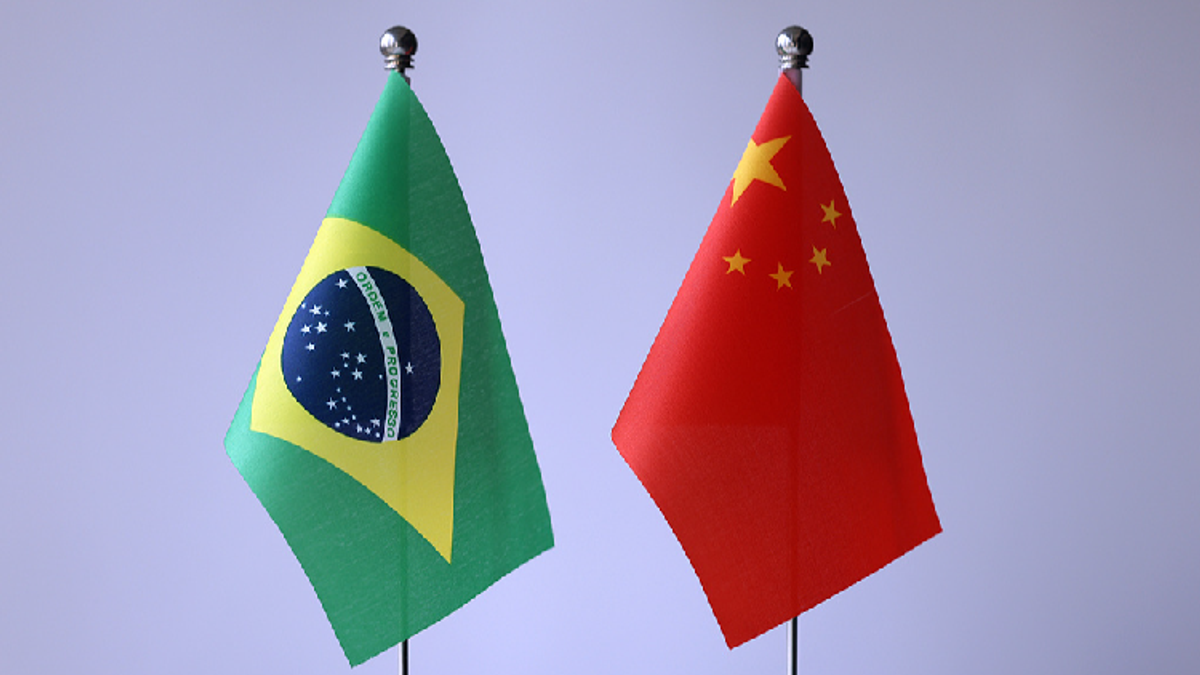
On Monday, July 27, 2026, Chinese President Xi Jinping engaged in significant phone talks with Brazilian President Luiz Inacio Lula da Silva. The high-level diplomatic exchange underscored a mutual commitment to strengthening bilateral and multilateral strategic coordination, particularly within the framework of the 'Global South.' The discussions, held between Beijing and Brasília, focused on advancing a 'China-Brazil community with a shared future,' aligning national development strategies, and enhancing cooperation across various critical sectors.
President Xi highlighted the positive progress made in aligning the two nations' development strategies, noting their crucial role in national development and improving public well-being. He also emphasized their contribution to stability in a volatile international landscape. With China marking the 105th anniversary of the Communist Party of China and the commencement of its 15th Five-Year Plan (2026-2030), and Brazil facing a key domestic political agenda, the timing of these talks signals a strategic effort to maintain positive momentum in their relationship.
Both leaders articulated a shared vision for reforming and improving the global governance system. President Xi asserted that China and Brazil, as important members of the Global South, should 'firmly stand on the right side of history' and 'the side of the progress of civilization.' This rhetoric underscores a collective desire to challenge existing international power structures and advocate for a more equitable global order. The call for upholding international fairness and justice, coupled with a resolute opposition to 'power politics' and 'external interference' – as voiced by President Lula – reflects a broader geopolitical alignment aimed at fostering multipolarity.
Central to their discussions was the promotion of 'high-quality development of greater BRICS cooperation.' President Xi urged the BRICS nations to 'chart the right course for cooperation, maintain the momentum of unity, deliver more outcomes, and write a new chapter of solidarity and self-reliance for the Global South.' This emphasis on BRICS as a platform for collective action and self-reliance is a clear indicator of its growing importance as an alternative to traditional Western-dominated blocs. Brazil's commitment to strengthening solidarity within BRICS and upholding the authority of the United Nations further illustrates a strategy of both reforming existing institutions and building parallel structures to amplify the voice of developing nations.
The economic dimension of the China-Brazil relationship was also a key focus. President Lula noted that bilateral trade had reached a new record high, reflecting the robust economic ties between the two countries. Brazil expressed keen interest in strengthening cooperation with China in cutting-edge fields such as artificial intelligence (AI), energy, and mineral resources. This aligns with China's strategic push for technological leadership and resource security, while offering Brazil opportunities for investment and technological advancement. Lula's welcome for more Chinese enterprises to invest in Brazil signifies a desire to diversify bilateral cooperation and foster economic growth.
The successful hosting of the 2026 World Artificial Intelligence Conference by China and President Xi's vision for open and inclusive international cooperation in AI governance were highly appreciated by Brazil. This convergence on AI policy highlights the strategic importance of technology in shaping future global power dynamics and the potential for the Global South to collaborate on setting norms and standards in emerging technological domains.
The phone talks between President Xi and President Lula carry significant geopolitical weight. They reinforce the growing alignment between two major economies of the Global South, signaling a concerted effort to reshape the international order. This partnership is not merely about bilateral trade; it represents a strategic coordination aimed at challenging unipolarity, advocating for a more inclusive global governance system, and asserting the collective agency of developing nations.
The explicit mention of opposing 'external interference' and 'power politics' can be interpreted as a direct, albeit implicit, critique of the foreign policies of certain Western powers. By supporting Brazil in safeguarding its sovereignty and independence, China positions itself as a reliable partner for nations seeking to assert greater autonomy on the world stage. The deepening of BRICS cooperation, alongside the emphasis on dialogue and consultation for resolving hotspot issues, suggests a preference for multilateralism that is distinct from the frameworks often promoted by Western alliances.
Looking ahead, this strengthened strategic coordination between China and Brazil is likely to have enduring implications for global power shifts. It underscores the increasing influence of the Global South in international affairs and the ongoing evolution towards a more multipolar world. The continued collaboration in economic, technological, and diplomatic spheres will be crucial in determining the future trajectory of international relations and the effectiveness of alternative governance models championed by emerging economies.
Source referenced: CGTN
This brief was synthesized by our Editorial Engine and reviewed by The Ground Narrative team.