TRENDING

Sunday, 18 October 2026
----------------------
7 Jumada Al-Awwal 1448 AH
In October 2026, China and Botswana elevated their ties to a comprehensive strategic partnership, promising new mining, digital and renewable projects. The deal promises growth, but the real impact falls on miners, farmers and small‑business owners.
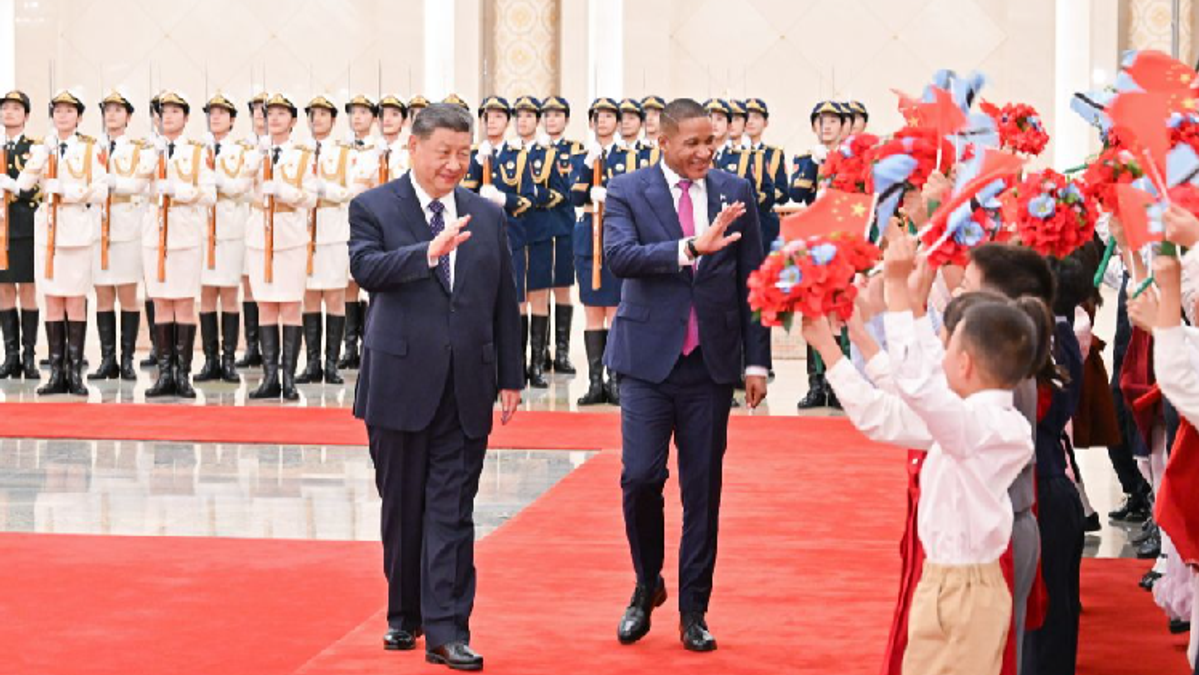
Chinese President Xi Jinping and Botswana President Duma Gideon Boko met in Beijing in mid‑October 2026 and announced a "comprehensive strategic cooperative partnership." The language invoked diamonds – Botswana’s historic export – as a metaphor for a friendship that should "shine bright and endure like diamonds." The two sides signed dozens of memoranda covering the Belt and Road Initiative, green mining, health, education and digital infrastructure. Highlights included a 100‑megawatt solar plant in Jwaneng built by a Chinese consortium, a national‑level data centre dubbed the Digital Delta, and a pledge to expand Chinese investment in mineral processing, renewable energy and biomedical innovation.
For China, Africa remains a source of raw materials and a market for excess industrial capacity. By offering zero‑tariff access to Chinese goods, Beijing creates a trade incentive that locks Botswana into a supply chain dependent on Chinese steel, machinery and electronics. The partnership also extends the Belt and Road footprint south of the Sahara, giving Beijing a geopolitical foothold in a region traditionally dominated by Western donors.
Chinese state‑owned firms finance and construct large‑scale projects – the Jwaneng solar farm and the Digital Delta data centre are prime examples. These contracts are typically funded through loans tied to future export revenues or resource concessions. In return, Botswana gains immediate infrastructure but also accrues debt that can be leveraged in future negotiations over mining licences or land use.
The agreement emphasizes "green mining" and digital transformation. By positioning itself as a provider of clean‑tech expertise, China cultivates a perception of partnership rather than exploitation. Training programmes for young engineers and medical staff create a cadre of local professionals who are familiar with Chinese standards and equipment, subtly aligning Botswana’s technical ecosystem with Beijing’s.
Botswana’s diamond sector employs thousands of workers in mines that are increasingly opened to Chinese contractors. While the partnership promises higher‑value processing, many miners face longer shifts, exposure to new extraction techniques, and the risk that profits will be repatriated to Chinese firms rather than staying in local communities.
The Jwaneng solar plant is touted as a solution to electricity shortages, yet the plant’s output is primarily earmarked for industrial zones and export‑oriented factories. Rural villages that still rely on diesel generators see only marginal improvements, and the cost of connecting households to the new grid is passed onto already cash‑strapped households.
Zero‑tariff imports flood Botswana’s retail sector with cheap Chinese goods, undercutting local manufacturers and traders. While consumers enjoy lower prices, home‑grown enterprises struggle to compete, leading to closures and job losses in sectors such as textiles, furniture and agro‑processing.
Official statements celebrate the partnership’s "mutual benefit," yet the exact terms of the financing – interest rates, repayment schedules and collateral – are rarely disclosed. Analysts warn that hidden debt could constrain Botswana’s fiscal space, forcing future governments to cede more mining concessions or accept austerity measures.
The "green mining" narrative glosses over the environmental legacy of expanding diamond and copper extraction. Chinese firms have a mixed record on pollution controls in other African projects, and the enforcement capacity of Botswana’s regulators remains limited. Communities near new mines risk water contamination and habitat loss despite promises of sustainable practices.
By deepening ties with China, Botswana signals a shift away from traditional Western aid channels. Western governments and multinational mining companies are downplaying the strategic implications, framing the deal as purely economic. In reality, the partnership gives Beijing leverage in regional forums such as the African Union and may influence voting patterns on issues ranging from trade rules to human‑rights resolutions.
- Debt disclosures: Watch for parliamentary hearings or audit reports that reveal the scale and terms of Chinese‑financed loans.
- Mining licence renewals: The next round of diamond and copper licence auctions will test whether Chinese firms secure a larger share of Botswana’s resource base.
- Local employment data: Quarterly reports on job creation in the solar and digital sectors will indicate whether promised skills transfers materialize.
- Environmental monitoring: Satellite imagery and NGO reports on water quality around new mining sites will reveal whether "green" claims hold up.
- Diplomatic moves: Any shift in Botswana’s voting behavior at the United Nations or the African Union could signal deeper geopolitical alignment with China.
These indicators will show whether the partnership truly diversifies Botswana’s economy or simply deepens its dependence on a single foreign power.
It covers zero‑tariff trade, joint projects in renewable energy, digital infrastructure, green mining, health and education, and a pledge for increased Chinese investment in Botswana’s industry.
Many of the projects are financed through loans tied to resource revenues, but the exact terms are not public, raising concerns that debt could rise and limit fiscal flexibility.
Training programmes are promised, yet many jobs in mining and manufacturing may go to Chinese firms, and the benefits to local workers depend on how contracts are structured and enforced.
Editor's Note: Analysis based on publicly available statements and prior patterns of China‑Africa infrastructure deals.
Source referenced: CGTN
This brief was synthesized by our Editorial Engine and reviewed by The Ground Narrative team.