TRENDING

Saturday, 24 October 2026
----------------------
13 Jumada Al-Awwal 1448 AH
Chinese Foreign Minister Wang Yi urged closer China-ASEAN cooperation in Manila, emphasizing economic integration and regional stability while implicitly challenging external influences. The meeting highlighted the deepening strategic partnership and ongoing efforts to manage the contentious South China Sea issue.
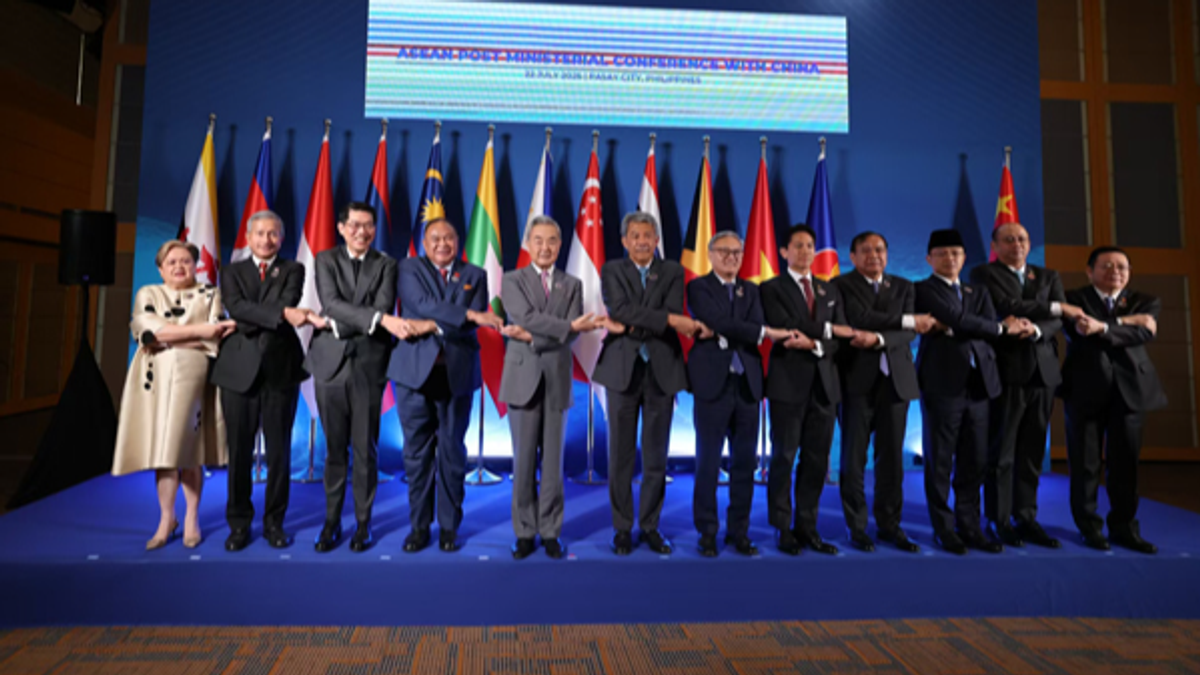
In a significant diplomatic engagement, Chinese Foreign Minister Wang Yi convened with his counterparts from the Association of Southeast Asian Nations (ASEAN) in Manila on July 22, 2026. The meeting served as a platform for Beijing to underscore the robust progress of the China-ASEAN Comprehensive Strategic Partnership over the past five years and to advocate for enhanced unity in navigating an increasingly complex geopolitical landscape. Wang Yi's remarks, delivered on July 23, 2026, outlined China's vision for the future of the partnership, emphasizing economic integration, regional security, and a concerted effort to resist what Beijing perceives as external interference.
Central to China's engagement strategy is the deepening of economic and social ties. Wang Yi highlighted four key areas of progress. Firstly, significant strides have been made in building a "community with a shared future" with neighboring countries, with China reaching bilateral consensus with eight ASEAN member states on this concept. This initiative, a cornerstone of Chinese foreign policy, aims to foster closer political and economic alignment with regional partners.
Secondly, economic and trade cooperation has seen sustained growth. China and ASEAN have maintained their status as each other's largest trading partners for six consecutive years, with bilateral trade surpassing an impressive $1 trillion in 2025. The formal signing of the China-ASEAN Free Trade Area (CAFTA) 3.0 Upgrade Protocol further solidifies this economic interdependence, promising expanded market access and reduced trade barriers. This economic gravity positions China as an indispensable partner for ASEAN's development aspirations.
Thirdly, the partnership has demonstrated solidarity in times of crisis, exemplified by China's rapid emergency assistance following major earthquakes in Myanmar and Mindanao in the Philippines. Such acts of mutual support aim to build goodwill and reinforce China's image as a reliable regional actor. Lastly, people-to-people exchanges have expanded significantly, facilitated by initiatives like the 2024-2025 ASEAN-China Year of People-to-People Exchanges and a dedicated visa facilitation scheme for ASEAN countries. These cultural and social linkages are crucial for fostering long-term understanding and cooperation.
Looking ahead, Wang Yi put forth four proposals to further advance China-ASEAN cooperation, each carrying significant geopolitical implications. The first proposal focused on safeguarding the regional environment for peace and development. Wang urged all sides to champion "Asian values" of peace, cooperation, openness, and inclusiveness, while firmly rejecting "unjustified external interference." This diplomatic language implicitly targets the growing influence of extra-regional powers, particularly the United States, and its efforts to strengthen alliances in the Indo-Pacific. China's call to oppose "exclusive small groupings" and refuse "camp-based confrontation" is a clear message against US-led security architectures like AUKUS or the Quad, which Beijing views as attempts to contain its rise.
Secondly, Wang proposed bolstering the resilience of regional development through open cooperation, deeper development integration, and the high-standard implementation of the Regional Comprehensive Economic Partnership (RCEP). Enhancing food, energy security, and supply chain stability were also highlighted, reflecting global concerns over economic vulnerabilities and disruptions. The third proposal centered on advancing green and innovation-driven development, with calls for expanded cooperation in emerging areas such as the digital economy, artificial intelligence, submarine cables, climate response, clean energy, and green agriculture. This aligns with global trends and positions China as a leader in future-oriented industries.
Finally, Wang emphasized a people-centered approach, promoting inclusive and equitable development to ensure tangible benefits for all citizens. This includes enhancing exchanges in poverty reduction, public health, education, youth, and tourism, aiming to broaden the base of support for the China-ASEAN partnership.
A critical and often contentious aspect of China-ASEAN relations is the South China Sea issue. Wang Yi reiterated China's position, urging regional countries to strictly honor the Declaration on the Conduct of Parties in the South China Sea (DOC). Crucially, he called on regional nations to resist "external attempts to stoke tensions" and reject any nation's efforts to "stir trouble" in the disputed waters. This stance underscores China's preference for managing the dispute bilaterally or regionally, minimizing the involvement of non-claimant states, particularly those perceived as challenging China's expansive claims.
Wang also noted that a "critical window has opened" for finalizing the Code of Conduct (COC) in the South China Sea, urging all parties to seize this opportunity and prevent external interference. The COC, if successfully negotiated, is intended to provide a framework for managing maritime activities and preventing conflicts in the disputed region. ASEAN countries, for their part, expressed hope for an early conclusion of the COC this year, reflecting their collective desire for stability and a rules-based approach to the complex territorial and maritime claims.
ASEAN member states acknowledged China as one of their most important neighbors and dialogue partners, as well as their largest trading partner. In the face of a turbulent international landscape, ASEAN countries expressed a desire for closer strategic coordination with China to bolster their own development resilience and advance high-quality connectivity. They voiced support for deeper cooperation across various sectors, including trade, investment, the digital economy, artificial intelligence, climate change, clean energy, and efforts to combat transnational crime. The meeting concluded with the adoption of a joint statement addressing the impact of the evolving situation in the Middle East on the region and strengthening regional energy cooperation, highlighting the broader scope of their collaborative agenda.
This diplomatic engagement in Manila underscores the intricate balance ASEAN nations must strike between leveraging China's economic might and navigating the geopolitical complexities, particularly concerning the South China Sea. For China, the meeting was an opportunity to consolidate its regional influence, promote its vision for a multipolar world, and counter perceived challenges to its strategic interests in Southeast Asia. The ongoing dialogue and cooperation between China and ASEAN will continue to be a defining factor in shaping the future stability and prosperity of the Indo-Pacific region.
Source referenced: CGTN
This brief was synthesized by our Editorial Engine and reviewed by The Ground Narrative team.


