TRENDING

Friday, 16 October 2026
----------------------
5 Jumada Al-Awwal 1448 AH
Chinese Foreign Minister Wang Yi and Australian Foreign Minister Penny Wong met in Manila, Philippines, to discuss strengthening bilateral ties and addressing regional concerns.
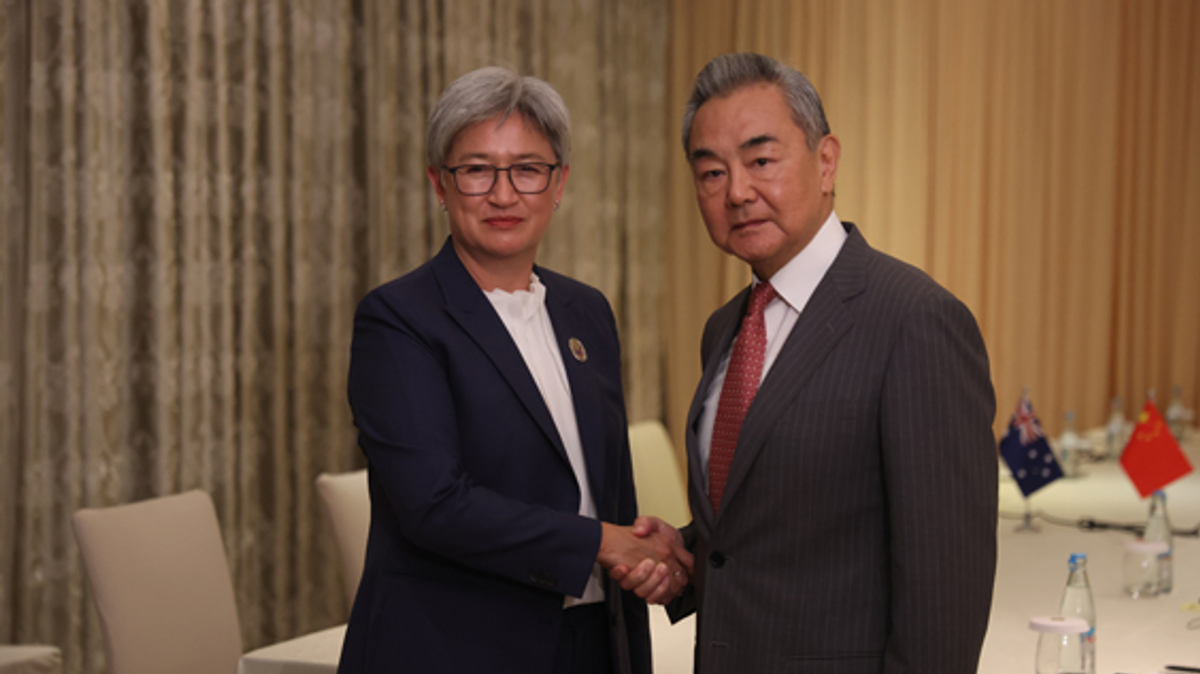
The recent meeting between Chinese Foreign Minister Wang Yi and Australian Foreign Minister Penny Wong in Manila, Philippines, marks a significant development in the efforts to strengthen China-Australia relations. The meeting comes at a time when regional tensions are running high, and both countries are seeking to navigate their complex relationships with each other and other major powers.
The China-Australia relationship has experienced significant ups and downs in recent years. In 2020, Australia's decision to ban Huawei from participating in its 5G network rollout led to a deterioration in relations. However, in 2022, the two countries began to show signs of improvement, with China lifting its sanctions on Australian coal and wine exports. The current meeting is a continuation of this trend, with both sides seeking to build on the progress made so far.
China's motivations for strengthening ties with Australia are multifaceted. Firstly, China is seeking to expand its economic influence in the Asia-Pacific region, and Australia is a key player in this region. By strengthening ties with Australia, China can gain access to new markets, resources, and investment opportunities. Secondly, China is seeking to counterbalance the growing influence of the United States in the region, and Australia's strategic location makes it an important partner in this effort.
Australia, on the other hand, is seeking to strengthen ties with China for several reasons. Firstly, Australia is heavily reliant on China as a trading partner, and a strong relationship with China is essential for its economic growth. Secondly, Australia is seeking to diversify its foreign policy and reduce its dependence on the United States, and a strong relationship with China can help it achieve this goal.
The strengthening of China-Australia relations has significant implications for the region. Firstly, it can help to reduce tensions between China and the United States, which have been a major source of instability in the region. Secondly, it can help to promote economic cooperation and investment in the region, which can lead to greater prosperity and stability. However, it also raises concerns about China's growing influence in the region and the potential for Australia to become a proxy for Chinese interests.
The future consequences of the strengthening of China-Australia relations will depend on several factors. Firstly, the success of the relationship will depend on the ability of both sides to manage their differences and address their concerns. Secondly, the relationship will be influenced by the broader regional dynamics, including the rise of China and the response of other major powers. Finally, the relationship will be shaped by the domestic politics of both countries, including the leadership styles and policies of their respective governments.
The meeting between Chinese Foreign Minister Wang Yi and Australian Foreign Minister Penny Wong is a significant development in the efforts to strengthen China-Australia relations. While there are challenges ahead, the two countries have a strong foundation to build on, and a successful relationship can have significant benefits for both sides. However, the relationship will require careful management and a commitment to addressing the concerns of both sides if it is to succeed.
Source referenced: CGTN
This brief was synthesized by our Editorial Engine and reviewed by The Ground Narrative team.