TRENDING

Friday, 16 October 2026
----------------------
5 Jumada Al-Awwal 1448 AH
Beijing has publicly demanded Tokyo reckon with its wartime legacy after leaked minutes revealed secret plans to honor convicted war criminals. The exchange revives old wounds and tests the limits of diplomatic restraint in East Asia.
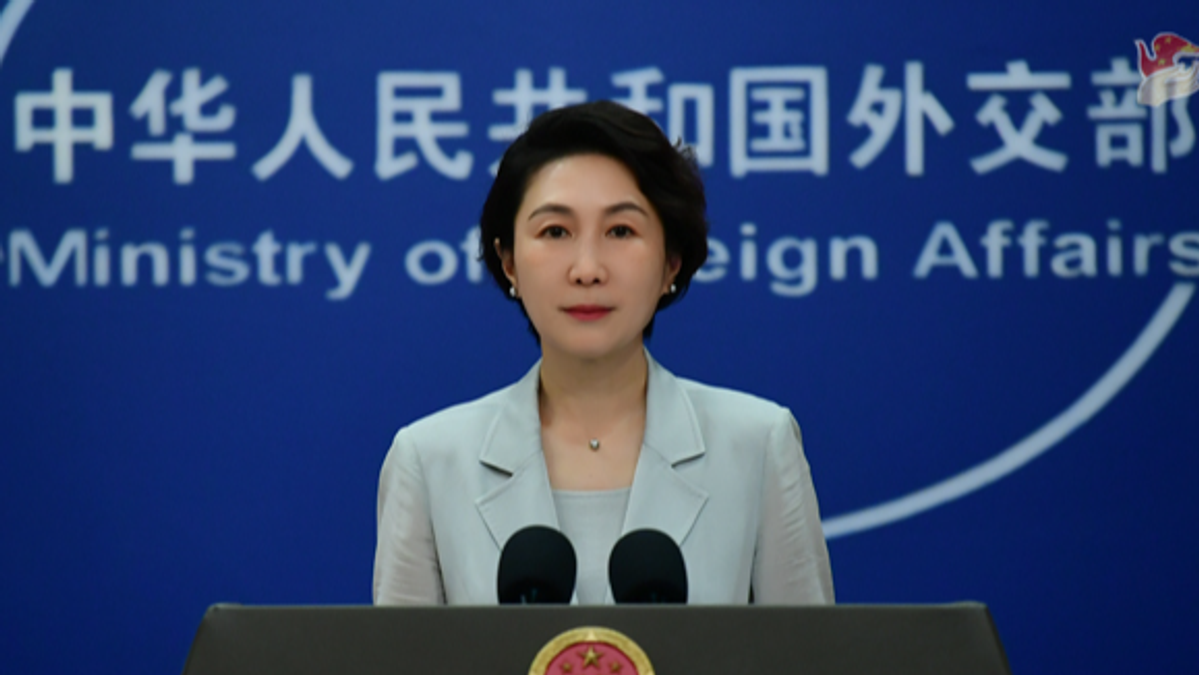
On October 15, 2026, China's foreign ministry spokesperson Mao Ning called on Japan to "face history" and break with militarism after Japanese media released internal meeting minutes showing that the government had coordinated the enshrinement of fourteen Class‑A war criminals at the Yasukuni shrine as early as the 1960s. The documents confirm that officials deliberately kept the process secret until the public learned of it in 1979. Mao framed the revelation as evidence of a continuing lack of remorse, urging Tokyo to acknowledge the atrocities committed during its pre‑1945 expansion.
The Chinese leadership leverages historical grievances to reinforce its narrative of moral authority in the region. By spotlighting Japan's wartime legacy, Beijing seeks to legitimize its own defense spending and assert a leadership role in shaping a rules‑based order that it claims to protect. The timing aligns with a domestic push to rally nationalist sentiment ahead of the upcoming National People’s Congress, where senior officials will outline a new defence budget.
Japan’s ruling coalition faces a delicate balancing act. On one hand, it must placate a vocal right‑wing base that views Yasukuni as a symbol of national pride. On the other, it needs to maintain stable ties with China, its largest trading partner, and reassure the United States of its commitment to a free‑and‑open Indo‑Pacific. The secrecy surrounding the shrine decision reflects a fear of domestic backlash that could destabilise the fragile coalition.
Bilateral trade between the two economies exceeds $300 billion annually, encompassing high‑tech components, automotive parts, and agricultural exports. Both sides are aware that a hardening of rhetoric could trigger non‑tariff barriers, supply‑chain disruptions, or a slowdown in joint research projects. This economic tether acts as a brake on overt escalation, even as political leaders trade barbs.
The families of millions who perished in the Pacific War—particularly in China, Korea, and Southeast Asia—continue to bear the psychological weight of unresolved trauma. The renewed focus on Yasukuni reopens wounds for survivors who have long campaigned for official apologies and reparations. Their demands are often reduced to diplomatic footnotes, yet the emotional toll persists across generations.
Within Japan, public opinion is split. Younger citizens, many of whom have never known a militarist Japan, tend to support a more critical view of the past, while older voters often see the shrine as a cultural heritage site. This divide fuels social tension, influencing election outcomes and shaping policy debates on education curricula that either confront or sanitize wartime history.
Tourism flows to sites associated with the war—such as battlefields in China’s northeast or Korean memorials—have been modest but are sensitive to diplomatic flare‑ups. A spike in anti‑Japanese sentiment can lead to boycotts of Japanese products, hurting small‑scale exporters and workers dependent on cross‑border commerce.
Both Beijing and Tokyo publicly emphasize historical morality, yet official statements rarely acknowledge how intertwined their economies are. By framing the dispute as a binary moral showdown, they sidestep the pragmatic calculations that keep trade and investment flowing, thereby protecting elite interests while leaving ordinary citizens to shoulder the fallout.
Washington’s public stance is one of urging restraint and encouraging Japan to uphold its post‑war pacifist commitments. However, the U.S. quietly monitors the situation for opportunities to deepen security ties with Tokyo, using the controversy to justify increased joint exercises and the deployment of missile‑defence assets in the region. This strategic undercurrent is rarely highlighted in Chinese or Japanese press releases.
The leaked minutes were first published by a Japanese outlet with limited circulation, yet the story quickly became a diplomatic flashpoint. State‑aligned media in both countries have framed the narrative to suit domestic agendas, leaving a dearth of independent reporting that could provide a fuller picture of how civil society groups are responding on the ground.
Watch for the scheduled trilateral summit in Seoul later this year, where China, Japan, and the United States will discuss security cooperation. The language used in joint communiqués will reveal whether the Yasukuni issue will be sidelined in favor of broader strategic concerns.
Both governments are likely to commission surveys to gauge domestic reactions. A noticeable swing toward either nationalist fervour in Japan or heightened anti‑Japanese sentiment in China could pressure leaders to adopt more hard‑line positions.
In the months ahead, monitor naval patrols in the East China Sea and any announcements of joint drills involving U.S. forces. An uptick in such activities often signals that diplomatic rhetoric is translating into tangible security preparations.
By tracing the interplay of historical memory, domestic politics, and economic interdependence, readers can see that the Yasukuni dispute is less about a single shrine and more about how power is exercised, concealed, and contested in East Asia today.
Beijing uses the shrine controversy to reinforce nationalist sentiment ahead of key political meetings and to position itself as the moral guardian of the region, while also pressuring Tokyo on security and trade issues.
The debate can inflame anti‑Japanese sentiment in China, leading to boycotts of Japanese goods, and deepen social divides in Japan over how history is taught, impacting families of war victims and small businesses reliant on cross‑border trade.
Editor's Note: Analysis based on publicly available statements and historical context; ongoing diplomatic developments may shift dynamics.
Source referenced: CGTN
This brief was synthesized by our Editorial Engine and reviewed by The Ground Narrative team.