TRENDING

Friday, 16 October 2026
----------------------
5 Jumada Al-Awwal 1448 AH
Despite a brokered ceasefire, malnutrition and starvation in Gaza have reached catastrophic levels, claiming hundreds of lives, particularly among children and the elderly. This crisis highlights the deep disconnect between diplomatic agreements and the grim reality on the ground for ordinary Palestinians.
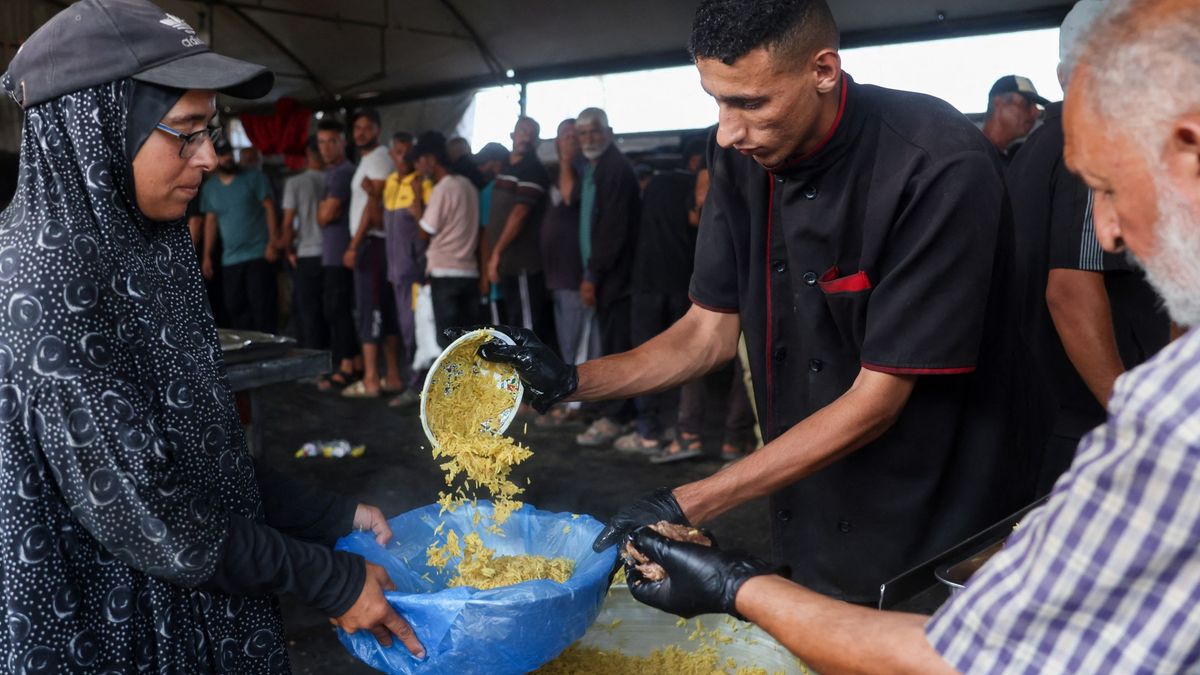
Malnutrition and starvation in Gaza have escalated to "catastrophic" levels, according to the Palestinian Ministry of Health, despite a United States-brokered ceasefire intended to facilitate humanitarian aid. Since 2024, at least 466 Palestinians have died from malnutrition and starvation, with children accounting for one-third of these deaths. The elderly represent the largest share, with 189 deaths, comprising 40.5 percent of the total, as many reduce their own portions to feed family members. The crisis projects 74,200 children will require acute malnutrition treatment by April 2027, while anaemia rates among pregnant women have surged to 61 percent in 2026, leading to a threefold increase in pregnancy losses compared to previous periods.
The catastrophic hunger in Gaza is not a natural disaster but a direct consequence of interlocking power dynamics, where control over resources and access becomes a tool of leverage. At the core is Israel's long-standing blockade of Gaza, a policy in place since 2007, which has systematically restricted the flow of goods, including food, water, fuel, and medical supplies. This blockade, intensified since the October 2023 war, transforms humanitarian aid from an unconditional necessity into a politically negotiated concession. Israel maintains that these restrictions are for security, to prevent Hamas from acquiring materials that could be used for military purposes. However, the practical outcome is a population dependent on external aid, with its very survival dictated by the fluctuating policies and permissions of the blockading power.
The recent US-brokered "ceasefire," while ostensibly aimed at increasing aid, demonstrates the limits of diplomatic intervention when fundamental power imbalances persist. Such agreements often serve as political victories for the mediators, creating an illusion of progress without fundamentally altering the conditions on the ground. The flow of aid, even under a ceasefire, remains subject to the discretion of Israel, which recently halted commercial supplies, citing a tax dispute between local merchants and Hamas. This accusation, denied by Hamas as "baseless disinformation," highlights how the internal governance of Gaza — or the lack thereof — is weaponized in the discourse around aid. The dispute, whether real or manufactured, provides a pretext for further restrictions, effectively turning the civilian population's hunger into a bargaining chip in a broader conflict.
Hamas, as the de facto governing authority in Gaza, also wields power, albeit within the confines of the blockade. Its ability to levy taxes or control distribution channels, even if disputed, impacts the accessibility and cost of goods for ordinary citizens. The accusation of a tax dispute, regardless of its veracity, points to the complex and often opaque layers of control within the Strip that further complicate humanitarian efforts. International bodies like UNICEF are caught in the middle, able to monitor and warn, but ultimately lacking the enforcement power to ensure consistent and unrestricted aid flow, especially when sovereign states leverage humanitarian access for political or security objectives. The very structure of aid delivery becomes a mechanism through which powerful actors assert control, leaving the most vulnerable with little agency over their own survival.
The numbers paint a stark picture, but behind each statistic is a human story of profound suffering and loss. The Gaza malnutrition crisis is disproportionately impacting the most vulnerable segments of the population, turning basic survival into an agonizing daily struggle.
Children are bearing the brunt of this crisis. With one-third of all malnutrition-related deaths since 2024 being children, and 74,200 projected to require treatment for acute malnutrition by April 2027, an entire generation faces irreversible damage. Malnutrition in early childhood leads to stunted growth, impaired cognitive development, and weakened immune systems, leaving them susceptible to diseases that a healthy body could easily fight off. Even for those who survive, the long-term physical and mental scars will shape their lives for decades, impacting their education, future productivity, and overall well-being. The innocence of childhood is replaced by the constant gnawing of hunger, a trauma that will echo through their lives.
The elderly, often overlooked in crisis narratives, are silently making the ultimate sacrifice. Accounting for 40.5 percent of malnutrition deaths, these individuals are not only vulnerable due to age and pre-existing health conditions but are actively choosing to go without food so their families can eat. The statistic that 48 percent of older people reduced their portions, and 11 percent went an entire day without a meal, reveals a profound act of love and desperation. This selflessness, while heartbreaking, underscores the extreme conditions forcing families to make impossible choices, eroding the dignity of those who should be cared for and revered in their later years.
The health crisis extends to pregnant women, with anaemia rates soaring to 61 percent in 2026 from 41 percent before the war. This directly contributes to nearly 4,000 pregnancy losses in the first half of 2026, a threefold increase. Anaemia and malnutrition in pregnant women have severe consequences for both mother and child, leading to higher rates of stillbirths, premature births, and low birth weight, perpetuating a cycle of poor health into the next generation. The ability to safely carry a child to term and nurture its early development is being systematically undermined, creating a public health catastrophe that will have intergenerational repercussions.
Beyond these specific groups, 1.4 million Palestinians — 67 percent of Gaza's population — are projected to face crisis-level food insecurity or worse through the end of 2026. This means widespread reliance on charity kitchens, a profound loss of self-sufficiency, and the erosion of dignity. The inability to provide for one's family, to access basic sustenance, strips individuals of their agency and fosters a pervasive sense of helplessness. The human cost is not just measured in deaths, but in the psychological toll of constant hunger, uncertainty, and the systematic dismantling of a community's ability to sustain itself.
While official statements and news reports often focus on the immediate crisis, several critical dimensions of the Gaza malnutrition crisis remain downplayed or omitted by powerful actors, obscuring the full mechanics of control and responsibility.
The term "US-brokered ceasefire" often implies a resolution or a significant de-escalation that should inherently alleviate suffering. However, the reality in Gaza demonstrates that a ceasefire, especially one not leading to a complete lifting of the blockade, is merely a pause in overt conflict, not an end to the humanitarian catastrophe. Powerful states and international bodies often highlight their diplomatic efforts as successes, framing ceasefires as evidence of their commitment to peace. Yet, for the people of Gaza, a ceasefire that allows restricted aid flow and maintains the fundamental conditions of siege is an empty promise. It shifts the narrative from active destruction to passive starvation, a slower, less visible form of suffering that is politically easier to manage and less likely to provoke international outrage.
The focus on aid delivery, while crucial for immediate survival, often overshadows the deliberate destruction of Gaza's capacity for self-sufficiency. The Gaza Health Ministry's call for support to revive local food production is a critical, yet often ignored, plea. Years of conflict, repeated displacement, and the blockade have systematically dismantled Gaza's agricultural sector, fishing industry, and other local economic activities. Farmland has been destroyed, access to fishing zones restricted, and essential inputs like seeds, fertilizers, and equipment are difficult to import. By making the population entirely dependent on external aid, the powerful actors involved maintain a profound level of control. The "untold story" here is that the crisis is not just about a lack of food *entering* Gaza, but a systemic prevention of Gaza's ability to *produce* its own food, thereby ensuring long-term dependency and vulnerability.
Israel's claim that supply shortages are due to a "tax dispute between local merchants and Hamas," and Hamas's swift dismissal of this as "baseless disinformation," serves as a classic example of a blame game designed to deflect responsibility. While internal governance issues within Gaza are undoubtedly complex, framing the entire humanitarian crisis around such a dispute downplays the overarching impact of the blockade and the extensive destruction caused by years of conflict. This narrative strategy shifts focus away from the fundamental issue of restricted access and the systemic collapse of Gaza's economy, instead placing the onus on internal Palestinian dynamics. Both sides, in their accusations, contribute to a fog of war that obscures the primary drivers of the humanitarian catastrophe and delays meaningful, sustained solutions.
The most insidious untold story is the slow normalization of suffering in Gaza. The ongoing nature of the crisis, stretching over years and punctuated by repeated escalations, risks desensitizing the international community. What was once shocking becomes routine. The "catastrophic levels" of malnutrition, the deaths of children and the elderly, the widespread food insecurity – these become statistics rather than urgent calls to action. Governments and international organizations, accustomed to managing protracted crises, may prioritize stability and political expediency over radical solutions like a complete lifting of the blockade or robust international intervention. The human cost, while acknowledged, is often treated as an unfortunate but inevitable consequence of a complex conflict, rather than a direct result of specific policies and power dynamics that could be altered.
As the Gaza malnutrition crisis deepens, several critical indicators will reveal the true trajectory of this humanitarian catastrophe and the political will, or lack thereof, to address it meaningfully.
First, monitor the consistency and volume of humanitarian and commercial aid entering Gaza. The current "ceasefire" has shown fragility, with supplies being disrupted. Any further halts or significant reductions, particularly as winter approaches, will directly translate into accelerated suffering and deaths. Watch for whether Israel maintains its stated policy of allowing aid, and how Hamas facilitates its distribution, or if either side uses aid as a political bargaining chip. The rhetoric around "tax disputes" or "security concerns" will be key indicators of impending restrictions.
Second, observe any genuine efforts to revive Gaza's local food production and economic infrastructure. The Gaza Health Ministry's call for support in this area is crucial. A true commitment to humanitarian relief would involve not just delivering aid, but enabling Palestinians to rebuild their farms, fishing fleets, and markets. Look for concrete investments or relaxation of import restrictions on agricultural inputs, construction materials, and commercial goods. The absence of such initiatives would signal a continued reliance on dependency, perpetuating the cycle of crisis.
Third, pay close attention to the health crisis beyond immediate starvation. The soaring rates of anaemia in pregnant women and the increase in pregnancy losses foreshadow a long-term public health disaster. Watch for reports on disease outbreaks, particularly among malnourished children and the elderly, as weakened immune systems make populations highly susceptible. The capacity of Gaza's healthcare system, already decimated, to cope with these secondary health crises will be a critical measure of the overall humanitarian response.
Finally, scrutinize the political discourse surrounding the blockade. Will international pressure translate into a sustained demand for its complete lifting, or will it remain focused on temporary aid corridors? The long-term resolution of Gaza's humanitarian crisis hinges on a fundamental shift in the power dynamics that govern access and control, moving beyond short-term fixes to address the root causes of dependency and vulnerability. The actions, or inactions, of major international players like the United States and the United Nations will be pivotal in determining whether Gaza can move beyond the brink of famine."
,
Since 2024, at least 466 Palestinians have died from malnutrition and starvation in Gaza. Children account for one-third of these deaths, while the elderly make up the largest share at 40.5 percent.
The crisis projects 74,200 children will require treatment for acute malnutrition by April 2027. Anaemia rates among pregnant women have surged to 61 percent in 2026, leading to a threefold increase in pregnancy losses compared to previous periods.
The crisis persists due to ongoing restrictions on aid flow, the long-standing Israeli blockade, and the systematic destruction of Gaza's local food production capacity. Political disputes over aid distribution also contribute to the continued suffering.
Source referenced: ALJAZEERA
This brief was synthesized by our Editorial Engine and reviewed by The Ground Narrative team.


