TRENDING

Monday, 19 October 2026
----------------------
8 Jumada Al-Awwal 1448 AH
The world's great powers are engaged in a high-stakes competition for access to Central Asia's vast treasure troves of critical minerals, including rare earths, manganese, and lithium. The region has emerged as a key battleground in the global scramble for these resources, with the US, EU, China, and Russia vying for influence.
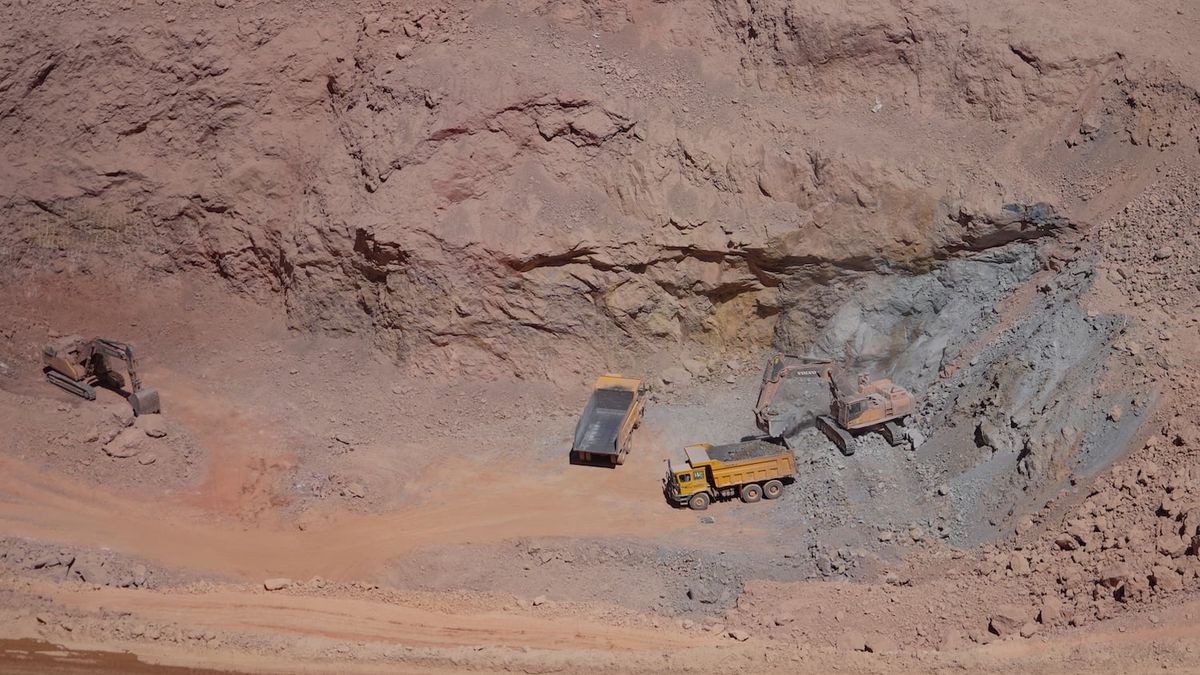
The world's great powers are engaged in a new iteration of the Great Game, a centuries-old struggle for influence and control in Central Asia. The region's vast treasure troves of critical minerals, including rare earths, manganese, and lithium, have become the focal point of this competition. The US, EU, China, and Russia are all vying for access to these resources, which are essential for clean energy technologies, digital technologies, and defense systems.
Central Asia holds 39% of global manganese ore reserves, 31% of chromium, 20% of lead, 13% of zinc, 9% of titanium, 6% of aluminum, 5% of copper, 5% of cobalt, and 5% of molybdenum. Kazakhstan, Kyrgyzstan, and Uzbekistan are among the top producers of these critical minerals. The region's strategic significance lies in its ability to supply the world's growing demand for these resources, which is expected to accelerate considerably in the coming decades.
The US, EU, and China have all been actively courting Central Asian nations to secure access to their critical minerals. The US has signed a historic agreement with Uzbekistan to gain better access to the country's critical minerals, while the EU has strengthened its ties with the region through the 3rd EU-Central Asia Economic Forum. China, which has made significant inroads in the region, is currently both a globally dominant supplier and a refiner of these elements.
Russia, which has expressed concerns about the US and EU efforts to secure access to rare earths and critical minerals in Central Asia, is also seeking to maintain its influence in the region. The Russian Deputy Foreign Minister has warned that the US and EU are attempting to push Russia out and create a Western-controlled infrastructure in the immediate vicinity of its borders.
The exploitation of Central Asia's mineral resources comes with several challenges, including the lack of reliable and up-to-date data on resource endowments, the predominance of domestic state-owned enterprises in the sector, and past disputes with foreign investors. Modernizing exploration and adopting advanced technologies, such as artificial intelligence for geological mapping and digitizing data, will be crucial in improving resource management and building local capacity.
The critical minerals business in Central Asia has the potential to drive economic growth and diversify the region's economies. However, it also risks perpetuating the dependency of the region on the world's larger and richer nations. Foreign investments should come with developmental dividends, such as technology transfer and the establishment of some degree of processing capacity locally.
China's cooperation with Central Asian countries could focus on supporting them in developing vertically integrated industries, from exploration and extraction to separation and advanced manufacturing. This approach would contrast with Western resource firms' attitude, which frequently prioritizes short-term shareholder value and regulatory de-risking. Instead, China could partner with Central Asian countries to build vertically integrated industrial models linking mining with midstream processing and downstream applications.
The new Great Game in Central Asia is a high-stakes competition for access to critical minerals. The region's strategic significance lies in its ability to supply the world's growing demand for these resources. The US, EU, China, and Russia are all vying for influence, and the challenges of exploiting Central Asia's mineral resources are significant. However, with the right approach, the critical minerals business in Central Asia has the potential to drive economic growth and diversify the region's economies.
Editor's Note: The analysis is based on publicly available information and may not reflect the full range of perspectives on the issue.
Source referenced: FOREIGNPOLICY
This brief was synthesized by our Editorial Engine and reviewed by The Ground Narrative team.