TRENDING

Tuesday, 22 September 2026
----------------------
11 Rabi' Al-Thani 1448 AH
Bulgaria's Prime Minister Rumen Radev has threatened to veto the EU's latest package of sanctions against Russia, citing concerns over the impact on the country's economy and its historical ties to the Russian Orthodox Church. The move has sparked concerns about Bulgaria's commitment to EU unity and its willingness to prioritize national interests over collective action.
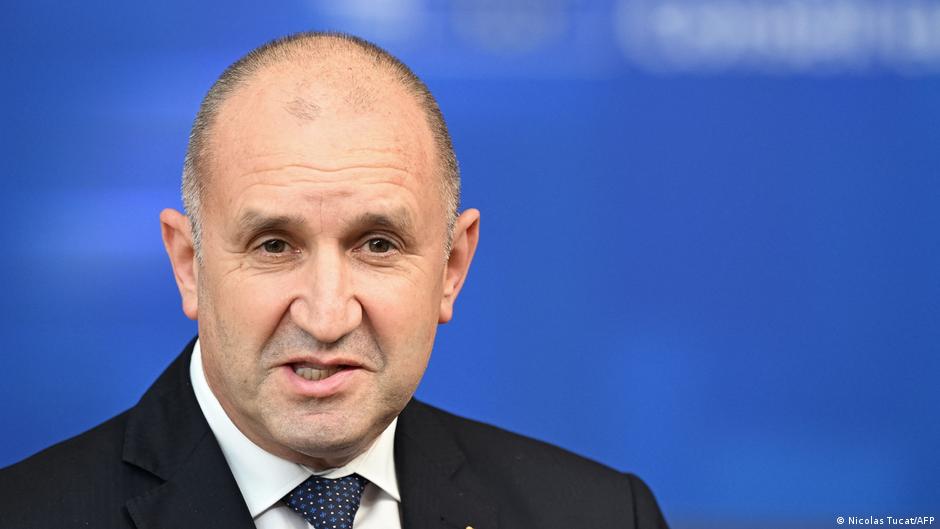
Bulgaria's Prime Minister Rumen Radev has sent shockwaves through the European Union by threatening to veto the latest package of sanctions against Russia. The move has sparked concerns about Bulgaria's commitment to EU unity and its willingness to prioritize national interests over collective action.
The EU's latest package of sanctions against Russia includes 34 individuals and 47 entities, with the aim of further isolating Russia and pressuring it to end its aggression in Ukraine. However, Bulgaria's Prime Minister Rumen Radev has objected to the inclusion of two individuals on the list: Patriarch Kirill, the head of the Russian Orthodox Church, and Vagit Alekperov, the former president of Lukoil.
Radev's objections are rooted in Bulgaria's historical ties to the Russian Orthodox Church and its economic interests in Lukoil. The prime minister has argued that the sanctions could disrupt supplies of fertilizers and spare parts for the Sofia metro, as well as the operations of Lukoil's oil refinery in Burgas. He has also claimed that the sanctions could expose Bulgaria to up to €3 billion in liability.
Bulgaria's veto threat has sparked concerns about the country's commitment to EU unity and its willingness to prioritize national interests over collective action. The move has also raised questions about the EU's ability to maintain a united front against Russia, particularly in the face of economic and historical ties between member states and Russia.
If Bulgaria follows through on its threat to veto the sanctions package, it could have significant consequences for the EU's ability to maintain a united front against Russia. It could also undermine the EU's credibility and effectiveness in promoting democracy and human rights in Eastern Europe.
Bulgaria's historical ties to the Russian Orthodox Church date back to the 19th century, when the Church played a significant role in the country's struggle for independence from the Ottoman Empire. However, the Church's role in Bulgaria's history is complex and multifaceted, and its relationship with the Russian government is also subject to interpretation.
Lukoil's oil refinery in Burgas is Bulgaria's only oil refinery, and the company has significant economic interests in the country. The sanctions could disrupt the refinery's operations and have a significant impact on Bulgaria's economy.
Bulgaria's veto threat has sparked concerns about the country's commitment to EU unity and its willingness to prioritize national interests over collective action. The move has also raised questions about the EU's ability to maintain a united front against Russia, particularly in the face of economic and historical ties between member states and Russia.
Bulgaria's veto threat is a test of EU unity and national interests. The move has sparked concerns about the country's commitment to EU unity and its willingness to prioritize national interests over collective action. The future consequences of the veto threat are uncertain, but it could have significant implications for the EU's ability to maintain a united front against Russia.
Bulgaria
EU
Russia
Sanctions
Lukoil
Russian Orthodox Church
Politics
World