TRENDING

Sunday, 25 October 2026
----------------------
14 Jumada Al-Awwal 1448 AH
A new poll shows Brazilian President Luiz Inacio Lula da Silva leading Senator Flavio Bolsonaro ahead of the October 2026 presidential election. The outcome carries significant implications for Brazil's domestic policies, regional influence, and global standing.
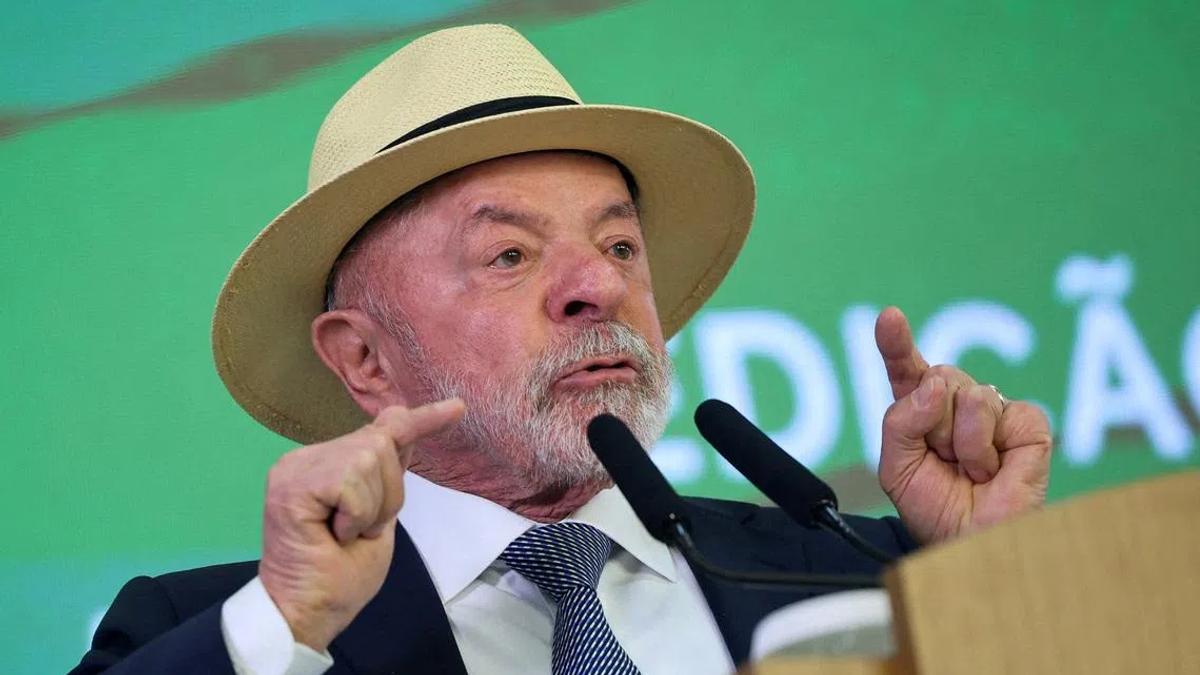
A recent poll conducted by Nexus for BTG Pactual indicates that Brazilian President Luiz Inacio Lula da Silva holds a significant lead over Senator Flavio Bolsonaro, son of former President Jair Bolsonaro, ahead of the October 2026 presidential election. This survey, conducted between July 24-26, 2026, among 2,004 respondents with a 2 percentage point margin of error, positions Lula with 47% support against Flavio Bolsonaro's 43% in a simulated second-round runoff. In a first-round scenario, Lula also leads with 42% of the votes, followed by Bolsonaro at 33%, with other candidates trailing. These findings underscore the ongoing political dynamics in Brazil and highlight the substantial geopolitical implications of the upcoming electoral contest.
The election pits two distinct political ideologies against each other, represented by Lula's Workers' Party (PT) and the conservative movement associated with the Bolsonaro family. Luiz Inacio Lula da Silva, a veteran leftist leader, previously served two terms as president from 2003 to 2010 and returned to power in 2022. His political platform typically emphasizes social welfare programs, state-led economic development, and a foreign policy focused on multilateralism and South-South cooperation. His current lead suggests a continued public preference for his brand of governance, which often seeks to address income inequality and expand social safety nets.
Conversely, Senator Flavio Bolsonaro represents the political legacy of his father, Jair Bolsonaro, whose presidency (2019-2022) was characterized by conservative social policies, market-friendly economic reforms, and a more nationalistic foreign policy often aligned with the United States. While not Jair Bolsonaro himself, Flavio's candidacy signifies the enduring influence of the 'Bolsonaro' brand and its appeal to a segment of the electorate that favors a different approach to governance, often prioritizing individual liberties, law and order, and reduced state intervention. The contest, therefore, is not merely a choice between individuals but between fundamentally different visions for Brazil's future.
The outcome of the October election will profoundly shape Brazil's domestic landscape. A Lula victory would likely solidify the current administration's economic policies, which have focused on increasing public spending, strengthening social programs like Bolsa Família, and potentially greater state involvement in strategic sectors. This approach aims to stimulate domestic demand and reduce poverty but can also raise concerns about fiscal responsibility and inflation among market observers. The continuity of Lula's policies would also likely entail a sustained focus on environmental protection, particularly concerning the Amazon rainforest, a critical issue both domestically and internationally.
Conversely, a victory for Flavio Bolsonaro would signal a potential shift back towards policies reminiscent of his father's administration. This could involve renewed efforts towards privatization, deregulation, and a more austere fiscal policy. Such a shift might be welcomed by certain business sectors and international investors seeking a more market-oriented environment, but it could also lead to a re-evaluation of social programs and environmental regulations. Beyond economic policy, the election's outcome will also influence the broader political climate, impacting social cohesion in a nation that has experienced significant polarization in recent years. The health of Brazil's democratic institutions, which faced challenges during the previous Bolsonaro era, will also be under scrutiny, with the election serving as a critical test of their resilience and impartiality.
Brazil's presidential election carries substantial weight beyond its borders, given the country's status as Latin America's largest economy and a significant global actor. Under Lula, Brazil has actively pursued a foreign policy that champions multilateralism, strengthens regional blocs like Mercosur, and fosters closer ties with emerging economies through platforms such as BRICS (Brazil, Russia, India, China, South Africa). A continued Lula presidency would likely reinforce this trajectory, potentially enhancing Brazil's role as a bridge between the Global South and traditional Western powers, and advocating for reforms in global governance structures. This approach could see Brazil continue to diversify its international partnerships, particularly with China, and maintain a more independent stance on various geopolitical issues.
Should Flavio Bolsonaro emerge victorious, Brazil's foreign policy might pivot towards a more nationalistic and potentially more aligned position with the United States and other Western democracies, similar to his father's tenure. This could lead to a re-evaluation of Brazil's engagement with BRICS, a different approach to regional diplomacy in South America, and potentially a less assertive stance on climate change issues on the international stage. The implications for the Amazon rainforest, a vital global carbon sink, are particularly acute. Lula's administration has prioritized combating deforestation, while the previous Bolsonaro government faced international criticism for its environmental policies. The election's result will thus have direct consequences for global climate efforts and biodiversity conservation. The world watches Brazil not just for its internal political choices, but for the ripple effects these choices will have on regional stability, global economic dynamics, and critical environmental challenges.
Source referenced: STRAITSTIMES
This brief was synthesized by our Editorial Engine and reviewed by The Ground Narrative team.