TRENDING

Monday, 19 October 2026
----------------------
8 Jumada Al-Awwal 1448 AH
Fires in Brazil's Amazon dropped to a historic low in 2025, but concerns remain about a possible 'super El Nino' in 2026, which could cause a longer dry season and more fires.
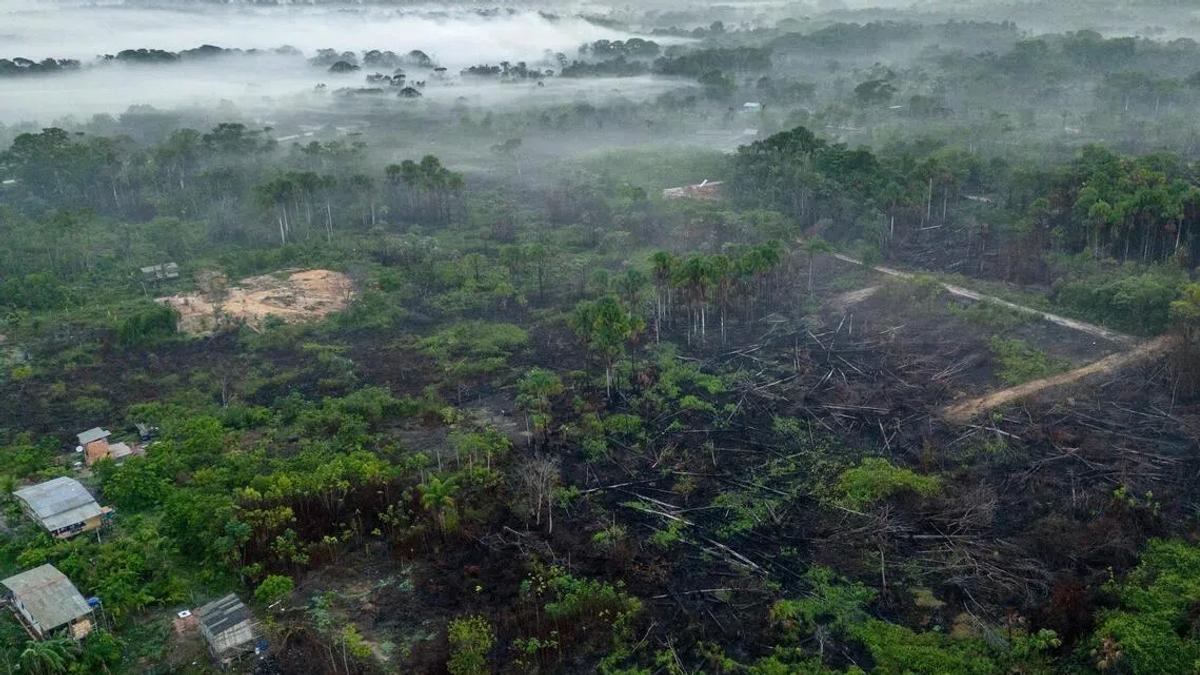
The Brazilian Amazon, the world's largest tropical rainforest, has seen a significant decline in fires in 2025, with 3.1 million hectares burned, the smallest area since records began in 1985. This marks a historic low in fires, with the majority of them being man-made. The decline in fires is attributed to a delayed rainy season, reduced deforestation, and a decrease in illicit activities such as mining.
The reduction in fires is a significant development, as it indicates a decrease in deforestation and human activities that contribute to climate change. The Amazon rainforest plays a crucial role in absorbing greenhouse gases that cause global warming, making its preservation essential for mitigating climate change.
In 2024, an unprecedented drought triggered the spread of fires, with the majority of them being man-made. This led to a severe fire season, with 8.5 million hectares burned. The situation was exacerbated by poorly managed fires, deforestation, and illicit practices such as mining.
The decline in fires is a positive development for Brazil's leftist president Luiz Inacio Lula da Silva, who is seeking reelection in October. The reduction in fires also highlights the effectiveness of community-led efforts to control outbreaks, with communities fearing a repeat of the severe 2024 fire season.
Despite the decline in fires, concerns remain about a possible 'super El Nino' in 2026, which could cause a longer dry season and more fires. The Cerrado savanna, a vast region in central Brazil, also continued to experience fires at similar rates. Protecting the Amazon is crucial to combat climate change, and the Brazilian government's efforts to eradicate deforestation by 2030 are a step in the right direction.
President Lula's decision to endorse a major offshore oil exploration project off the coast of the Amazon has garnered criticism from activists. However, his commitment to environmental causes, including the reduction of deforestation, is a positive development. The Brazilian government's efforts to protect the Amazon are crucial to mitigating climate change and preserving the region's biodiversity.
The decline in fires in the Brazilian Amazon is a significant development, indicating a decrease in deforestation and human activities that contribute to climate change. However, concerns remain about a possible 'super El Nino' in 2026, which could cause a longer dry season and more fires. The Brazilian government's efforts to protect the Amazon and eradicate deforestation by 2030 are crucial to mitigating climate change and preserving the region's biodiversity.
Editor's Note: While the decline in fires is a positive development, concerns remain about a possible 'super El Nino' in 2026, which could cause a longer dry season and more fires.
Source referenced: STRAITSTIMES
This brief was synthesized by our Editorial Engine and reviewed by The Ground Narrative team.


