TRENDING

Sunday, 20 September 2026
----------------------
9 Rabi' Al-Thani 1448 AH
The Russia-Ukraine war has once again disrupted the Black Sea's trade corridors, threatening global food security and putting seafarers' lives at risk. Ukraine's grain exports have been cut by roughly a third, and shipping freight costs have doubled, as Russian missile and drone attacks target merchant ships and ports.
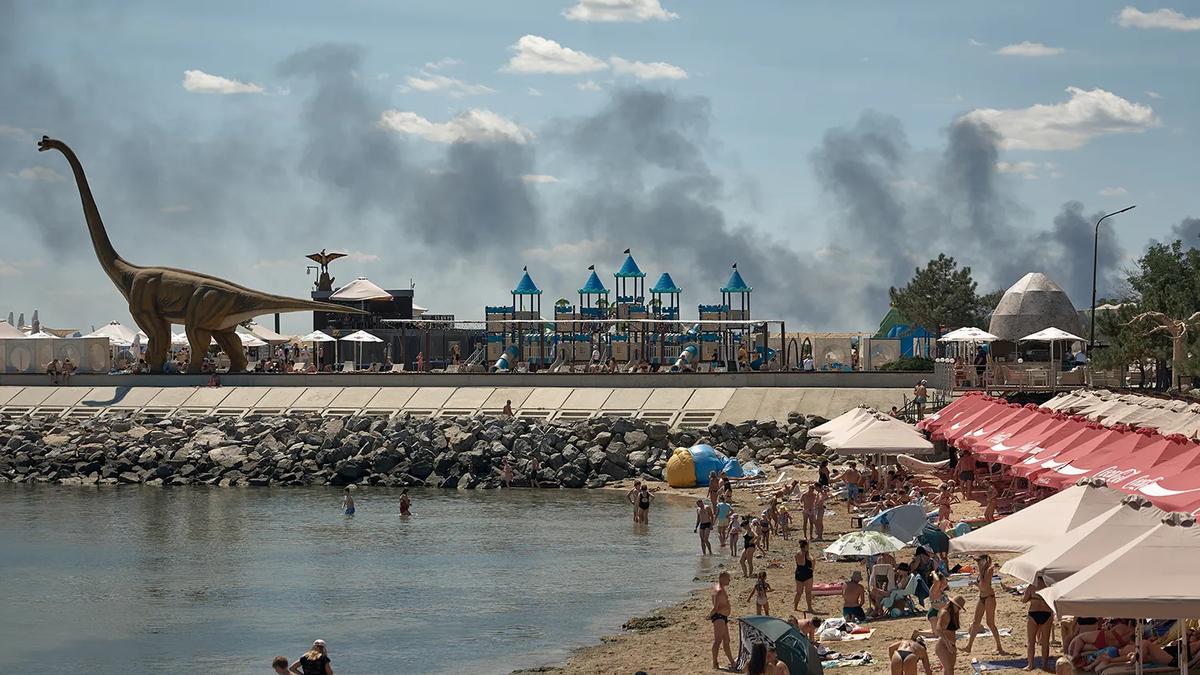
The Black Sea's trade corridors are at the center of the Russia-Ukraine war again, with Russian missile and drone attacks targeting Ukrainian and foreign-flagged merchant ships in ports and at sea. On July 23, Ukraine announced that maritime transport to and from its three unoccupied Black Sea ports was effectively frozen. The attacks have already cut Ukraine's grain exports by roughly a third and doubled shipping freight costs into and out of the country.
The current crisis is different from the previous one in key respects. Instead of a physical blockade, Russia is striking ships, their crews, and their cargo directly, making the financial risk so great that merchant vessels won't make the trip. War-risk premiums on freight rates and shipping insurance have spiked, and ship owners are citing force majeure to walk away from charters. This is a market collapse driven by cost and risk, not a siege. The logic of this hard-nosed financial calculus raises serious ethical questions, as it prioritizes financial loss over human life.
Seafarers are bearing the brunt of the conflict, with 10 people killed in a missile attack on a Turkish-owned bulk cargo carrier. The International Transport Workers' Federation (ITF) has emphasized that these are not accidents, but deliberate acts against civilian workers who have no part in the conflict and no power to escape it. The ITF has called for genuine, guaranteed safety for seafarers, stating that no cargo, no contract, no commercial pressure is worth a seafarer's life.
What is being downplayed in the official statements is the fact that the current crisis is not just about grain exports, but about the human cost of the conflict. The focus on war-risk insurance and financial compensation for ship owners and cargo owners obscures the fact that seafarers' lives are being put at risk. The fact that the US has set up a $20 billion maritime reinsurance plan for the Strait of Hormuz, but it hasn't fully worked, raises questions about the effectiveness of such measures in protecting human life.
Readers should watch for the development of alternative routes and markets for Ukrainian grain exports, as well as the response of the international community to the crisis. The ability of Central European countries to absorb the lost capacity from Ukraine's deepwater ports is uncertain, and the cost of using alternative routes will be significant for Ukrainian exporters. The situation is further complicated by Ukraine's own strikes on Russian shipping in the Sea of Azov, which could escalate the conflict. The international community must prioritize the safety of seafarers and find a solution that balances the need for grain exports with the need to protect human life.
Editor's Note: The analysis is based on publicly available information and may not reflect the full complexity of the situation.
Source referenced: FOREIGNPOLICY
This brief was synthesized by our Editorial Engine and reviewed by The Ground Narrative team.


