TRENDING

Sunday, 20 September 2026
----------------------
9 Rabi' Al-Thani 1448 AH
Thousands marched in Paris on Sept 20 to demand a repeal of a draft law that would presume police use of force as lawful. The showdown pits law‑makers seeking security guarantees against citizens fearing a new licence to kill.
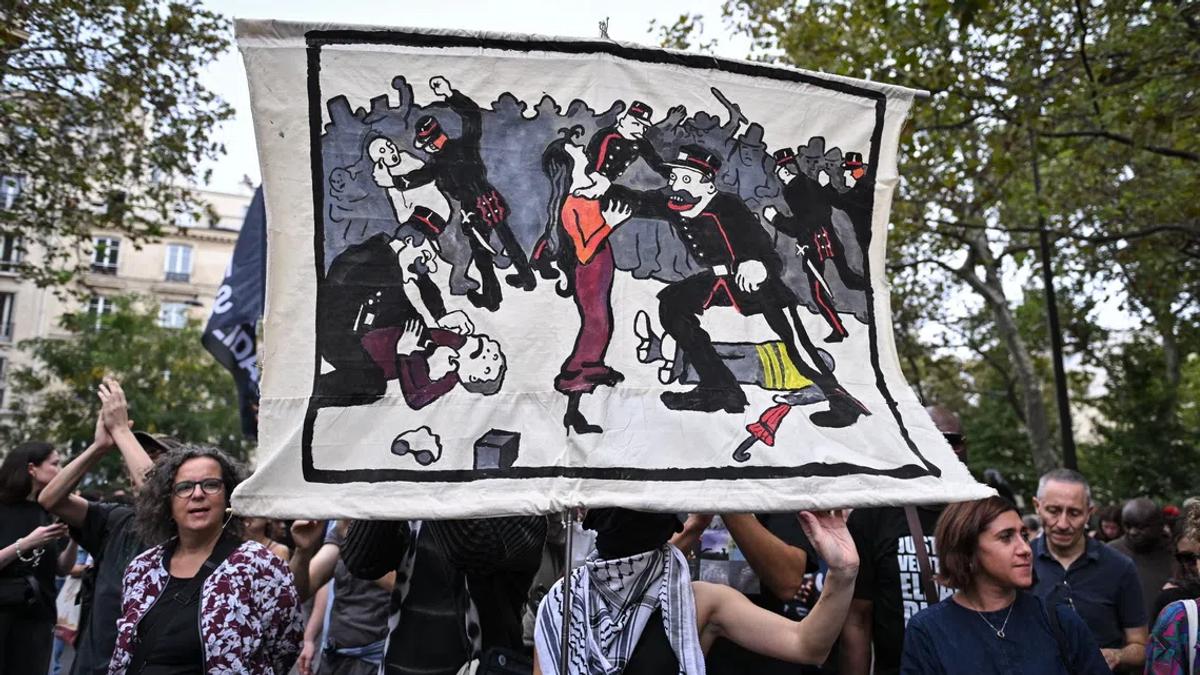
On Sept 20, thousands gathered in Paris to oppose a draft law that would reverse the burden of proof in police‑use‑of‑force cases. The bill, approved by the National Assembly in July, states that any law‑enforcement officer who fires a weapon is presumed to have acted legally, shifting the onus onto victims or their families to prove misconduct. The protest, joined by left‑wing politicians, human‑rights groups and families of shooting victims, coincided with parallel rallies across French cities and a petition that has amassed over 730,000 signatures.
The draft law reflects a broader political calculus within France’s executive and parliamentary blocs. After a series of high‑profile police shootings, the government has framed stricter legal protection for officers as a means to bolster morale, deter what it calls “law‑enforcement hesitancy,” and signal a tough stance on public disorder ahead of upcoming municipal elections. For senior officials, the legislation also serves to placate police unions that have threatened strikes, thereby preserving operational continuity. Economically, limiting costly legal battles over each shooting reduces state expenditures on litigation and compensation, a point often highlighted in budget debates. Internationally, France seeks to align its policing standards with other European states that have tightened rules of engagement, yet it diverges by moving the presumption of legality onto the officer—a shift that could set a precedent for allied nations watching France’s security model.
The human cost of the bill is borne by the communities most exposed to police encounters: residents of Seine‑Saint‑Denis, Marseille’s northern districts, and other marginalized neighborhoods where police presence is frequent and tensions high. Families like Amal Bentousi’s, whose brother was shot in 2012, confront the prospect of an even steeper evidentiary hurdle to seek justice. Youths in these areas already face disproportionate stops, searches, and arrests; a legal shield could embolden more aggressive tactics, increasing the likelihood of fatal outcomes. Moreover, the broader French populace risks eroding trust in the Republic’s promise of equality before the law, potentially fueling cycles of alienation and civil unrest that strain social services and local economies.
Official statements emphasize “clarity” and “protecting officers” while downplaying the bill’s impact on judicial independence. What receives little attention is the subtle alignment of the draft with a growing security‑industry lobby that profits from expanded police armament and training contracts. Defense firms stand to gain from higher procurement of firearms and protective gear as the law encourages a more militarized policing posture. Additionally, the Senate’s upcoming vote is being shepherded by senior legislators with close ties to these contractors, a nexus rarely highlighted in mainstream coverage. The narrative of “protecting citizens” masks a convergence of political survival, corporate profit, and a shift toward a more securitized state apparatus.
Watch the Senate debate in the coming weeks for amendments that could either soften the presumption of legality or cement it. A narrow passage would likely trigger renewed street actions, potentially spilling into other European capitals where police‑reform debates are heating up. Legal challenges may also arise in the Constitutional Council, where past rulings have struck down statutes that infringe on fundamental rights. Internationally, the European Court of Human Rights could become a venue for victims seeking redress, setting a cross‑border precedent. Finally, monitor the response of police unions; a concession on the bill could be leveraged for broader demands on staffing, equipment, and budget allocations, reshaping France’s security landscape for years to come.
Source referenced: STRAITSTIMES
This brief was synthesized by our Editorial Engine and reviewed by The Ground Narrative team.