TRENDING

Sunday, 20 September 2026
----------------------
9 Rabi' Al-Thani 1448 AH
Canada’s prime minister met France’s president on the remote Saint‑Pierre and Miquelon archipelago, signaling a joint pushback against U.S. pressure. The visit spotlights shifting alliances, sovereignty debates, and the human stakes for the islands’ dwindling residents.
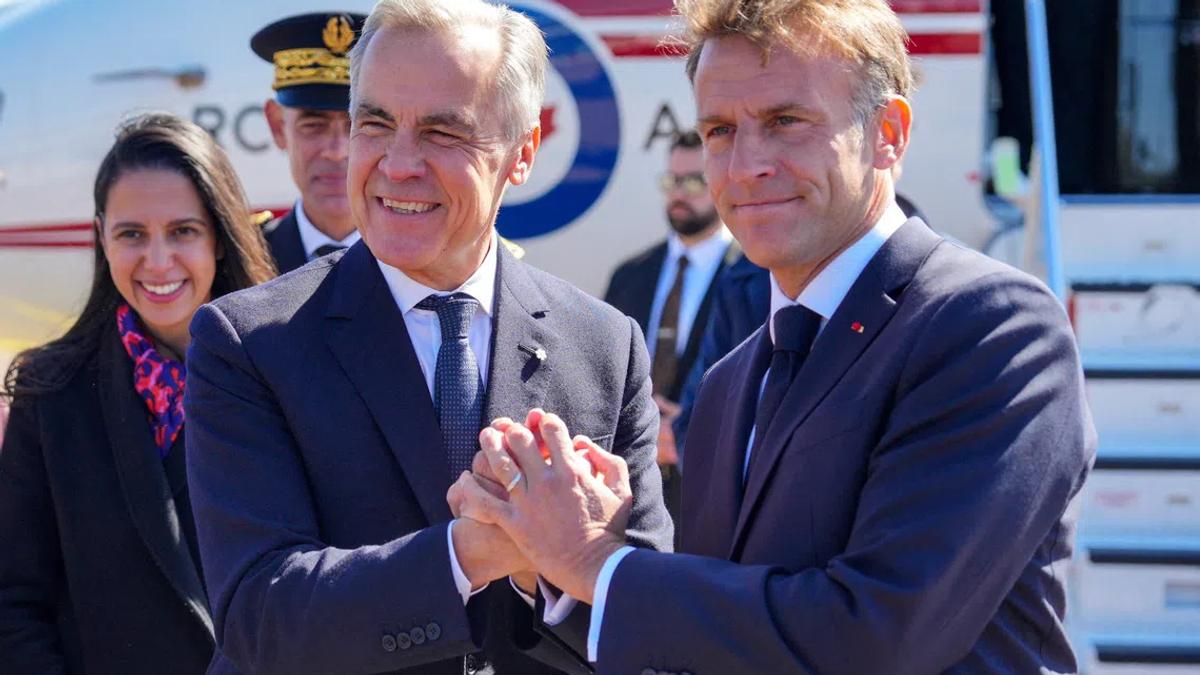
On September 20, 2026, French President Emmanuel Macron welcomed Canadian Prime Minister Mark Carney to Saint‑Pierre and Miquelon, France’s last North‑American overseas possession. The two leaders exchanged a warm handshake, held a working lunch, and issued a joint statement emphasizing shared values and a commitment to “sovereignty, freedom to decide and a future of peace and prosperity.”
The meeting is less about the 6,000‑person archipelago and more about the calculus of three great powers. Macron is using the symbolic weight of a historic French foothold to argue that Europe must assert security independence as U.S. President Donald Trump pushes an overtly nationalist agenda, even flaunting a map that lumps French overseas territories into an expanded United States. By staging the encounter on French soil, Paris underscores its claim to a global, maritime presence that can serve as a bargaining chip in Euro‑Atlantic negotiations.
Carney faces a domestic dilemma. Trump’s rhetoric—threatening to annex Canada or make it the 51st state—has forced Ottawa to seek alternative security anchors. The proposal to grant Canada “associate member” status in the European Union would give Ottawa a diplomatic back‑stop and a trade framework less vulnerable to U.S. tariffs or political whims. For the EU, a North‑American associate could extend its normative influence across the Atlantic, counterbalancing a United States that is increasingly isolationist.
Both leaders also have internal political incentives. Macron, battling a fragmented European Parliament and rising Euroscepticism, can point to a concrete diplomatic win that showcases French relevance beyond the continent. Carney, whose party is under pressure from nationalist factions, can claim he is protecting Canadian sovereignty by diversifying alliances. The convergence of these incentives creates a rare moment of coordinated defiance against a common challenger.
The archipelago’s residents bear the brunt of the geopolitical theater. Saint‑Pierre and Miquelon’s population is aging, with births outpaced by deaths, and young people routinely leave for education in mainland France or Canada. Climate‑driven relocation is already underway: the village of Miquelon is moving inland to escape sea‑level rise, a process that threatens homes, local fisheries, and cultural continuity. The influx of high‑profile diplomatic activity does little to address these immediate concerns, and the cost of security upgrades or infrastructure tied to the visit falls on a tax base already strained.
Beyond the islands, Canadian coastal communities watch the EU‑associate proposal with mixed feelings. While a broader trade umbrella could stabilize markets, it may also impose regulatory standards that complicate traditional industries such as fishing, which already contend with U.S. and EU quotas. In France, overseas territories like Guadeloupe and Martinique see the Saint‑Pierre meeting as a reminder that Paris’s global footprint is a double‑edged sword—offering strategic leverage but also exposing distant citizens to the fallout of great‑power rivalries.
Official statements focus on “shared values” and “sovereign decision‑making,” yet they sidestep the economic calculus underpinning the EU‑associate idea. Canada’s trade balance with the United States remains heavily weighted toward energy and agricultural exports; an EU framework could shift supply chains, but the transition costs are largely unquantified. Likewise, the French government downplays the fiscal burden of maintaining remote territories, which require disproportionate defense spending and climate‑adaptation funds. By framing the meeting as a moral stand against Trump, both capitals obscure the fact that the alliance could lock both nations into new dependency structures—Canada on EU regulatory regimes, France on a North‑American outpost that must be defended against potential U.S. coercion.
Watch for three concrete developments. First, the formal language of the joint statement will reveal whether Canada’s “associate member” status moves from rhetoric to a negotiated roadmap, and which EU institutions will spearhead it. Second, the United States is likely to respond—either with diplomatic pressure on the EU to reject the overture or with a recalibration of its own North‑American policy, perhaps offering concessions to Canada to keep it within the U.S. sphere. Third, the climate‑relocation project in Miquelon will serve as a litmus test for how quickly France can translate symbolic sovereignty into tangible support for its overseas citizens. If the relocation stalls, local dissent could undermine the narrative of a strong, sovereign partnership.
The convergence of a tiny island, a transatlantic alliance, and a U.S. president’s expansionist posturing illustrates how ordinary communities become chess pieces in a larger power game. The next weeks will show whether the symbolic embrace in Saint‑Pierre translates into material shifts—or remains a photo‑op that leaves the island’s residents watching from the sidelines.
Source referenced: STRAITSTIMES
This brief was synthesized by our Editorial Engine and reviewed by The Ground Narrative team.


