TRENDING

Saturday, 24 October 2026
----------------------
13 Jumada Al-Awwal 1448 AH
A vehicle attack at Berlin's annual Pride event on July 26, 2026, left one dead and 16 wounded, prompting a city-wide manhunt for the perpetrator. The incident highlights persistent threats to public safety and social cohesion in Europe, particularly from extremist ideologies.
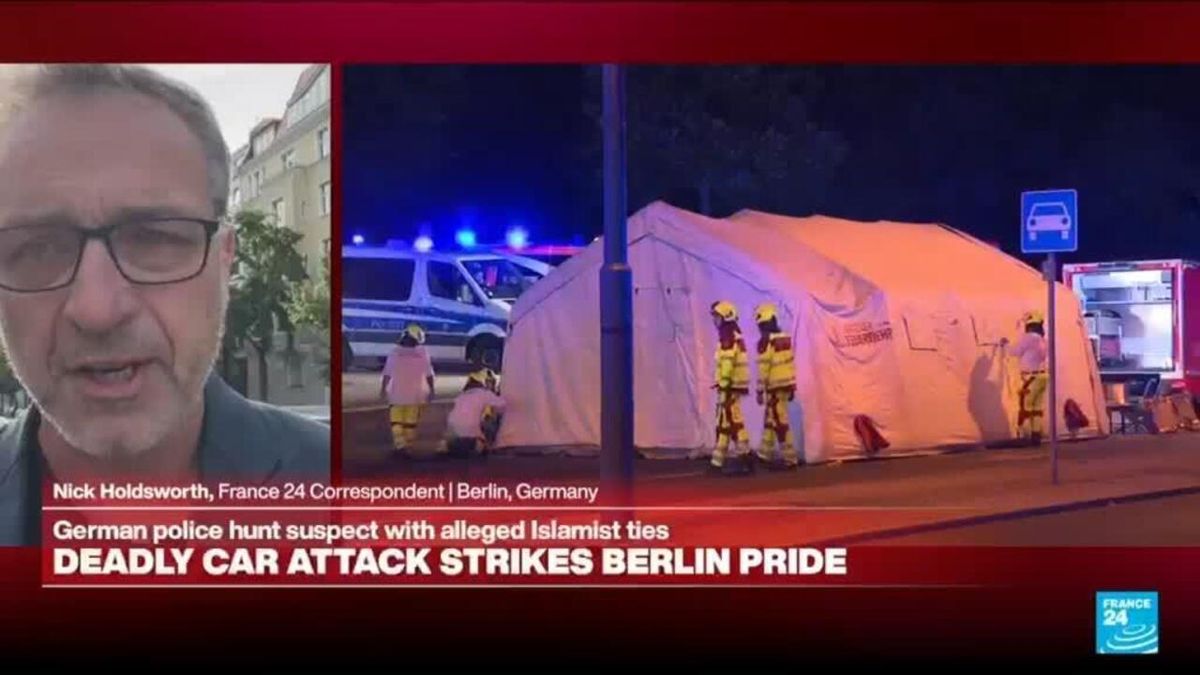
On July 26, 2026, Berlin's annual Pride event, a vibrant celebration of LGBTQ+ rights and community, was tragically disrupted when an unidentified individual drove a vehicle into a crowd of participants. The deliberate act resulted in the death of one person and left 16 others wounded, casting a somber shadow over the German capital. Authorities immediately launched a comprehensive manhunt for the perpetrator, who is considered armed and dangerous, as the city grapples with the aftermath of what appears to be a targeted act of violence.
The incident occurred amidst a festive atmosphere, transforming a scene of celebration into one of chaos and emergency. Eyewitnesses reported the vehicle intentionally veering into the crowd, underscoring the premeditated nature of the assault. Emergency services swiftly responded, providing aid to the injured and securing the perimeter, while police initiated an extensive investigation to identify and apprehend the driver. The immediate focus remains on ensuring public safety and bringing the individual responsible to justice.
The motive behind the attack remains under active investigation, but the targeting of a Pride event strongly suggests a hate-motivated crime aimed at the LGBTQ+ community. Vehicle ramming has, regrettably, become a tactic favored by various extremist groups, including those inspired by Islamist ideologies and far-right extremists, due to its low barrier to entry and potential for mass casualties in crowded urban settings. This method has been employed in numerous attacks across Europe and beyond, making it a significant concern for security agencies.
While the specific ideology driving the perpetrator in Berlin is yet to be confirmed, the choice of target aligns with patterns of violence perpetrated by individuals or groups hostile to LGBTQ+ rights and freedoms. Such attacks are designed not only to inflict physical harm but also to sow fear, disrupt social cohesion, and suppress the public expression of marginalized communities. The incident serves as a stark reminder of the persistent threat posed by various forms of extremism and hate-fueled violence within European societies.
This attack carries significant geopolitical and societal implications for Germany and the wider European continent. Firstly, it underscores the ongoing challenge of urban security in an era where public gatherings, even those intended for peaceful celebration, can become targets. German authorities, like their counterparts across Europe, face the complex task of balancing open, democratic societies with robust security measures to protect citizens from both domestic and international threats.
Secondly, the incident highlights the vulnerability of specific communities to hate crimes. The LGBTQ+ community, despite significant strides in rights and acceptance in many Western nations, continues to face prejudice and violence. An attack on a Pride event is an assault on the principles of equality, diversity, and inclusion that are foundational to modern European democracies. It risks exacerbating social divisions and fostering an environment of fear among marginalized groups.
Thirdly, if the attack is definitively linked to an extremist ideology, it will intensify debates surrounding radicalization, integration, and counter-terrorism strategies within Germany. The country has previously grappled with both Islamist-inspired terrorism and a resurgence of far-right extremism, both of which pose distinct but interconnected challenges to national security. This event will likely prompt a re-evaluation of intelligence gathering, community outreach, and preventative measures aimed at countering extremist narratives.
The Berlin attack occurs within a broader European context marked by heightened security concerns. The continent has witnessed a series of high-profile attacks in recent years, prompting a collective effort among EU member states to enhance intelligence sharing, border security, and counter-terrorism cooperation. This incident will undoubtedly reinforce the urgency of these collaborative efforts, as the threat landscape continues to evolve.
For Germany, a nation that prides itself on its democratic values and commitment to human rights, the attack represents a profound challenge to its social fabric. The response from civil society, political leaders, and law enforcement will be crucial in demonstrating resilience against hate and reaffirming the country's dedication to protecting all its citizens. The long-term consequences will depend on the swiftness of justice, the clarity of the motive, and the collective resolve to address the underlying currents of extremism and intolerance that continue to threaten peace and stability in Europe.
The manhunt continues, and the world watches as Berlin seeks to understand the full scope of this tragic event and its implications for the future of public safety and social harmony.
Source referenced: FRANCE24
This brief was synthesized by our Editorial Engine and reviewed by The Ground Narrative team.


