TRENDING

Saturday, 19 September 2026
----------------------
8 Rabi' Al-Thani 1448 AH
As French President Macron hosts Canadian PM Carney in a symbolic North Atlantic meeting, Europe and Canada signal a deepening alliance amidst US tensions, potentially reshaping global power dynamics. This strategic pivot highlights a collective search for stability and new partnerships in a volatile geopolitical landscape.
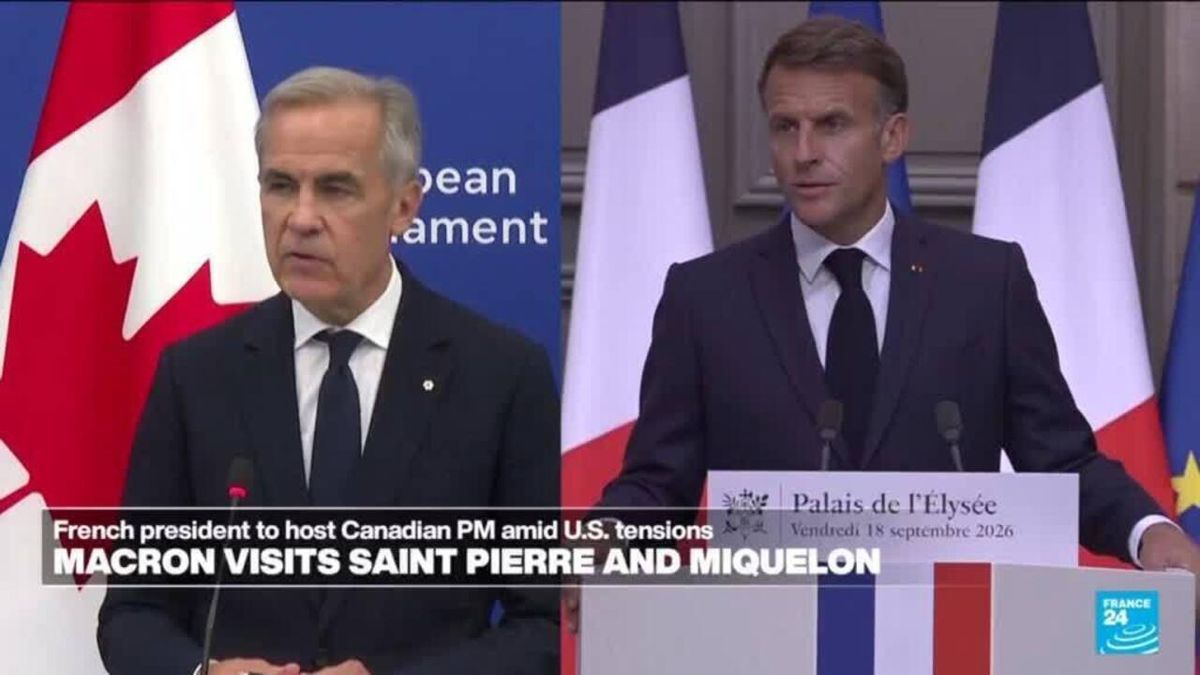
French President Emmanuel Macron recently hosted Canadian Prime Minister Mark Carney in a remote French territory in the North Atlantic. This highly symbolic meeting occurred against a backdrop of escalating tensions with Washington, particularly concerning trade. The encounter follows a significant proposal by European Commission President Ursula von der Leyen to establish Canada as the European Union's first associate member, underscoring a deliberate effort to forge closer ties between Europe and Canada. The choice of a remote location, far from traditional power centers, amplified the message of a distinct, emerging alignment.
The growing strain with Washington, likely driven by protectionist trade policies and tariffs, is a primary catalyst for this transatlantic reorientation. For the European Union, this move aligns with its broader ambition for strategic autonomy, aiming to reduce its reliance on the United States and assert its own geopolitical influence. Bringing Canada into an "associate member" status offers a concrete pathway to build a more expansive, non-US-centric bloc, strengthening economic and political leverage. Canada, traditionally deeply intertwined with the US economy, is actively seeking to diversify its trade and political partnerships. This strategy mitigates the risks posed by potential US protectionism and offers Canada greater stability through access to the vast European market and a like-minded political partner. France, by hosting this pivotal meeting in one of its North Atlantic territories, subtly asserts its sovereign interests in the region while positioning itself as a key architect of this evolving transatlantic order, distinct from American influence. The economic incentives are clear: both sides are seeking predictable, stable trade relationships in an era of increasing global volatility.
While leaders discuss grand strategies, the human cost of shifting alliances and potential trade wars often falls on ordinary citizens. Industries deeply integrated into cross-border supply chains, such as automotive manufacturing, agriculture, and specialized goods, face significant disruption. Tariffs, a common tool in trade disputes, can inflate production costs, erode competitiveness, and ultimately lead to job losses in sectors ill-equipped to adapt quickly. Consumers, in turn, often bear the brunt of these tariffs through higher prices for imported goods, diminishing their purchasing power. Small and medium-sized enterprises, which typically lack the resources of multinational corporations, are particularly vulnerable to market volatility and supply chain disruptions. Furthermore, specific communities in both Canada and Europe with deep historical and economic ties to the United States could experience substantial economic hardship as trade patterns are deliberately reconfigured. Even the inhabitants of the remote French territory, while perhaps proud of their role in high-stakes diplomacy, could find their local economies indirectly affected by these larger geopolitical currents.
Official statements surrounding this meeting will undoubtedly emphasize "strengthening alliances" and "diversifying partnerships." What is often downplayed, however, is the profound dissatisfaction with the United States that underpins this reorientation. The full extent of this disillusionment and its long-term implications for established US-led institutions like NATO are rarely articulated openly. Furthermore, the concept of Canada becoming the EU's "first associate member" is a novel and potentially transformative model. The specifics of what this status entails – from economic integration and regulatory alignment to security cooperation and political influence – remain largely opaque. This new framework could set a precedent for other nations seeking closer ties with the EU, fundamentally reshaping the bloc's external relations. Beneath the surface of diplomatic unity, there are likely internal debates within EU member states and Canada regarding the appropriate degree of distancing from the US and the pace of European integration. These nuanced discussions and potential disagreements are typically kept out of the public eye. Finally, pursuing strategic autonomy comes with tangible costs, both economic (e.g., investing in alternative supply chains, independent defense capabilities) and political (potential retaliatory measures from the US). These costs are frequently understated in the pursuit of a new strategic direction.
The immediate aftermath of this meeting will be crucial. Observers should closely watch for Washington's reaction: Will the US escalate trade tensions, impose new tariffs, or exert diplomatic pressure in response to this overt alignment? The detailed framework of Canada's "associate membership" with the EU will also be a critical area of focus. What specific benefits and obligations will define this new relationship, and how will it impact existing trade agreements, regulatory harmonization, and security cooperation? Furthermore, the success of this model could prompt other nations, such as post-Brexit UK, Australia, or New Zealand, to explore similar arrangements, potentially solidifying a broader, non-US-centric global bloc. The implications for NATO's future cohesion and purpose will also be significant, particularly if the US continues to pursue protectionist or isolationist foreign policies. Finally, tracking shifts in trade volumes and investment flows between Canada, the EU, and the US will provide concrete evidence of this strategic reorientation's real-world impact.
Editor's Note: Analysis is based on a hypothetical scenario dated 2026, treated as current news for the purpose of geopolitical forecasting.
Source referenced: FRANCE24
This brief was synthesized by our Editorial Engine and reviewed by The Ground Narrative team.


