TRENDING

Tuesday, 22 September 2026
----------------------
11 Rabi' Al-Thani 1448 AH
Keir Starmer's unexpected resignation as UK Prime Minister has paved the way for Andy Burnham, the popular Mayor of Greater Manchester, to potentially lead the Labour Party and the nation. Burnham's rise signals a critical juncture for British politics, promising a blend of 'pro-business socialism' and a renewed focus on domestic stability amidst ongoing post-Brexit challenges.
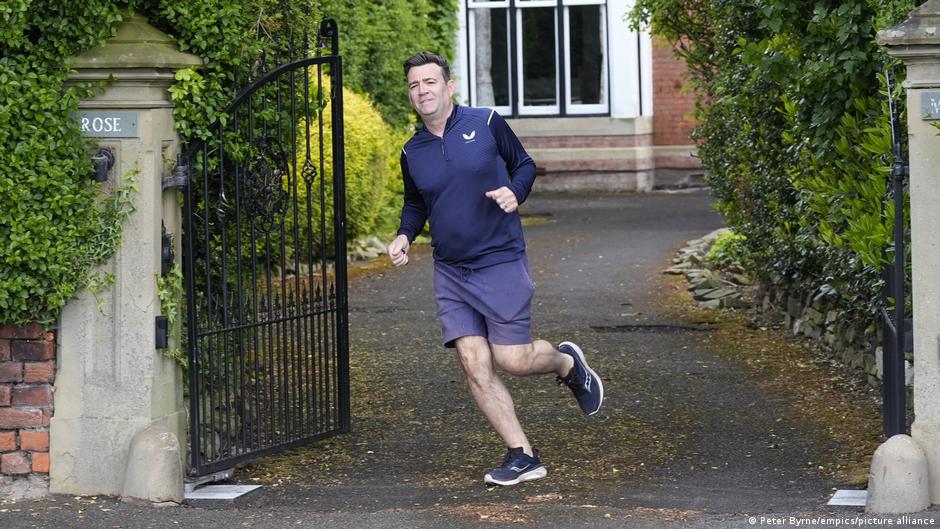
The United Kingdom's political landscape is undergoing another significant transformation following the unexpected resignation of Prime Minister Keir Starmer. Just two years after leading the Labour Party to a historic landslide victory in 2024, Starmer announced his departure from Downing Street, citing "intense pressure." This development triggers a leadership contest within the Labour Party, with Andy Burnham, the popular Mayor of Greater Manchester, widely anticipated to become the next Prime Minister. Burnham's recent victory in the Makerfield by-election, securing a seat in Parliament, has cleared a crucial procedural hurdle for his potential ascent to the nation's highest office. The succession is expected to be finalized by the end of Parliament's summer recess in September.
Andy Burnham, 56, brings decades of political experience to the forefront of British politics. His career began in 2001 when he first entered Parliament, serving as a junior minister under Tony Blair and later holding significant cabinet roles, including Health Secretary, under Gordon Brown. Burnham's political identity is rooted in the moderate-left wing of the Labour Party, characterized by what he describes as "pro-business socialism." This ideology seeks to balance social welfare and public services with a supportive environment for economic growth and enterprise.
After two unsuccessful bids for the Labour leadership in 2010 and 2015, Burnham transitioned to regional politics, becoming Mayor of Greater Manchester in 2017. His tenure as mayor has been marked by notable achievements, particularly in expanding affordable public transportation and prioritizing housing and healthcare initiatives. His strong advocacy for his region, including a high-profile confrontation with then-Prime Minister Boris Johnson over COVID-19 lockdown support, earned him the moniker "King of the North." This regional success and his deep connection to the working-class communities of northern England, where he was born and raised, are central to his broad public appeal. He is also a vocal critic of Brexit, the UK's departure from the European Union in 2020, a stance that could signal a nuanced approach to future UK-EU relations.
The potential premiership of Andy Burnham carries significant geopolitical and domestic implications for the United Kingdom. Domestically, his rise reflects a continued search for stable leadership in a country grappling with profound political, economic, and social challenges exacerbated by Brexit. Burnham would be the seventh Prime Minister since the 2016 referendum, underscoring a decade of political volatility. His popularity is seen by many supporters as Labour's strongest defense against the growing influence of the right-wing populist Reform UK party led by Nigel Farage. A Labour government under Burnham would likely focus on strengthening public services, addressing regional inequalities, and potentially re-evaluating aspects of the UK's post-Brexit economic strategy, although a full reversal of Brexit is improbable. His "pro-business socialism" could shape future industrial policy and international trade agreements, seeking to attract investment while ensuring social protections.
Internationally, a new Prime Minister always signals a potential recalibration of diplomatic priorities. While the core tenets of UK foreign policy, such as its commitment to NATO and key alliances, are unlikely to shift dramatically, Burnham's leadership could bring a renewed emphasis on certain areas. His criticism of Brexit suggests a potential push for closer economic alignment or a more pragmatic relationship with the European Union, aiming to mitigate economic friction. Furthermore, his focus on domestic stability and social cohesion could indirectly strengthen the UK's international standing by projecting an image of a more unified and functional nation. However, the immediate challenge for Burnham, should he assume office, will be to unite a potentially fractured Labour Party, address the deep-seated economic anxieties of the British populace, and navigate the complex geopolitical landscape that has defined the UK's role on the world stage since Brexit. His ability to deliver on his promise of "hope for the future" will be critical in determining the trajectory of the UK in the coming years.