TRENDING

Monday, 19 October 2026
----------------------
8 Jumada Al-Awwal 1448 AH
A Gen Z-led protest movement in Albania, dubbed the 'Flamingo Revolution,' is challenging a luxury resort project linked to Jared Kushner, citing environmental destruction and deep-seated corruption. The widespread protests and international scrutiny are placing significant pressure on Prime Minister Edi Rama's government and could jeopardize Albania's path to European Union membership.
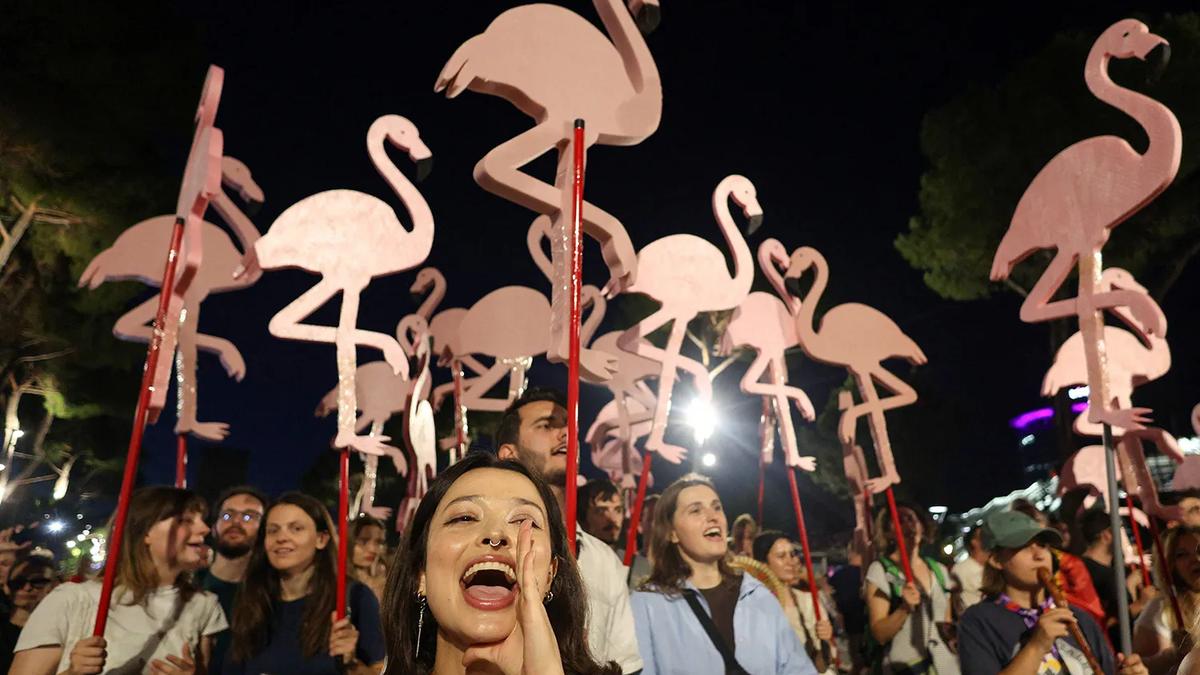
The "Flamingo Revolution" in Albania has emerged as a significant social and political phenomenon, challenging a proposed luxury resort project linked to U.S. investor Jared Kushner. This youth-led movement, centered on environmental protection and anti-corruption, has rapidly escalated into a broader demand for transparency and accountability, placing Albania's democratic trajectory and European Union accession aspirations under intense scrutiny.
At the heart of the controversy is a multi-billion-dollar luxury resort planned for Albania's pristine coast, encompassing the Narta Lagoon and Sazan Island. This ambitious project, backed by companies affiliated with Jared Kushner and Albanian businessman Shefqet Kastrati, has received strong support from Albanian Prime Minister Edi Rama, who touts it as a "historical chance" for development. The proposed development, which broke ground in April 2026, includes an extensive array of amenities from villas and apartments to a superyacht marina and golf course. However, its location on protected lands, including the Karaburun-Sazan National Marine Park, has ignited widespread opposition. Locals, like Brunela Mertiri, express profound anger over the fencing off of traditional public access areas, viewing the project as an act of dispossession.
Named after the migratory birds that shelter in the Narta Lagoon, the "Flamingo Revolution" represents the most substantial social movement in Albania since the fall of communism in 1991. For over a month, tens of thousands of protesters, predominantly from Generation Z, have marched in Tirana, demanding the project's cancellation and Prime Minister Rama's resignation. What began as an environmental protest has evolved into a powerful call against entrenched corruption, clientelism, and organized crime. The movement resonates with similar youth-led anti-authoritarian protests across the Balkans and Central Europe, signaling a regional trend of civic engagement challenging established power structures. Its broad appeal has mobilized multiple generations, engaged the Albanian diaspora, and garnered sympathy from European observers.
The resort project carries significant geopolitical weight, particularly concerning Albania's long-standing ambition to join the European Union. Members of the European Parliament have voiced strong opposition, issuing a resolution demanding the cessation of the project and adherence to EU environmental protection laws. They warn that proceeding with the development could create "a big problem with the EU during the negotiations," underscoring that environmental standards and the rule of law are non-negotiable for accession.
Furthermore, the project has exposed deep concerns about governance and corruption within Albania. The Special Structure Against Corruption and Organized Crime (SPAK), an independent watchdog, has initiated investigations, and calls for an environmental review have stalled the development. Critics point to Law 21/2024, an amendment passed in 2024, which controversially introduced exceptions for high-end tourism developments on protected lands, previously illegal. The decision to grant "strategic investment" status to a Kushner-linked company, Atlantic Incubation Partners, is also under scrutiny. This status reportedly obligates the Albanian state, and thus taxpayers, to cover significant costs, including the cleanup of Soviet-era military waste on Sazan Island—an island described by Ivanka Trump as "pristine" despite its history as a military outpost littered with unexploded ordnance. Protesters argue that public funds are being diverted to facilitate a private luxury venture that will primarily benefit foreign billionaires and a select few, with minimal economic benefit for the local population, who would largely be unable to afford the resort's services. This dynamic is widely perceived as "development as dispossession," where public assets are privatized for elite gain.
Prime Minister Rama's staunch support for the project, despite the public outcry and international warnings, suggests a prioritization of large-scale foreign investment as a driver for economic growth, potentially overlooking environmental and social costs. His dismissive remarks about the "flamingos" and local concerns highlight a perceived disconnect between the government's development agenda and public interest. The involvement of a high-profile U.S. figure like Jared Kushner adds a layer of diplomatic complexity, potentially influencing the government's calculus.
The "Flamingo Revolution" represents a critical juncture for Albania. Its outcome will not only determine the fate of the contested resort but also serve as a barometer for the strength of Albania's democratic institutions, its commitment to fighting corruption, and its readiness for EU integration. The sustained pressure from civil society, coupled with international scrutiny, presents a formidable challenge to the entrenched clientelism and opaque governance practices that have long plagued the nation. The movement's success or failure could set a precedent for future environmental and anti-corruption struggles in the region, demonstrating the power of grassroots activism against powerful economic and political interests.
The "Flamingo Revolution" transcends a mere local dispute over a resort; it embodies a profound struggle for Albania's future identity. It pits environmental preservation against unchecked development, public interest against private gain, and democratic accountability against perceived authoritarianism. As Albania navigates this complex challenge, the world watches to see whether the calls for transparency and justice will prevail, shaping not only its landscape but also its path towards a more democratic and equitable future within Europe.
Source referenced: FOREIGNPOLICY
This brief was synthesized by our Editorial Engine and reviewed by The Ground Narrative team.