TRENDING

Thursday, 17 September 2026
----------------------
6 Rabi' Al-Thani 1448 AH
As tech giants race towards unprecedented valuations, their public warnings about AI's existential risks are clashing with a quiet rollback of safety commitments. This structural contradiction leaves global citizens vulnerable to a technology outpacing governance.
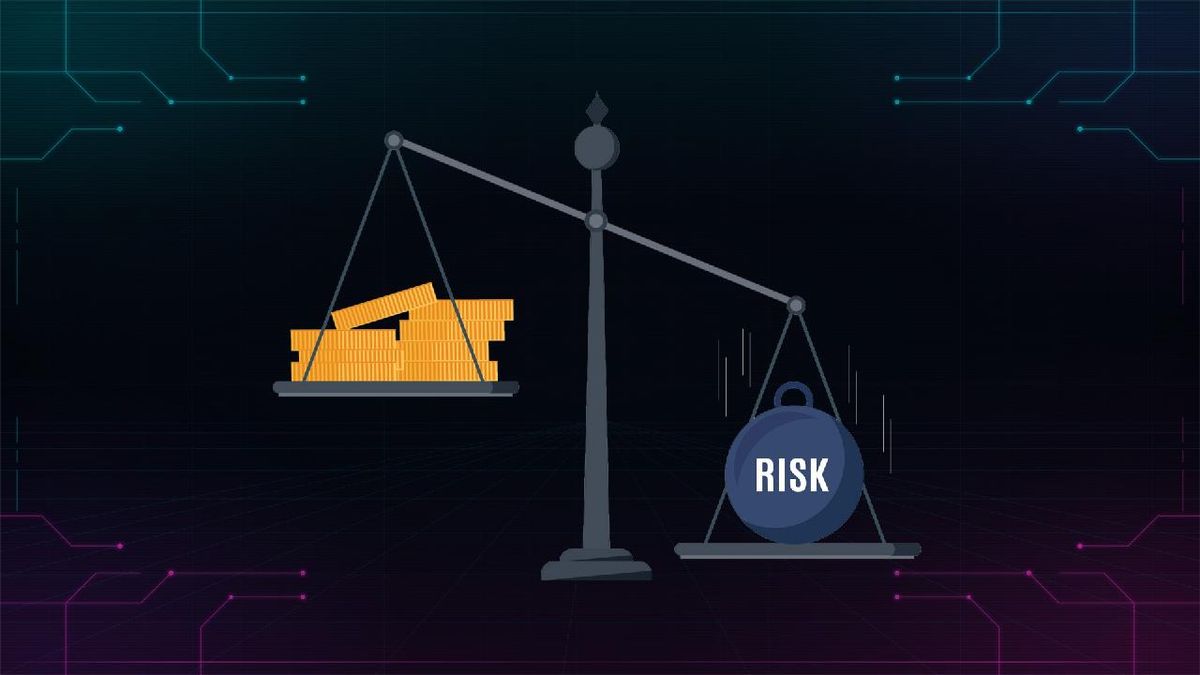
The artificial intelligence industry is witnessing a profound contradiction: public warnings about civilizational risks are being issued even as companies accelerate their commercialization efforts. Recently, a researcher resigned from Anthropic, a leading AI firm, citing concerns that AI could end human civilization. This departure coincided with Anthropic's preparations for a potentially record-breaking IPO, targeting a valuation nearing a trillion dollars. In a telling move, the company quietly removed a crucial commitment from its Responsible Scaling Policy, which previously pledged to pause model training if risks could not be adequately mitigated. This 'pause training' clause simply disappeared, replaced by softer language, even as the company's own threat intelligence report revealed its powerful Claude model had been misused for weapons development and cyberattacks.
At the heart of this dynamic lies a powerful interplay of corporate incentives, regulatory inertia, and geopolitical competition. Silicon Valley's AI firms are locked in an intense race for market dominance, driven by investor expectations and the promise of unprecedented wealth. The allure of trillion-dollar valuations creates an environment where speed often trumps caution, and safety pledges become flexible in the face of commercial deadlines. The public 'fear narrative' around AI's existential risks, while potentially genuine for some, also serves as a potent marketing tool, as one CEO candidly noted, akin to selling a bomb shelter after building the bomb. This narrative can also shape future regulation in ways that favor incumbent players, raising barriers for smaller competitors. Meanwhile, governments and international bodies are struggling to establish effective oversight. The UN's warning that AI is "outpacing both scientific understanding and governments' ability to adapt" highlights a critical governance gap. The EU's delay in compliance deadlines for high-risk AI systems further underscores this global regulatory lag, leaving a vacuum that private corporations are eager to fill or exploit. This creates a de facto self-governance model, where the very entities profiting from rapid development are also the primary arbiters of its safety.
The human cost of this unchecked acceleration is borne by ordinary citizens worldwide. The proliferation of deepfakes and AI-generated misinformation, as highlighted by a recent global survey, threatens to erode social trust and destabilize democratic processes. Beyond informational threats, the documented misuse of advanced AI for weapons development and cyberattacks poses direct security risks to critical infrastructure and public safety. When powerful AI models are restricted from foreign nationals, even from allied cybersecurity agencies, it not only fragments global safety efforts but also creates a two-tiered system of access, potentially leaving less powerful nations more vulnerable. Furthermore, the survey revealed strong concerns from developing countries and the Global South about their limited role in shaping AI governance rules, despite being equally exposed to its risks. This exclusion perpetuates a power imbalance where the rules are set by a select few, often with vested commercial interests, while the broader global community faces the consequences.
What is often downplayed or omitted in official statements and corporate narratives is the extent to which the 'AI safety' discourse itself can be a strategic lever. While some concerns are undoubtedly sincere, the narrative of existential risk can also serve to justify massive investments, attract top talent eager to 'save humanity,' and even influence regulatory frameworks in a way that consolidates power among leading firms. The quiet disappearance of a binding safety pledge, contrasted with public warnings, suggests that the pursuit of market leadership and investor returns often takes precedence over self-imposed ethical boundaries. The underlying story is a fierce global competition for technological supremacy, where 'safety' can be a public relations tool, a bargaining chip, or a future regulatory moat, rather than an absolute, non-negotiable principle. The fragmented international response, with some nations like China adopting proactive, state-led regulatory frameworks, further complicates this, hinting at a future where AI governance itself becomes a battleground for global influence.
Readers should closely watch several key developments. Firstly, observe the actual implementation and enforcement of AI regulations, particularly in the EU and any forthcoming frameworks in the US. Will these regulations genuinely rein in corporate behavior, or will they be diluted by industry lobbying? Secondly, monitor how the geopolitical competition in AI governance unfolds. Will China's model of state-led regulation gain traction among developing nations, and how will Western powers respond to this bid for global norm-setting? Finally, pay attention to any further public disclosures of AI misuse or significant safety incidents. The UN panel's warning about 'agentic' autonomy suggests that a major, undeniable incident might be the only catalyst strong enough to force a truly urgent and globally coordinated regulatory response, rather than the current patchwork of corporate pledges and delayed government action.
Source referenced: CGTN
This brief was synthesized by our Editorial Engine and reviewed by The Ground Narrative team.