TRENDING

Thursday, 17 September 2026
----------------------
6 Rabi' Al-Thani 1448 AH
A critical election in the Philippines' Bangsamoro Autonomous Region, intended to solidify a peace deal, was marred by violence and allegations of fraud. This fragile vote reflects deep-seated power struggles, threatening a decades-long quest for self-determination and potentially reshaping Manila's strategic priorities.
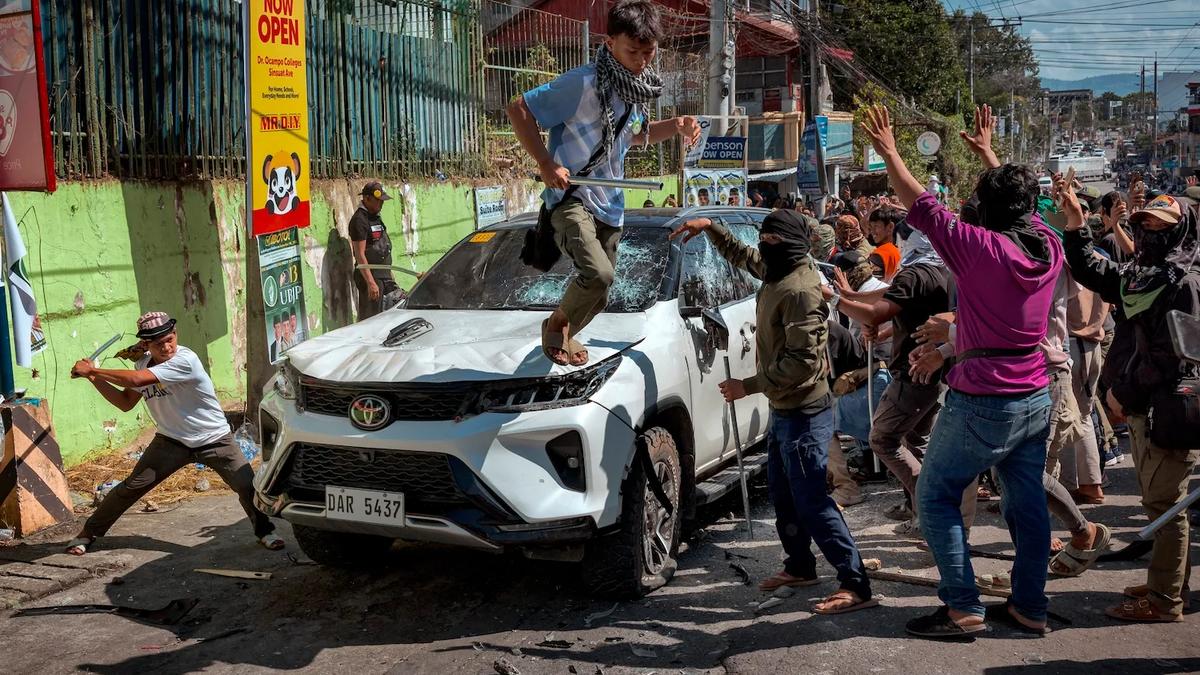
The Bangsamoro Autonomous Region in Muslim Mindanao (BARMM) held its inaugural parliamentary elections on September 14, 2026, a crucial step intended to cement a fragile peace agreement. However, the vote was anything but peaceful, marked by deadly violence, widespread intimidation, and allegations of irregularities, casting a long shadow over the region's path to self-governance. At least five people were killed and 18 injured during the election period, which also saw ballot delays, masked men roaming streets, and a shoot-out at a polling station.
The election in BARMM is a complex interplay of historical grievances, internal rebel factionalism, and national strategic interests. For decades, the Moro Islamic Liberation Front (MILF) waged an armed struggle for self-determination, culminating in the 2014 peace agreement that promised autonomy in exchange for demobilization and political integration. This election was meant to formalize that transition, but the internal split within the MILF itself — between the United Bangsamoro Justice Party (UBJP) led by Al Haj Murad Ebrahim and the Bangsamoro Federalist Party (BFP) led by Abdulraof Macacua, reportedly backed by the national government — reveals a deeper struggle for control. The national government's calculus is clear: a stable, compliant BARMM government frees up the Philippine military, historically bogged down by internal insurgencies, to confront the escalating challenge posed by China in the South China Sea. However, the MILF's continued armed presence, with an estimated 14,000 fighters reportedly better armed now than in 2014, represents a significant counter-leverage, ensuring that even a politically defeated faction retains considerable power to disrupt peace.
The true cost of this 'bumpy peace' is borne by the ordinary citizens of Mindanao, who have endured generations of conflict, displacement, and underdevelopment. The deaths and injuries during the election period are a stark reminder that even a democratic exercise can become a battleground. For communities hoping for a definitive end to violence and the promise of genuine self-governance, the election's irregularities and the lingering threat of armed factions mean that peace remains an elusive dream. Families continue to live under the shadow of potential renewed conflict, their aspirations for stability, economic opportunity, and secure futures held hostage by political maneuvering and the unfinished business of demobilization. The promises of autonomy and development, central to the peace deal, feel distant when the very process meant to deliver them is fraught with violence and distrust.
While official narratives focus on the democratic process and the commitment to peace, what is often downplayed is the Philippine national government's strategic imperative to 'settle' Mindanao. The prospect of redirecting the military's focus from internal counter-insurgency to external maritime defense against China is a powerful, unspoken driver behind Manila's engagement in the BARMM peace process. The extent of the national government's alleged backing for the Bangsamoro Federalist Party, if true, also undermines the spirit of genuine self-determination and autonomy envisioned by the peace agreement, framing the election less as a free choice and more as a managed transition. Furthermore, the significant number of still-armed MILF fighters, and the stalled demobilization, is a critical vulnerability that official statements often gloss over, presenting a facade of progress while the potential for renewed armed conflict simmers beneath the surface. The deep-seated distrust between factions and with Manila is a constant, unaddressed undercurrent.
The immediate focus will be on how the United Bangsamoro Justice Party (UBJP) and its armed wing, the MILF, respond to the likely victory of the Bangsamoro Federalist Party. Their acceptance, or rejection, of the election results will be critical to the peace process's survival. Watch for any escalation of protests or renewed armed activity. Furthermore, the effectiveness of the new BARMM government in delivering on the promise of autonomy and development will be key to winning over a skeptical populace and preventing the resurgence of grievances. Finally, observe the Philippine national government's actions: will the 'settling' of Mindanao indeed free up military resources, and how quickly will these be redeployed to address the pressing geopolitical challenges in the South China Sea? The long-term stability of the region hinges on these delicate balances.
Source referenced: FOREIGNPOLICY
This brief was synthesized by our Editorial Engine and reviewed by The Ground Narrative team.


