TRENDING

Thursday, 17 September 2026
----------------------
6 Rabi' Al-Thani 1448 AH
Lebanon's new general amnesty law, ostensibly for prison overcrowding, is a calculated political maneuver reshaping the country's sectarian power dynamics. It signals a notable rise in Sunni political influence, potentially releasing thousands of prisoners, including controversial Islamist figures.
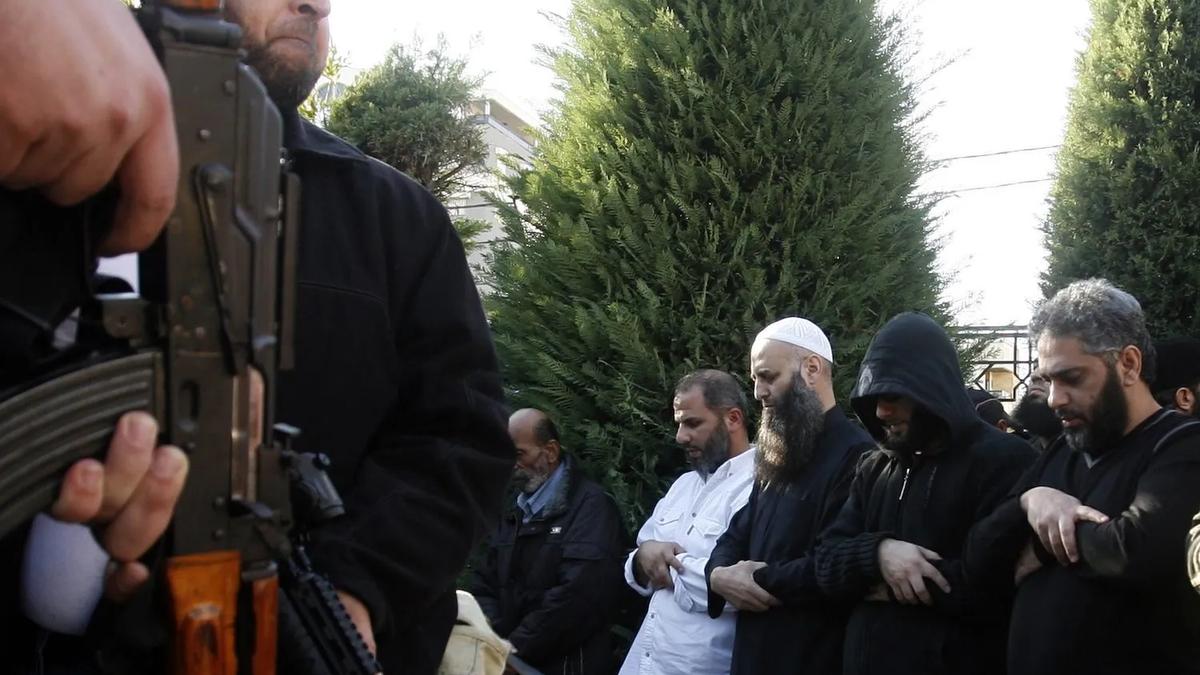
On August 12, Lebanon’s parliament passed a general amnesty law, the first of its kind since 1991. While officially framed as a measure to alleviate severe overcrowding in the nation's prisons, the legislation will commute death sentences, reduce life terms, and mandate the release of individuals held without charges for over 12 years. Beneath this stated humanitarian purpose, the law represents a significant, if subtle, recalibration of power among Lebanon's deeply entrenched sectarian factions.
This amnesty is a multi-layered political bargain, reflecting the complex web of interests that govern Lebanon. The Shiite group Hezbollah, despite recent strategic setbacks, leveraged its influence to secure amnesty for offenses common within its constituencies, such as cannabis cultivation and car theft. Christian parties similarly pushed for pardons for those who collaborated with the Israeli occupation and fled to Israel in 2000. However, the most striking development is the successful lobbying by Sunni politicians for the inclusion and potential release of Sunni Islamist prisoners, including high-profile figures like Sheikh Ahmed al-Assir, who was previously sentenced to death for clashes with the Lebanese Army.
This shift is not occurring in a vacuum. It is emboldened by a confluence of regional changes: the perceived weakening of the Syrian Assad regime, the increasing isolation of Hezbollah, and the rise of a Sunni leader, Ahmed al-Sharaa, in Damascus. Hezbollah, facing its own strategic pressures, particularly from Israel, no longer possesses the same unbridled capacity or political will to indefinitely suppress Sunni Islamist elements. Crucially, the Lebanese state itself lacks the unilateral power to confront a major sectarian group without risking widespread civil strife. For the traditional Sunni elite, this amnesty is a calculated gamble: a means to engage in populist politics, gain leverage against Hezbollah, and potentially channel popular discontent while aiming to maintain overall control.
While the law purports to address the plight of thousands languishing in overcrowded prisons, the more profound human cost is borne by the broader Sunni community. Outside of Beirut's elite circles and limited middle-class pockets, many Sunnis face widespread economic dispossession, a plight comparable to that experienced by the Shiite community but without the organized social welfare networks provided by groups like Hezbollah. This economic hardship fuels deep resentment, not only against Hezbollah-influenced governments but also against the very Sunni leaders who have long upheld the economic and political status quo.
By potentially releasing figures like Assir, the amnesty risks reigniting sectarian tensions and exposing ordinary citizens to renewed political instability and potential violence, especially in conservative areas such as Sidon and Tripoli. For instance, the families of the 18 soldiers killed by Assir's group now face the prospect of his early release, a development that, from their perspective, represents a profound injustice and a betrayal of the state's duty to protect its own.
Official statements surrounding the amnesty law heavily emphasize humanitarian concerns and prison reform, effectively downplaying the raw political calculus at its core. What is largely omitted from public discourse is the inherent fragility of Lebanon's state institutions, which are often too weak to enforce justice impartially across sectarian lines without external backing or internal consensus. No powerful actor openly discusses the implicit trade-off: humanitarian relief for some (easing prison overcrowding) is exchanged for political expediency for others (sectarian power plays).
The potential for this amnesty to empower a new generation of populist, potentially radical, Sunni leaders is also largely unspoken by the established political class. They frame the law as a necessary evil or a humanitarian act, rather than acknowledging the risk of unleashing forces that could fundamentally challenge their own authority and the existing order. The historical precedent of secular leaders inadvertently empowering Islamist movements that later spiral out of control—as tragically witnessed in Iraq, Syria, and Egypt—remains a silent undercurrent that no Lebanese politician will publicly acknowledge.
Several critical developments warrant close observation in the coming months:
The fate of Ahmed al-Assir and other released Sunni Islamist figures: Will they re-enter the political arena? How will they be received by the wider Sunni community, particularly the economically dispossessed? Will they challenge traditional Sunni leadership or seek to align with it?
The reaction of Hezbollah and other sectarian groups: How will these factions respond if Sunni Islamist influence grows significantly? Could this lead to a renewed cycle of sectarian competition, or even confrontation, further destabilizing the country?
The Sunni "Overton window": Observe whether mainstream Sunni politics, particularly in conservative cities like Sidon and Tripoli and their rural environs, shifts towards a more Islamist flavor, potentially pushing for social or even constitutional reforms.
Lebanon's relationship with its international partners: A rise in Sunni Islamist political power could complicate the relationships between Lebanon's Sunni elite and countries like the United States, depending on the nature and trajectory of the newly empowered factions.
Source referenced: FOREIGNPOLICY
This brief was synthesized by our Editorial Engine and reviewed by The Ground Narrative team.


