TRENDING

Thursday, 17 September 2026
----------------------
6 Rabi' Al-Thani 1448 AH
Despite official pronouncements of partnership at the BRICS summit, the underlying tensions between China and India persist. Both nations use diplomacy to project unity while strategically navigating deep-seated border disputes and economic competition.
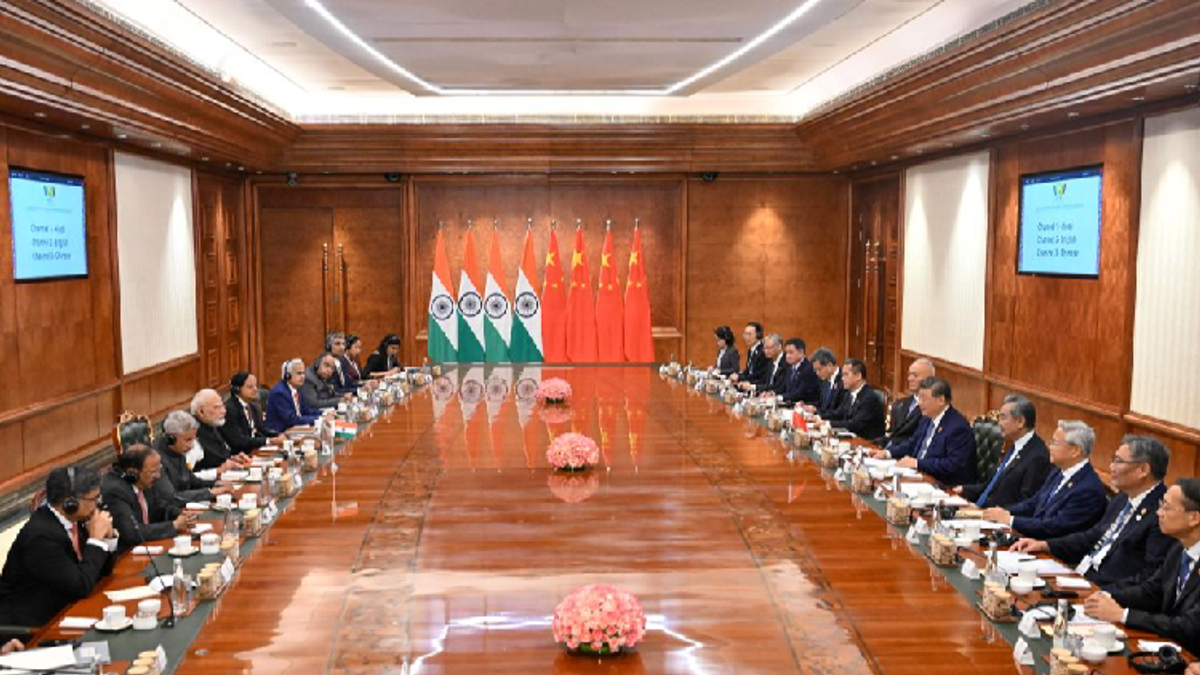
Chinese President Xi Jinping and Indian Prime Minister Narendra Modi recently met on the sidelines of the 18th BRICS Summit in New Delhi. Following two previous annual encounters, Beijing's Foreign Ministry highlighted a key consensus: China and India should be partners. Modi, for his part, affirmed India's independent foreign policy, stating that its relationship with China would not be swayed by third parties and that no anti-China activities would be permitted on Indian soil. Both leaders reportedly discussed fostering development, strengthening cooperation, and promoting a multipolar world.
This diplomatic overture comes against a backdrop of complex power dynamics. For China, framing India as a 'partner' serves multiple strategic goals. It aims to project a united front within the BRICS bloc, especially as China prepares to assume the presidency, thereby strengthening its narrative of Global South leadership and multipolarity. This also subtly works to mitigate India's growing alignment with Western powers, particularly through initiatives like the Quad. Beijing seeks to manage, rather than resolve, the simmering border disputes, preferring stability on its terms to avoid diverting resources from other strategic priorities. For India, Modi's emphasis on an 'independent foreign policy' is a crucial assertion of its strategic autonomy. Delhi aims to leverage its position between the West and the China-Russia axis, ensuring it can engage with all major powers without becoming beholden to any. This allows India to pursue economic growth and national security interests while maintaining a delicate balance, avoiding direct confrontation with China while still asserting its sovereignty and regional influence.
While leaders speak of partnership and cooperation, the human cost of the unresolved tensions is borne by ordinary citizens. Along the disputed Line of Actual Control (LAC) in the Himalayas, communities live under constant military vigilance, facing disruptions to traditional livelihoods, restricted movement, and the psychological burden of potential conflict. Soldiers on both sides endure harsh conditions, often in remote, high-altitude terrains, with the risk of skirmishes always present. Beyond the border, economic competition and occasional boycotts impact businesses and consumers in both countries. Indian manufacturers and traders, for instance, face uncertainty regarding access to Chinese markets or competition from Chinese goods, while Indian consumers might pay more for certain products due to trade restrictions. The nationalist sentiments often fueled by border incidents also strain people-to-people ties, making cultural exchange and mutual understanding more difficult.
The official rhetoric of 'partnership' and 'win-win cooperation' significantly downplays the deep-seated mistrust, the unresolved territorial claims, and the ongoing strategic competition that define the China-India relationship. Despite the pleasantries exchanged at the BRICS summit, neither side has genuinely de-escalated its military posture along the LAC, nor have concrete steps been announced to resolve the core border disputes that have led to deadly clashes in the past. Modi's statement about not allowing 'anti-China activities' on Indian soil, while framed by Beijing as positive, is also a subtle reminder that India's engagement with other powers (like the US, Japan, and Australia) is a reality, even if it won't be used as a direct launchpad for aggression. The 'partnership' is more a diplomatic tool to project stability and unity to the Global South than a reflection of true strategic alignment. Both nations are vying for leadership within the Global South, not simply cooperating as equals, with each seeking to advance its own vision for a multipolar world.
Readers should closely watch the developments along the LAC. Any significant military movement or infrastructure development by either side could quickly reignite tensions, testing the diplomatic 'partnership' rhetoric. The actual implementation of economic and trade cooperation agreements will also be critical; whether rhetoric translates into tangible improvements for businesses and citizens will reveal the depth of commitment. Furthermore, as China assumes the BRICS presidency next year, observe how India navigates its role within the bloc, especially concerning proposals that might be perceived as overly aligned with Beijing's agenda. Finally, India's continued balancing act between its engagements with Western powers and its participation in non-Western blocs like BRICS will be a key indicator of its long-term strategic trajectory.
Source referenced: CGTN
This brief was synthesized by our Editorial Engine and reviewed by The Ground Narrative team.


