TRENDING

Friday, 16 October 2026
----------------------
5 Jumada Al-Awwal 1448 AH
A Ghanaian startup is deploying AI-powered drones to detect crop diseases and pests early, aiming to significantly reduce agricultural losses and enhance food security across the nation. This technological integration holds substantial implications for economic development and regional stability, though challenges of accessibility persist.
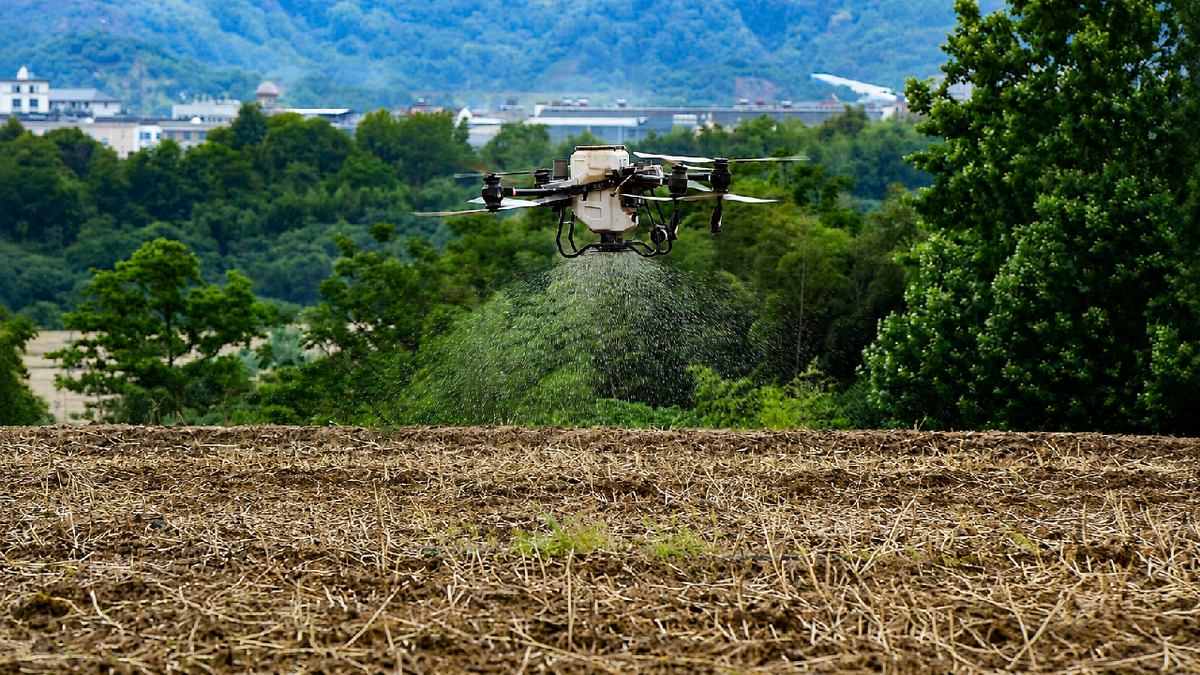
In a significant development for agricultural innovation and food security in Africa, a Ghanaian startup, KaraAgro AI, is leveraging artificial intelligence (AI) and drone technology to revolutionize farming practices. This initiative, emerging around July 2026, directly addresses the pervasive issue of crop loss due to pests and diseases, a challenge that annually devastates agricultural yields across the continent and globally.
The core of KaraAgro AI's system involves deploying drones to capture thousands of high-resolution images across farmlands. These images are then processed and analyzed by sophisticated AI algorithms to identify the earliest signs of crop stress, pest infestations, and plant diseases. According to Darlington Akogo, the founder of KaraAgro AI, this early detection capability can provide farmers with a crucial one-month head start compared to traditional manual inspection methods, allowing for timely and targeted interventions before damage becomes widespread and irreversible.
The introduction of this technology in Ghana is particularly pertinent given the scale of agricultural losses worldwide. The UN Food and Agriculture Organization (FAO) estimates that up to 40 percent of global crop production is lost each year to pests and plant diseases. For many smallholder farmers in Africa, these losses represent not just reduced income but a direct threat to their livelihoods and regional food security. The ability to mitigate such substantial losses through precision agriculture offers a powerful tool in the fight against hunger and poverty.
From a geopolitical perspective, enhancing food security in Ghana and potentially across West Africa has profound implications. Food scarcity is a known driver of social unrest, migration, and regional instability. By boosting agricultural productivity and resilience, AI-powered farming can contribute to greater national self-sufficiency, reduce reliance on food imports, and foster more stable rural economies. This aligns with broader international development goals and strengthens the capacity of African nations to manage their own food systems in the face of climate change and other global stressors.
The economic benefits of this innovation are substantial. Increased yields translate directly into higher incomes for farmers, stimulating rural economies and contributing to national GDP. For farmers like Abdullai Abubakar, who has experienced significant yam crop losses, the promise of improved yields through such technology is compelling. Moreover, the precision application of pesticides and fertilizers, guided by AI analysis, can lead to reduced input costs and more environmentally sustainable farming practices.
However, the successful widespread adoption of such advanced technologies hinges on accessibility and affordability. Agricultural expert Osman Tanko highlights the risk that smallholder farmers, who often constitute the backbone of African agriculture, could be left behind if innovations remain out of reach due to cost or skepticism. KaraAgro AI acknowledges this challenge and is actively working to bridge this gap by training agricultural extension officers across Ghana. This strategy aims to disseminate the technology and knowledge directly to farming communities, ensuring that precision agriculture benefits not only large commercial operations but also the millions of smallholder farmers who feed the continent.
Ghana's embrace of AI-powered drones in agriculture positions it as a leader in technological adoption within the African context. This initiative serves as a potential blueprint for other African nations grappling with similar agricultural challenges. The successful integration of AI and drone technology could catalyze a broader transformation of farming practices across the continent, moving towards more efficient, resilient, and data-driven agricultural systems.
While the immediate focus is on pest and disease detection, the long-term potential of such platforms extends to optimizing irrigation, monitoring soil health, and predicting yields, further enhancing agricultural productivity and sustainability. The journey to widespread adoption will require continued investment, policy support, and community engagement, but the foundational steps being taken in Ghana demonstrate a promising path towards a more food-secure and economically vibrant Africa.
Source referenced: CGTN
This brief was synthesized by our Editorial Engine and reviewed by The Ground Narrative team.


