TRENDING

Sunday, 11 October 2026
----------------------
30 Rabi' Al-Thani 1448 AH
Yemeni government forces claim a sweeping push against the Houthis around the Bab al‑Mandeb strait, a move that could reshape regional power and deepen the humanitarian crisis. The battle pits local actors against a web of foreign interests, from Saudi Arabia to Iran and even distant powers like the United States.
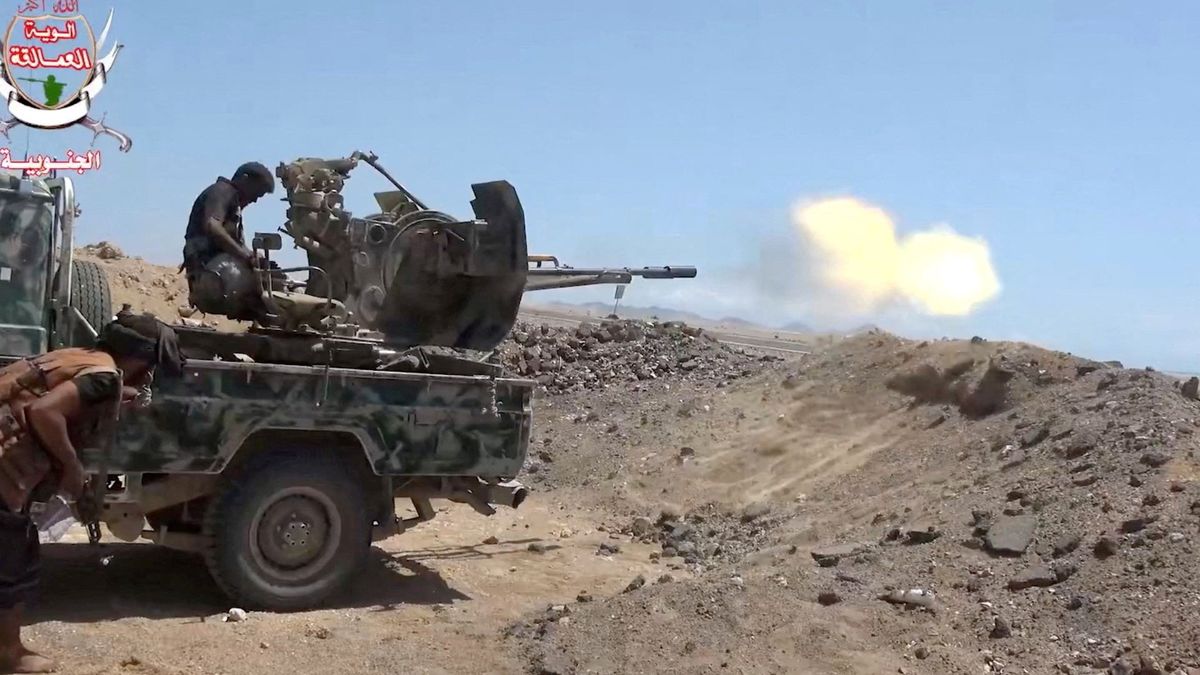
The Yemeni army, representing the internationally recognised government, announced on 10 October 2026 that it had killed more than a thousand Houthis in a series of nearly two‑thousand targeted strikes across the country. The operation, dubbed “Dawn of Yemen,” also claimed the destruction of roughly 180 Houthi combat and logistics vehicles and the demolition of ammunition depots. While the military spokesperson, Colonel Majed Abdullah al‑Nazili, said ground units were “continuing to advance,” independent verification of the figures remains unavailable. The fighting has intensified around the Red Sea coastal towns of Mocha and Dhubab, both key to controlling the Bab al‑Mandeb strait, a chokepoint through which an estimated 10 percent of global maritime trade passes.
The conflict is not merely a domestic power struggle; it is a flashpoint where Saudi Arabia, Iran, and their allies project influence. Saudi Arabia backs the Yemeni government as a bulwark against the Iran‑aligned Houthis, hoping to secure the Bab al‑Mandeb corridor that underpins its oil export routes. For Iran, the Houthis serve as a strategic lever to pressure Saudi interests and to demonstrate reach into the Red Sea, a theater that complements its broader contest with the Gulf monarchies.
Control of Bab al‑Mandeb translates directly into economic leverage. Shipping companies pay higher insurance premiums and, at times, reroute vessels around the Cape of Good Hope, adding days and fuel costs. This pressure creates a revenue stream for any party that can claim authority over the passage, whether through legitimate tolls or illicit taxation of vessels. The Yemeni government’s push aims to re‑assert its claim, thereby attracting international support and potential financial aid tied to the security of global trade.
The United States, while publicly cautious, monitors the situation closely because of its anti‑piracy and counter‑terrorism missions in the Gulf of Aden. A renewed Yemeni offensive could invite a broader coalition strike, similar to past Saudi‑U.S. air campaigns, but Washington is weighing domestic political costs after recent contentious Middle‑East engagements. Meanwhile, Pakistan has been warned by the Houthis that any involvement on Saudi behalf could make Pakistani assets in the Red Sea legitimate targets, a threat that adds another layer to the regional calculus.
For Yemen’s president and his military commanders, demonstrating offensive capability is essential for internal legitimacy. After years of a stalemate, a high‑profile operation offers a narrative of progress that can be leveraged in political negotiations and in securing foreign aid. Conversely, the Houthis rely on the perception of resilience; heavy casualties, if accurate, could undermine their claim to be an unstoppable force, prompting them to amplify rhetoric about multi‑front resistance.
The renewed assaults around Mocha and Dhubab have forced thousands of families to flee coastal villages, seeking shelter in already overcrowded camps in Aden and Hodeidah. Food aid deliveries, already hampered by blockades, face further disruption as roads become battle zones. The United Nations warns that a 20‑percent drop in aid flow could push an additional 1.2 million people into acute food insecurity, compounding a crisis that has claimed over 30,000 lives since 2015.
Hospitals in the south, many of which were already operating on minimal staff and supplies, are now treating combat injuries alongside a surge in water‑borne diseases. The destruction of transport vehicles hampers the movement of medical kits, while the threat of airstrikes discourages humanitarian convoys from entering contested zones. Children under five are especially vulnerable, with malnutrition rates projected to rise above 25 percent in the next six months.
Even residents not directly in the line of fire feel the pinch. The Bab al‑Mandeb strait is a conduit for fuel imports; any disruption inflates local gasoline prices, pushing daily commuters into poverty. Fishermen, who depend on the Red Sea’s rich waters, face both naval blockades and the danger of stray artillery, cutting off a vital source of protein and income for coastal communities.
Both Saudi Arabia and the Yemeni government have framed the offensive as a “clean‑up” operation targeting terrorist infrastructure, deliberately omitting the scale of civilian displacement. Press releases highlight the number of Houthis killed while offering scant data on collateral damage, a pattern that mirrors earlier phases of the war where casualty figures were selectively reported to sustain international support.
Major shipping lines have quietly rerouted vessels around the strait, citing “operational safety,” yet they rarely disclose the cost implications to the public. Insurance firms, meanwhile, have raised premiums but keep the details of their risk assessments under wraps, obscuring how much extra expense is being passed onto consumers worldwide.
International coverage often spotlights the potential involvement of the United States or Pakistan, diverting attention from the lived reality of Yemeni civilians. This framing serves the interests of foreign ministries that wish to portray the conflict as a proxy battleground, thereby justifying diplomatic statements while sidestepping accountability for the humanitarian toll.
The next weeks will reveal whether the Yemeni government can sustain its momentum or if the Houthis will launch the promised missile strikes against Pakistan‑flagged vessels. Observers should monitor satellite imagery of the Bab al‑Mandeb coastline for signs of fortified positions, as well as shipping lane data from AIS trackers that indicate whether commercial traffic is truly resuming or being permanently diverted. Diplomatic signals from Saudi Arabia and Iran, especially any back‑channel talks, will also hint at whether a negotiated pause is possible before the conflict spirals into a broader regional confrontation.
The Bab al-Mandeb connects the Red Sea to the Gulf of Aden, funneling about 10 percent of global maritime trade, including oil shipments. Control of the strait lets a power levy fees, influence shipping routes, and affect global energy prices.
Civilians face mass displacement, heightened food insecurity, and a collapsing health system as aid routes are disrupted. The fighting also drives up fuel prices and cuts off fishing livelihoods, deepening poverty across southern Yemen.
Source referenced: ALJAZEERA
This brief was synthesized by our Editorial Engine and reviewed by The Ground Narrative team.