TRENDING

Tuesday, 6 October 2026
----------------------
25 Rabi' Al-Thani 1448 AH
Renewed clashes between the Houthis and Saudi‑backed forces have pushed millions into deeper need, while funding gaps and strategic calculations leave aid workers stranded.
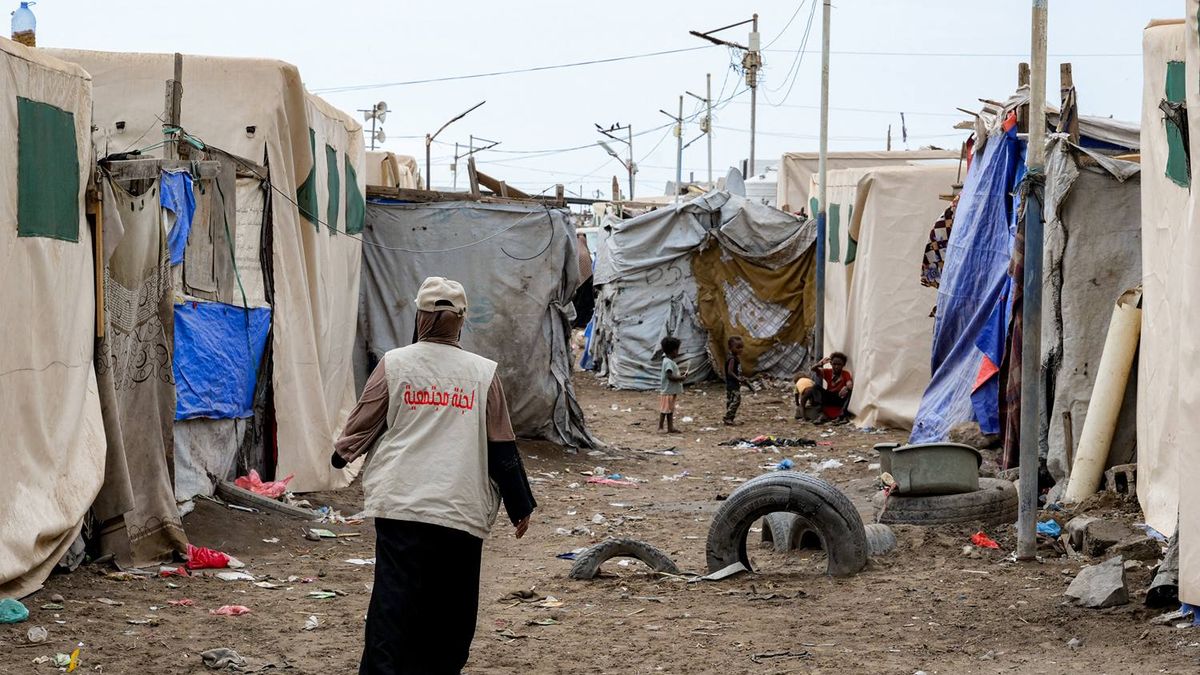
In early September 2026 the Houthis launched a rapid offensive along the Red Sea coast, seizing key ports and the Bab el‑Mandeb strait. Within weeks the fighting spilled inland, shattering the 2022 truce and triggering a fresh wave of displacement that has already forced over 145,000 people to flee their homes.
The renewed conflict is a convergence of three overlapping power tracks. First, Iran continues to view the Houthi movement as a strategic lever to pressure Saudi Arabia, using the proxy to keep a foothold on the Red Sea trade artery. Tehran supplies weapons, intelligence, and political cover, but also expects the Houthis to tie down Saudi forces that would otherwise be deployed elsewhere in the Gulf.
Second, Saudi Arabia and its Emirati allies see control of the Bab el‑Mandeb as essential to safeguard oil shipments and to prevent a perceived Iranian encirclement. The Saudi‑UAE coalition has poured air power and limited ground troops into the south, hoping to blunt the Houthi advance and preserve its own maritime dominance. Yet the coalition is also grappling with domestic fatigue after years of costly proxy wars, which limits the political appetite for a full‑scale ground invasion.
Third, the United States and European donors have dramatically reduced humanitarian budgets for Yemen, citing donor fatigue and competing crises in Ukraine and the Indo‑Pacific. The U.S. cut all direct aid to Yemen in 2024, leaving the World Food Programme (WFP) to operate on a fraction of its pre‑war funding. This funding vacuum forces NGOs to ration food, limit medical supplies, and, in some cases, suspend operations altogether.
The intersection of these incentives creates a self‑reinforcing loop: the more the Houthis threaten shipping lanes, the greater the strategic urgency for Saudi Arabia to intervene; the more Saudi forces engage, the more the U.S. and Europe are pressured to justify their limited financial support, which in turn weakens the humanitarian safety net that keeps civilian unrest from spilling into recruitment for armed groups.
The International Organization for Migration reports that since June, more than 145,000 Yemenis have been uprooted, many multiple times. Internally displaced people (IDPs) crowd makeshift shelters in schools and mosques, where sanitation is poor and disease spreads easily. World Health Organization alerts warn of rising cholera, measles, and dengue cases, while maternal health services have collapsed in many districts.
Over 18 million Yemenis now confront acute food insecurity, and 2.2 million children under five suffer from severe malnutrition. Aid workers describe mothers queuing for dwindling rice rations, often forced to send their children to seek day‑labour in unsafe urban outskirts just to bring home a few extra grains. The psychological toll is evident: children who have already endured the 2014 civil war now experience another wave of displacement, eroding any sense of normalcy.
With food aid slashed to 20 percent of needs, many young men view enlistment with the Houthis or government forces as a pragmatic way to earn cash. Recruiters exploit this desperation, promising regular wages that civilian aid cannot match. This dynamic fuels a feedback loop where hunger fuels recruitment, which in turn prolongs the conflict that creates the hunger.
Both Saudi Arabia and Iran publicly downplay the impact of the fighting on global shipping, framing their actions as defensive. In reality, the Houthi control of the Bab el‑Mandeb threatens a chokepoint through which roughly 10 percent of world oil passes. International insurers have already raised premiums, and the ripple effect on global food prices is beginning to show, especially for nations already stretched by climate shocks.
Western governments often present the reduction of aid budgets as a move toward “more efficient” spending. However, internal memos leaked from the U.S. State Department reveal a deliberate shift of resources toward counter‑Iranian operations in the Gulf, treating Yemen as a peripheral theater. This reallocation leaves the World Food Programme scrambling for private donations while the UN‑coordinated response stalls.
Media coverage frequently frames the war as a binary Iran‑Saudi proxy showdown, sidelining Yemeni political actors who have long resisted external manipulation. Local councils, tribal leaders, and civil‑society groups are attempting grassroots cease‑fire negotiations, but their efforts receive scant attention because they do not fit the dominant geopolitical storyline.
The next three months will be decisive. First, monitor whether the Houthis can consolidate control over the Bab el‑Mandeb; any disruption to tanker traffic will trigger a rapid escalation in global oil and food markets. Second, watch for a potential Saudi‑UAE ground push beyond the coastal belt—such an operation would likely draw a stronger Iranian response and could force the United Nations to reconsider its limited peace‑keeping mandate.
Third, keep an eye on donor behavior. A new wave of private philanthropy or a policy reversal by the United States could temporarily alleviate the funding gap, but unless the underlying power calculus changes, aid will remain a stop‑gap rather than a solution. Finally, follow the emerging local peace initiatives; if they gain traction, they could provide a bottom‑up counterweight to the top‑down proxy narrative and open space for a negotiated settlement.
The humanitarian collapse in Yemen is not an inevitable byproduct of distant great‑power rivalry—it is a crisis that deepens whenever those powers prioritize strategic leverage over the lives of ordinary Yemenis. Understanding who benefits, who bears the cost, and what is being left out of official statements is essential for any citizen trying to make sense of the unfolding tragedy.
Donor fatigue, U.S. funding cuts, and competing crises have left the World Food Programme operating on a fraction of its budget, forcing NGOs to ration aid and suspend some operations.
The strait handles about 10 percent of world oil shipments; any disruption raises shipping insurance costs and can trigger spikes in global oil and food prices, especially for import‑dependent nations.
Source referenced: FOREIGNPOLICY
This brief was synthesized by our Editorial Engine and reviewed by The Ground Narrative team.