TRENDING

Thursday, 17 September 2026
----------------------
6 Rabi' Al-Thani 1448 AH
The World Economic Forum’s 2026 Gender Gap Report shows a modest rise to 69.2% parity, but the gains are fragile and uneven, leaving women excluded from top decision‑making rooms worldwide.
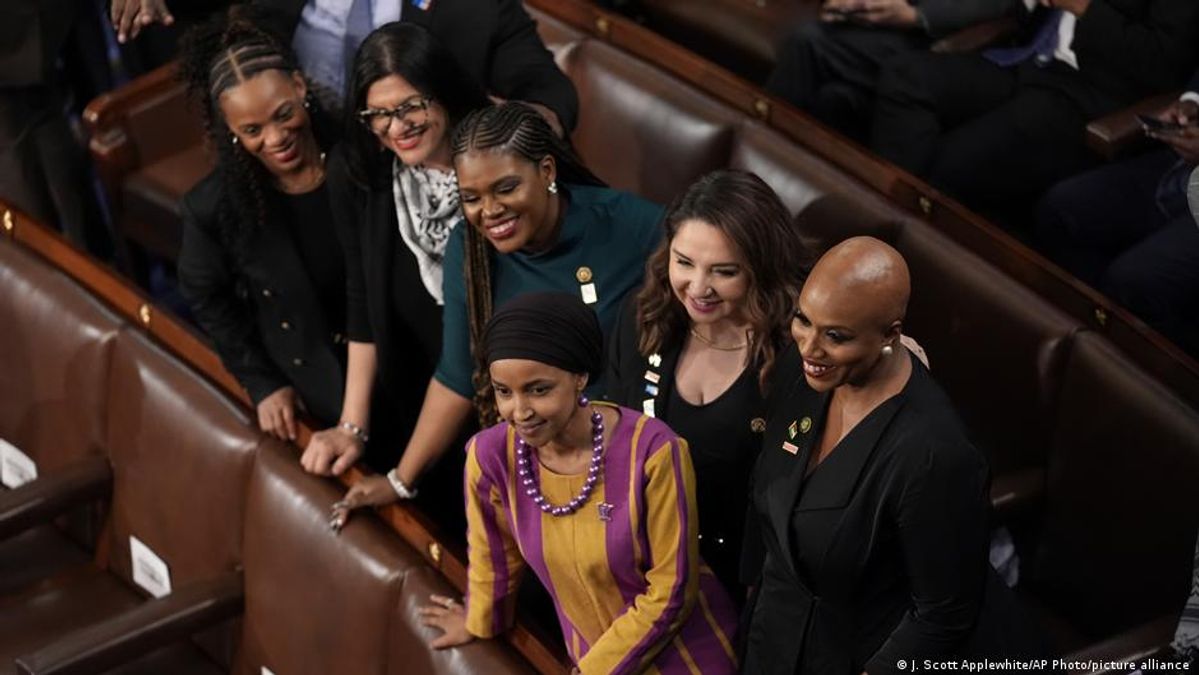
The World Economic Forum released its Global Gender Gap Report 2026, noting that global gender parity has risen to 69.2% – the closest it has ever been to equality. The index, which tracks workforce participation, education, health and political representation across 145 economies, warns that full parity could still be a century away and that recent progress, especially in political leadership, is slipping.
The report’s numbers are the surface of a deeper tug‑of‑war between competing incentives. Governments that champion gender parity often do so to attract foreign investment, meet EU or UN reporting standards, and stave off domestic unrest. Yet the same leaders may backtrack when parity threatens entrenched patronage networks – for example, the United States saw a drop in women ministers after the Trump administration’s cabinet reshuffle, reflecting how partisan calculus can outweigh gender goals.
In the private sector, CEOs and boards face shareholder pressure to improve diversity scores, but the upside is largely reputational. Real economic incentives – tax breaks, access to public contracts, or AI procurement preferences – remain limited, allowing firms to keep the status quo where women occupy less than 20% of CEO roles. The surge of AI investment (nearly $1 trillion globally) illustrates another paradox: while AI promises new high‑skill jobs, women make up fewer than one‑in‑five AI engineers, a gap that reinforces existing labor market hierarchies.
International competition also shapes the landscape. Nations like Iceland and Namibia climb the rankings by institutionalizing gender quotas and promoting women to visible leadership positions, partly to signal progressive governance to donors and tourists. Meanwhile, larger economies such as India and China improve scores mainly through education, a low‑cost lever that does not automatically translate into power‑sharing at the top of ministries or corporations.
The statistics mask everyday hardships. In the United States, women still earn ≈16% less than men in senior management, a gap that widens for women of color. In India, professional and technical participation has risen, yet women’s share of senior officials remains under 13%, limiting their influence over policies that affect labor rights, health care, and safety.
In Sub‑Saharan Africa, Namibia’s rise to fourth place is a bright spot, but the continent’s overall range is stark: Chad sits at the bottom with 57.8% parity, meaning women there face severe barriers to education, formal employment, and political voice. The report’s focus on percentages overlooks the psychological toll of exclusion – reduced bargaining power, higher exposure to gender‑based violence, and limited access to credit for women‑owned enterprises.
Official narratives celebrate the “closing gap” while glossing over structural inertia. Governments and corporations downplay the fragility of gains by attributing setbacks to “cultural lag” rather than policy reversals. For instance, the WEF highlights Iceland’s success without interrogating how its high tax burden and strong welfare state, funded by a relatively homogeneous tax base, create conditions that many larger economies cannot replicate.
Corporate leaders also sidestep the profit motive behind AI hiring practices. The report notes women’s under‑representation in AI firms but stops short of linking it to algorithmic bias that can perpetuate hiring discrimination, reinforcing a cycle where women are excluded from the very sectors that will shape future work.
Finally, the media framing of the report – emphasizing a single “percentage” – distracts from the fact that parity in education does not automatically lead to parity in decision‑making. By celebrating the “69.2%” figure, the narrative masks the political cost of women’s absence from cabinets, boardrooms, and AI development teams.
Watch for policy experiments that tie public procurement to gender‑balanced supply chains, especially in AI‑related contracts. In the EU, the pending Pay Transparency Directive could force firms to disclose gender pay gaps, creating market pressure for change. In the United States, upcoming mid‑term elections may shift the balance of women in Congress, influencing future legislation on parental leave and childcare subsidies.
In Asia, India’s skill‑development programs for women in tech will be a litmus test: will they translate into senior roles or remain a pipeline for low‑paid positions? Meanwhile, China’s modest climb in the rankings may hide a state‑driven narrative that leverages gender statistics to project soft power without altering the male‑dominated political elite.
Globally, the next report will reveal whether the “fragile” gains are merely a statistical blip or the beginning of a durable shift. Citizens should demand transparent metrics, not just headline percentages, and hold both governments and corporations accountable for the real power they allocate – or withhold – from half the population.
Source referenced: DW
This brief was synthesized by our Editorial Engine and reviewed by The Ground Narrative team.


