TRENDING

Thursday, 17 September 2026
----------------------
6 Rabi' Al-Thani 1448 AH
Chinese President Xi and Indian Prime Minister Modi met on the BRICS sidelines, signaling a tentative thaw in a rivalry that spans borders and history. The analysis unpacks the power calculus, the hidden human toll, and the signals to watch.
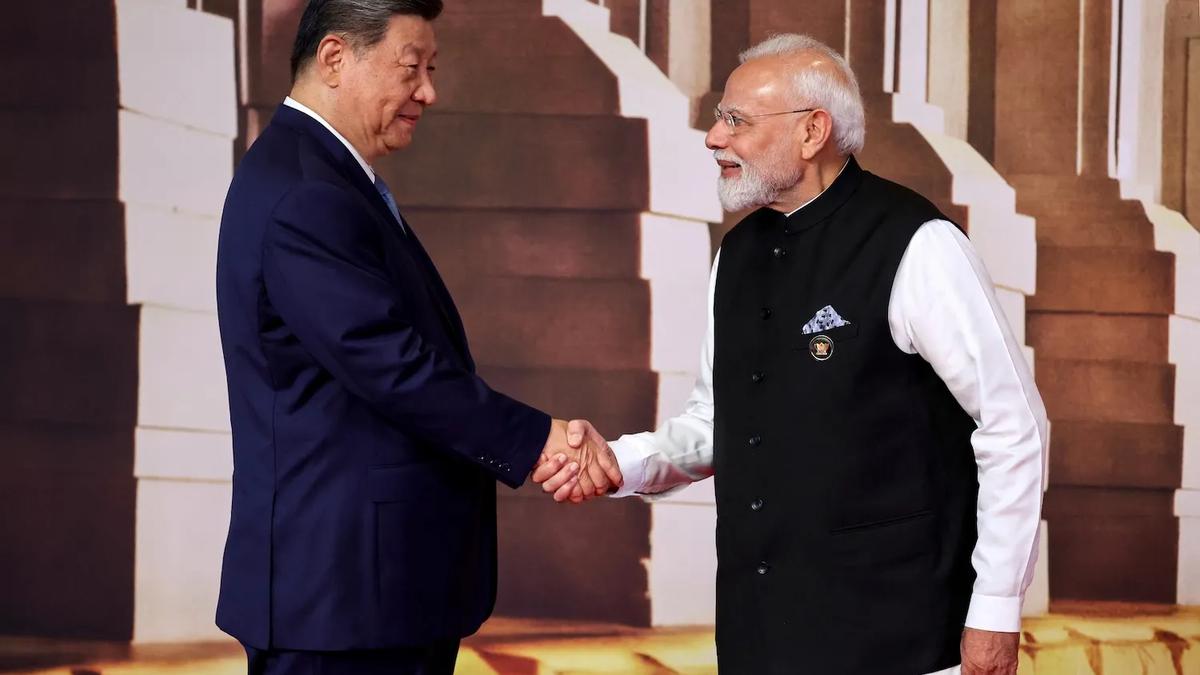
Chinese President Xi Jinping arrived in New Delhi for the first time in seven years, attending the BRICS summit and holding a one‑on‑one meeting with Indian Prime Minister Narendra Modi. Both leaders pledged to boost commercial and cultural ties, while China’s foreign minister Wang Yi claimed they reached a “most important consensus” to be partners, not rivals.
The meeting sits at the intersection of three structural forces. First, economic interdependence: both economies have felt the sting of U.S. tariffs, especially after the 2024 Trump‑era trade spikes that squeezed export‑driven sectors in India and China. Second, strategic hedging: New Delhi seeks to reduce reliance on a volatile U.S. market, while Beijing wants a reliable partner to offset American pressure in the Indo‑Pacific. Third, border politics: despite a 2024 border agreement that eased Ladakh tensions, a 15,000‑square‑mile dispute remains, and China’s deepening military ties with Pakistan add a layer of mistrust. The BRICS platform offers a diplomatic stage where both can showcase cooperation without inviting direct U.S. scrutiny, reinforcing their shared desire to shape a multipolar order.
While leaders trade smiles, ordinary citizens on both sides bear the cost of rivalry. In India’s border states, farmers and traders still grapple with disrupted supply chains caused by intermittent closures of mountain passes. In the Himalayan region, military families live under the constant threat of renewed skirmishes, limiting mobility and access to education. Across the border, Pakistani workers employed in Chinese‑built infrastructure face heightened insecurity as Sino‑Pak ties deepen, potentially shifting labor markets away from Indian migrants. Moreover, the broader South Asian populace confronts inflationary pressure as both capitals prioritize strategic commodities over domestic price stability.
Official statements emphasize partnership, yet they downplay the geopolitical ripple effects of a Sino‑Indian rapprochement on the U.S. and its regional allies. Washington’s pivot to the Indo‑Pacific is predicated on a clear India‑U.S. alignment; a softened China‑India stance erodes that premise, yet U.S. officials remain silent, hoping to keep the narrative of a united front against Beijing. Additionally, the Pakistan factor is largely omitted. China’s recent sale of advanced weaponry to Pakistan, used in air combat against India, creates a paradox: Beijing courts India publicly while deepening a military bond with its arch‑rival. This dual track is a strategic hedge for Beijing, but it leaves regional security architects scrambling to reassess threat calculations.
Watch for three concrete signals. 1) Border implementation: any concrete steps to demarcate the contested 15,000 sq mi—whether joint patrols or infrastructure projects—will reveal whether the rhetoric translates into risk reduction. 2) Trade metrics: a measurable uptick in bilateral trade, especially in high‑tech components, would indicate that economic incentives are outweighing security concerns. 3) Pakistan‑China moves: new defense contracts or joint exercises involving Pakistan and China will test the limits of the India‑China partnership and could reignite a security dilemma. The next BRICS summit, scheduled for 2027, will likely serve as a litmus test for the durability of this detente.
Source referenced: FOREIGNPOLICY
This brief was synthesized by our Editorial Engine and reviewed by The Ground Narrative team.


