TRENDING

Thursday, 17 September 2026
----------------------
6 Rabi' Al-Thani 1448 AH
If Donald Trump meets Kim Jong Un later this year, the most visible guest may be the leader’s teenage daughter, Kim Ju Ae. Her presence could signal a dynastic hand‑off while reshaping how the world treats North Korea’s nuclear status.
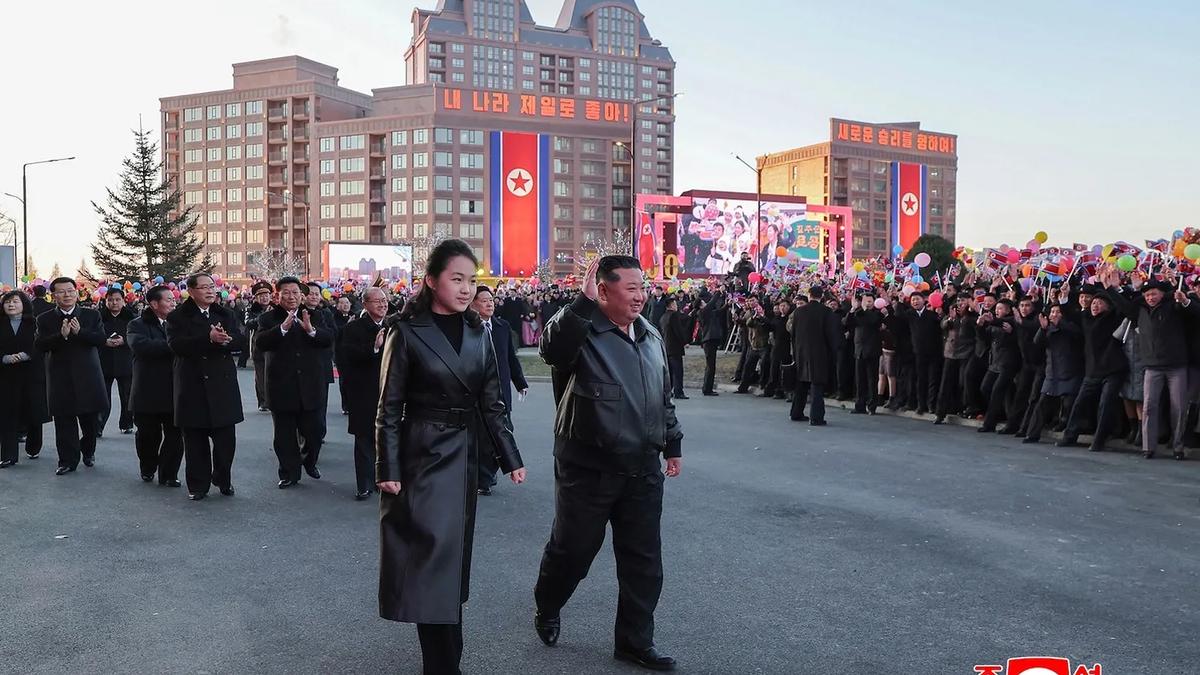
North Korean leader Kim Jong Un is expected to travel to the United States for a summit with former President Donald Trump later in 2026. Intelligence reports and South Korean sources indicate that Kim may bring his 13‑year‑old daughter, Kim Ju Ae, to the meeting – a first for a North Korean heir to appear on a global diplomatic stage.
The summit serves multiple overlapping incentives. For Trump, personal rapport with Kim offers a political narrative of “deal‑making” that resonates with his base and distracts from domestic challenges. For Pyongyang, the ceremony is a low‑cost way to cement the legitimacy of a fourth‑generation dynasty without altering the country’s nuclear posture. By showcasing Ju Ae, Kim signals continuity to the Korean People’s Army, the elite bureaucracy, and external audiences, reinforcing the perception that the regime will survive any internal shock.
Economically, the United States hopes that a high‑profile encounter could unlock incremental sanctions relief, easing the pressure on North Korean markets that funnel illicit revenue into the regime’s coffers. China, a long‑standing backer, watches the optics closely; a visible heir may reassure Beijing that a stable, predictable neighbor remains in place, preserving its strategic buffer. Russia, meanwhile, benefits from a North Korean posture that normalizes nuclear status, reducing the need for Moscow to act as a mediator.
The power calculus also hinges on alliance math. South Korea and Japan must balance the allure of reduced tensions against the risk that a summit without denuclearization concessions legitimizes Pyongyang’s weapons program. Their intelligence services are quietly assessing whether the appearance of a youthful successor could make future negotiations more rigid, as a new leader may inherit a hardened ideological line.
Ordinary North Koreans bear the brunt of the regime’s diplomatic theater. Resources diverted to stage the summit – from lavish security details to state‑run media productions – are taken from a population already facing chronic food shortages and limited medical care. The prospect of sanctions relief, if any, is unlikely to reach market stalls or improve public health; instead, it typically enriches the elite who control foreign trade channels.
In the United States, taxpayers fund the diplomatic mission, the security apparatus, and any potential aid packages that might accompany a softened sanctions regime. Meanwhile, citizens of South Korea live under the constant threat of accidental escalation; a summit that normalizes nuclear status can embolden hardliners in Pyongyang to maintain provocative missile tests, keeping the Korean Peninsula in a perpetual state of alert.
Official statements from both Washington and Pyongyang focus on “peace” and “stability,” but they downplay the symbolic power of a dynastic hand‑off. Trump’s camp frames the meeting as a personal achievement, sidestepping the deeper question of whether the United States is implicitly recognizing North Korea as a nuclear‑armed state. Likewise, North Korean propaganda emphasizes Ju Ae’s presence as a sign of national pride, while quietly reinforcing the regime’s claim that its nuclear arsenal is a non‑negotiable cornerstone of sovereignty.
China’s role is also muted in public discourse. Beijing benefits from a stable North Korean succession that does not threaten its border, yet it quietly pressures Pyongyang to avoid overt provocations that could trigger a U.S.‑led coalition response. Russian commentary, meanwhile, hints at a broader shift: if the United States accepts a summit without denuclearization, it may set a precedent for other nuclear‑capable states to seek legitimacy through high‑level visits rather than disarmament.
Watch for three immediate signals. First, the composition of the North Korean delegation: a formal invitation extended to Ju Ae would confirm the regime’s intent to present her as a successor. Second, any shift in U.S. language from “complete denuclearization” to “managed nuclear status,” which would indicate a policy pivot toward pragmatic engagement. Third, reactions from Seoul and Tokyo – whether they issue joint statements demanding concrete concessions or remain silent – will reveal how the regional alliance is recalibrating its deterrence posture.
Beyond the summit, the real test will be whether Ju Ae’s visibility translates into institutional power. If she begins to appear in state‑run broadcasts delivering policy pronouncements, the regime is moving from symbolic grooming to operational succession, tightening the dynasty’s grip and complicating any future diplomatic opening.
In short, the next Trump‑Kim meeting is less about missile counts and more about who will inherit the throne and how the world chooses to acknowledge that inheritance.
Editor's Note: Analysis based on publicly available intelligence and expert commentary; some details of the planned delegation remain unconfirmed.
Source referenced: FOREIGNPOLICY
This brief was synthesized by our Editorial Engine and reviewed by The Ground Narrative team.


