TRENDING

Wednesday, 11 November 2026
----------------------
1 Jumada Al-Thani 1448 AH
The UN Security Council is at a crossroads as rising powers demand change and the P5 cling to veto power. A new AI‑driven analysis reveals both the stakes for global governance and the human price of inaction.
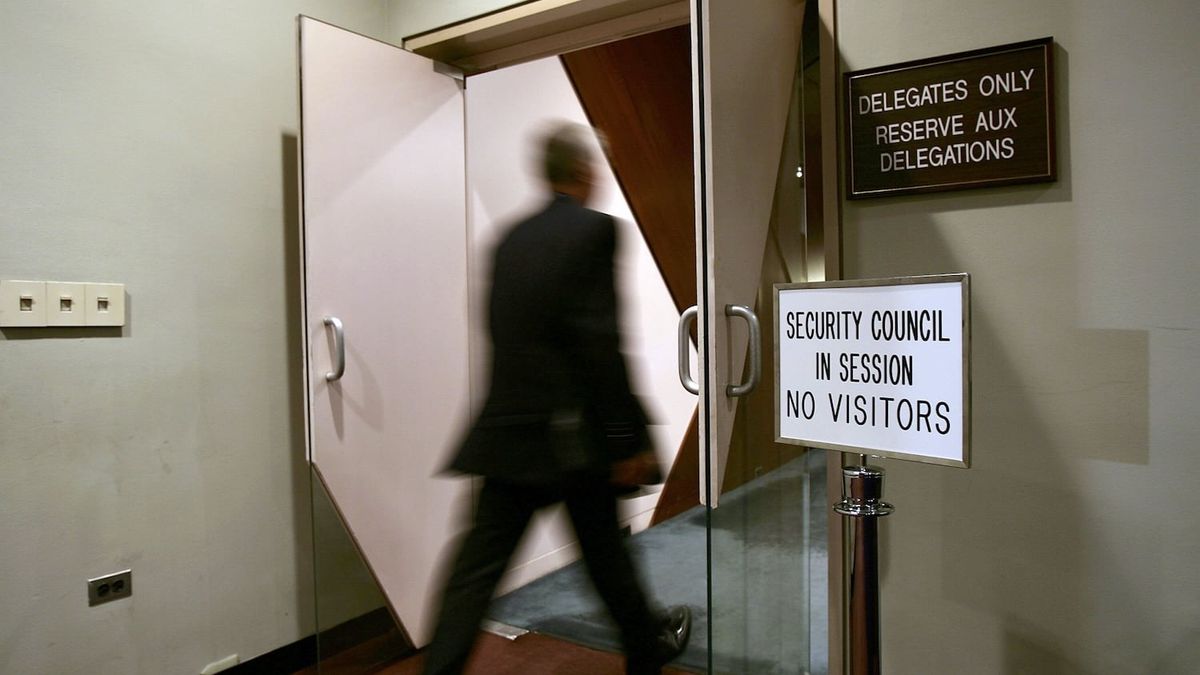
The United Nations Security Council (UNSC) remains a 1945‑era institution, dominated by five permanent members—United States, China, Russia, France, and United Kingdom—who each wield a veto. A growing coalition of middle and emerging powers has pressed for an overhaul that would broaden permanent membership or add new non‑permanent seats. Recent research from the Quincy Institute, using AI‑based simulations, suggests specific reform pathways that could preserve the council’s relevance while curbing deadlock.
The status quo rests on three intertwined forces. First, the veto gives the P5 a decisive lever over any resolution, making them reluctant to dilute their own authority. Second, two rival reform blocs— the G4 (Germany, Japan, Brazil, India) pushing for new permanent seats, and the Uniting for Consensus group demanding only elected seats—have locked each other in a stalemate. Third, the lack of concrete data on how reforms would affect council performance has kept negotiations speculative, allowing the P5 to claim that any change would risk chaos.
AI simulations now inject hard numbers into the debate. The model predicts that expanding permanent membership without safeguards would lengthen decision‑making cycles from 28.5 to 42.1 days and boost veto use by over 60 %. Conversely, a hybrid approach that adds a veto‑override mechanism—requiring two concurring negative votes or a two‑thirds General Assembly majority—could cut veto frequency by up to 40 % and accelerate resolutions to an average of 21 days. A second proposal, creating a pool of “semipermanent” members serving staggered multi‑year terms, would increase election chances for small states from once every 30‑50 years to a much higher probability, while giving middle powers a meaningful, though not permanent, voice.
These mechanisms hinge on political calculus. The P5 will only concede if the council’s legitimacy erodes to the point where they risk being sidelined entirely. Meanwhile, the G4’s recent setbacks—Germany’s failed two‑year bid—open space for alternative coalitions of small and developing nations to champion the semipermanent model. The interplay of self‑preservation, diplomatic bargaining, and emerging data creates a narrow window where reform becomes politically feasible.
When the council stalls, smaller nations are forced to watch decisions made by a handful of great powers, often without any recourse. This marginalization translates into delayed humanitarian interventions, weaker peace‑keeping mandates, and a perception that the UN serves elite interests rather than global citizens.
Prolonged vetoes have directly impacted crises in places like Syria, Yemen, and the Sahel. Each time a resolution is blocked, civilians endure longer periods of violence, displacement, and famine. The simulation’s finding that a veto‑override could reduce deadlock by 40 % suggests that millions of lives could be saved if the council acted more swiftly.
Instability in conflict zones depresses regional trade, inflates refugee flows, and strains development budgets. Countries neighboring war‑torn areas—such as Jordan, Ethiopia, and Bangladesh—bear the cost of hosting refugees and managing border security, diverting resources from education, health, and infrastructure.
Official statements from the P5 often frame reform as a matter of “global consensus” and “shared responsibility.” In reality, the underlying motive is to protect veto power, which underpins their ability to shape sanctions, military authorizations, and the international legal narrative. By emphasizing procedural hurdles, they divert attention from the strategic advantage of unilateral action when the council is paralyzed.
The Quincy Institute’s simulation is presented as a neutral, data‑driven solution, yet the model’s assumptions—such as the likelihood of member states aligning on an override—reflect the biases of its designers. By foregrounding technical precision, the analysis downplays the political negotiations, lobbying, and behind‑the‑scenes deals that ultimately decide whether any proposal is adopted.
While the G4 publicly champions permanent seats, many middle powers are quietly building coalitions around the semipermanent concept. Nations like South Africa, Indonesia, and Mexico have been coordinating through the Group of 77 to push for a more inclusive voting pool, a maneuver that receives little media coverage compared to the high‑profile G4‑UFC rivalry.
The next UN General Assembly session in September will feature a formal debate on council reform, where the veto‑override proposal is expected to surface as a compromise text. Observers should track three indicators: (1) whether any P5 member publicly acknowledges the need for an override, (2) the formation of a cross‑regional coalition of small and developing states that can command a two‑thirds majority in the General Assembly, and (3) any shift in the voting patterns of the G4 after Germany’s recent setback. A breakthrough on any of these fronts could reshape the architecture of global security governance and, by extension, the daily lives of people living in conflict zones worldwide.
The veto‑override would allow a permanent member’s veto to be overturned if at least two other council members also vote against a resolution, or if a two‑thirds majority in the General Assembly votes to nullify it.
Semipermanent seats would rotate more frequently, giving small and developing nations a realistic chance to influence decisions, rather than being locked out for decades under the current system.
Reduced deadlock and faster decision‑making could enable quicker authorizations of peace‑keeping missions, humanitarian aid, and sanctions, potentially shortening the duration of crises and saving civilian lives.
Editor's Note: Analysis relies on the Quincy Institute’s simulation; real‑world political negotiations may diverge from modeled outcomes.
Source referenced: FOREIGNPOLICY
This brief was synthesized by our Editorial Engine and reviewed by The Ground Narrative team.